THE ADVENTURE COLLECTIVE® · Independent discovery and booking for outdoor travel

A private day trip from Kalutara that pairs the sky-high drama of Sigiriya Rock Fortress with the quiet, painted sanctuaries of Dambulla Cave Temple. Climb the rock, read the frescoes, and learn how ancient engineering and devotion shaped central Sri Lanka.
A private day trip from Kalutara that pairs the sky-high drama of Sigiriya Rock Fortress with the quiet, painted sanctuaries of Dambulla Cave Temple. Climb the rock, read the frescoes, and learn how ancient engineering and devotion shaped central Sri Lanka.
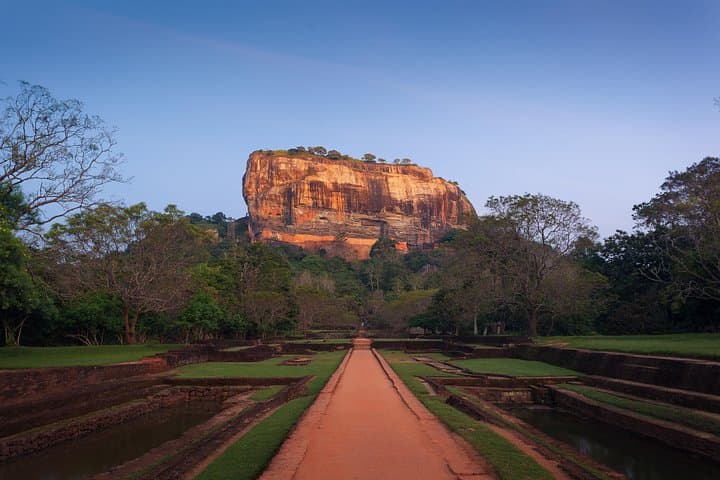
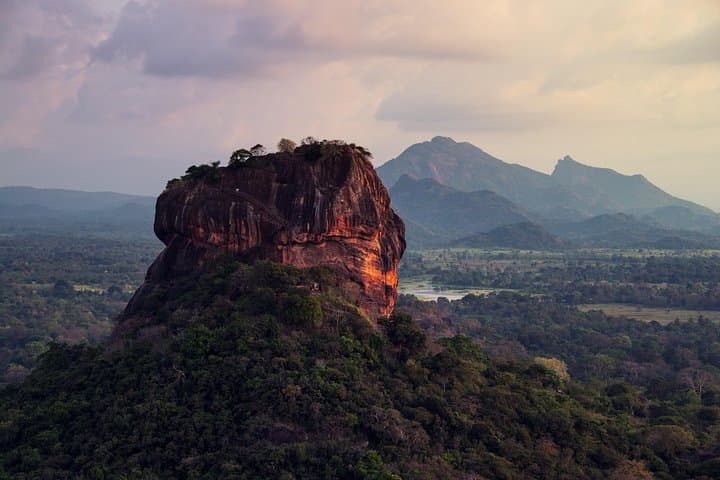
You step out of the air‑conditioned vehicle into a heat that makes the rock smell like warm stone. Sigiriya looms ahead—a sheer dome rising roughly 200 meters above flat rice paddies and scrub—its weathered sides streaked with centuries of monsoon and sun. Monkeys dart between the broken steps at the base and tourists gather beneath the giant lion’s paws: a last fragment of a deliberately theatrical entrance meant to announce a palace in the sky.
Verified experiences and guided adventures in the surrounding area.
Operated by Lakpura LLC · Sigiriya, Central Province
You step out of the air‑conditioned vehicle into a heat that makes the rock smell like warm stone. Sigiriya looms ahead—a sheer dome rising roughly 200 meters above flat rice paddies and scrub—its weathered sides streaked with centuries of monsoon and sun. Monkeys dart between the broken steps at the base and tourists gather beneath the giant lion’s paws: a last fragment of a deliberately theatrical entrance meant to announce a palace in the sky.
This full‑day loop from Kalutara threads two of Sri Lanka’s most decisive moments in antiquity. Centuries before colonial maps and modern highways, King Kasyapa carved a capital into the rock in the 5th century AD. He ordered gardens, moats and reservoirs that still hold water; he commissioned the bright frescoes for which Sigiriya is famous. Geologically, Sigiriya is the remnant of a hardened magma plug—an island of igneous stone resisting erosion as the plain around it subsided.
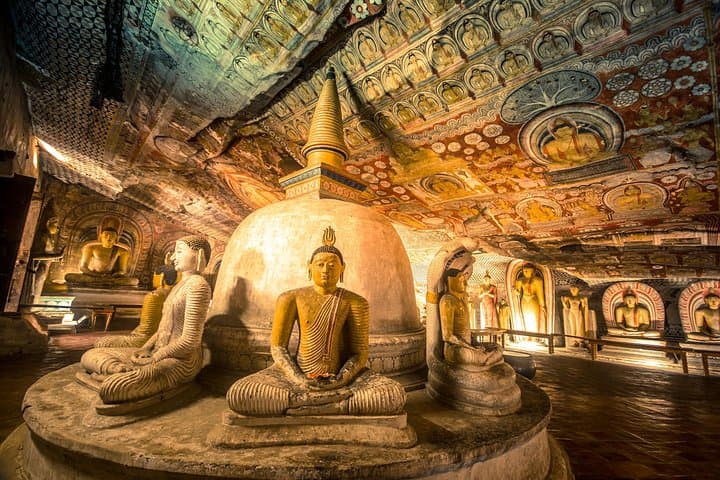
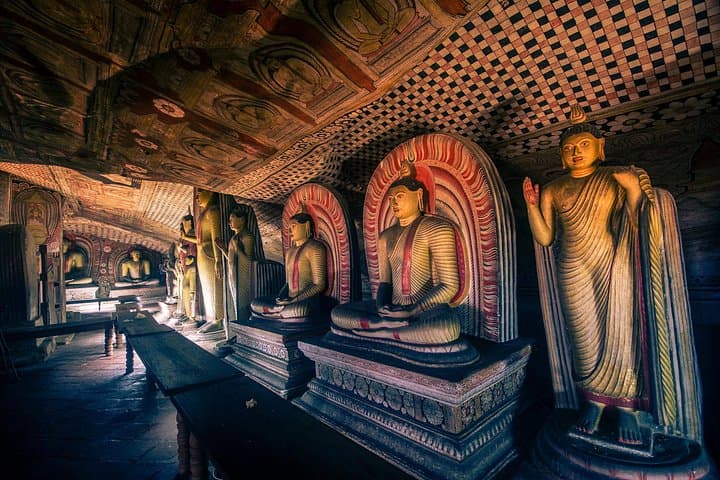
Earlier, at Dambulla, the tone softens. Five caverns hollowed beneath a granite outcrop shelter over 150 statues and frescoes spanning millennia. The caves began as a refuge for early Buddhists and later became a royal shrine; now the hush of prayer mixes with the low scrape of sandals on stone. The colors—ochres, siennas, and the deep lapis blues of certain pigments—remain unexpectedly vibrant, their preservation owed to cool rock interiors and careful conservation.
Culturally, this route ties royal ambition to religious devotion. In a single day you move from the engineered extravagance of a palace fortress to the intimate piety of painted caves, seeing irrigation tech, rock art, and monastic continuity that define central Sri Lanka.
Practical bits: expect a long day—transfers from Kalutara are roughly three to four hours each way by private car, and the guided itinerary runs about 13 hours total. At Sigiriya allow 2–3 hours to climb (roughly 1,000–1,200 steps, some exposed metal staircases) and tour the terraces and museum; Dambulla takes 60–90 minutes if you want to read the panels and move between caves. Wear sturdy, grippy shoes, long shorts or light trousers inside Dambulla (modest dress required), and carry 1–2 liters of water—heat and humidity climb with you.
Timing matters: start early to beat the worst sun and the crowds, or plan a late afternoon return when the light slants across the water gardens. Respect the sites: don’t touch frescoes, stay on designated paths, and hire local guides when possible—their context turns ruins into stories. With a practiced stride and a sense of curiosity, the day becomes more than sightseeing; it’s a lesson in how landscape, religion and power were engineered into lasting stone.
Expect roughly 3–4 hours each way in an air‑conditioned vehicle depending on traffic and route.
Children can climb but must be supervised—stair sections are steep and some are exposed; consider turning back if they show fatigue.
The tour description notes admissions are not included—confirm with the operator and have cash or card for museum and site tickets.
Yes, with efficient pacing: about 60–90 minutes at Dambulla and 2–3 hours at Sigiriya, plus transfer time.
Yes, English-speaking guides are often available; the tour provides an English-speaking chauffeur‑guide according to the listing.
Not recommended for pregnant travelers or those with serious heart or spinal conditions due to steep climbs and long day.
Lakpura LLC operates guided outdoor trips and adventures with an emphasis on safety, stewardship, and memorable experiences.
You step out of the air‑conditioned vehicle into a heat that makes the rock smell like warm stone. Sigiriya looms ahead—a sheer dome rising roughly 200 meters above flat rice paddies and scrub—its weathered sides streaked with centuries of monsoon and sun. Monkeys dart between the broken steps at the base and tourists gather beneath the giant lion’s paws: a last fragment of a deliberately theatrical entrance meant to announce a palace in the sky.
You step out of the air‑conditioned vehicle into a heat that makes the rock smell like warm stone. Sigiriya looms ahead—a sheer dome rising roughly 200 meters above flat rice paddies and scrub—its weathered sides streaked with centuries of monsoon and sun. Monkeys dart between the broken steps at the base and tourists gather beneath the giant lion’s paws: a last fragment of a deliberately theatrical entrance meant to announce a palace in the sky.
This full‑day loop from Kalutara threads two of Sri Lanka’s most decisive moments in antiquity. Centuries before colonial maps and modern highways, King Kasyapa carved a capital into the rock in the 5th century AD. He ordered gardens, moats and reservoirs that still hold water; he commissioned the bright frescoes for which Sigiriya is famous. Geologically, Sigiriya is the remnant of a hardened magma plug—an island of igneous stone resisting erosion as the plain around it subsided.
Earlier, at Dambulla, the tone softens. Five caverns hollowed beneath a granite outcrop shelter over 150 statues and frescoes spanning millennia. The caves began as a refuge for early Buddhists and later became a royal shrine; now the hush of prayer mixes with the low scrape of sandals on stone. The colors—ochres, siennas, and the deep lapis blues of certain pigments—remain unexpectedly vibrant, their preservation owed to cool rock interiors and careful conservation.
Culturally, this route ties royal ambition to religious devotion. In a single day you move from the engineered extravagance of a palace fortress to the intimate piety of painted caves, seeing irrigation tech, rock art, and monastic continuity that define central Sri Lanka.
Practical bits: expect a long day—transfers from Kalutara are roughly three to four hours each way by private car, and the guided itinerary runs about 13 hours total. At Sigiriya allow 2–3 hours to climb (roughly 1,000–1,200 steps, some exposed metal staircases) and tour the terraces and museum; Dambulla takes 60–90 minutes if you want to read the panels and move between caves. Wear sturdy, grippy shoes, long shorts or light trousers inside Dambulla (modest dress required), and carry 1–2 liters of water—heat and humidity climb with you.
Timing matters: start early to beat the worst sun and the crowds, or plan a late afternoon return when the light slants across the water gardens. Respect the sites: don’t touch frescoes, stay on designated paths, and hire local guides when possible—their context turns ruins into stories. With a practiced stride and a sense of curiosity, the day becomes more than sightseeing; it’s a lesson in how landscape, religion and power were engineered into lasting stone.