THE ADVENTURE COLLECTIVE® · Independent discovery and booking for outdoor travel

A full-day circuit through Sri Lanka’s dry zone, this tour pairs the dramatic climb of Sigiriya’s Lion Rock with the painted sanctity of Dambulla Cave Temple. Expect a long, active day with steep stairs, ancient frescoes, and strict temple etiquette.
A full-day circuit through Sri Lanka’s dry zone, this tour pairs the dramatic climb of Sigiriya’s Lion Rock with the painted sanctity of Dambulla Cave Temple. Expect a long, active day with steep stairs, ancient frescoes, and strict temple etiquette.
You step off the air-conditioned van into a wash of heat and green — rice paddies and scrub opening to a vertical island of stone that pins the sky. Sigiriya, the “Lion Rock,” rises nearly 200 meters above the plain, its sheer face a challenge that dares you to climb. The path begins with manicured gardens and ponds; by mid-morning you’re threading metal staircases past fresco panels, then through the carved lion paws into the fortress belly, where a platform rewards you with an uncluttered sweep across the central dry zone.
Verified experiences and guided adventures in the surrounding area.
Operated by OTN WORLD PVT LTD · Sigiriya, Central Province
You step off the air-conditioned van into a wash of heat and green — rice paddies and scrub opening to a vertical island of stone that pins the sky. Sigiriya, the “Lion Rock,” rises nearly 200 meters above the plain, its sheer face a challenge that dares you to climb. The path begins with manicured gardens and ponds; by mid-morning you’re threading metal staircases past fresco panels, then through the carved lion paws into the fortress belly, where a platform rewards you with an uncluttered sweep across the central dry zone.
The day moves in time with two different histories. At Sigiriya you’re tracing the brief, ostentatious reign of King Kassapa (5th century CE), who crowned this rock with a palace and terraced gardens and painted the rock face with half-hidden frescoes of courtly women. Below, the site’s hydraulic engineering — reservoirs, moats and fountains — reveals a sophisticated approach to urban design that predates many better-known medieval capitals.
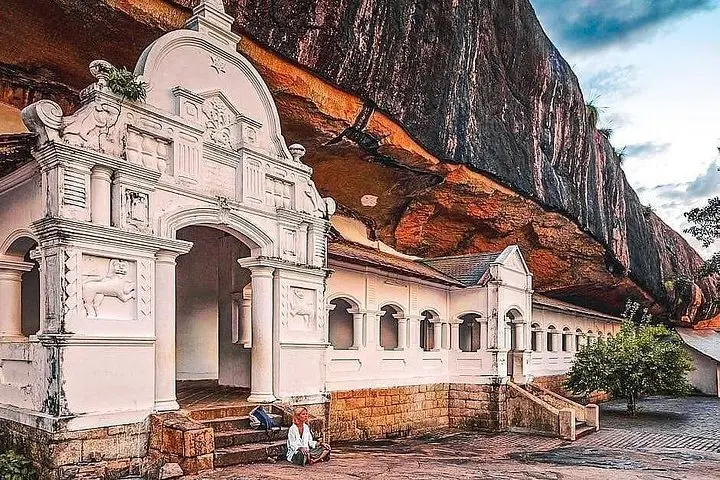
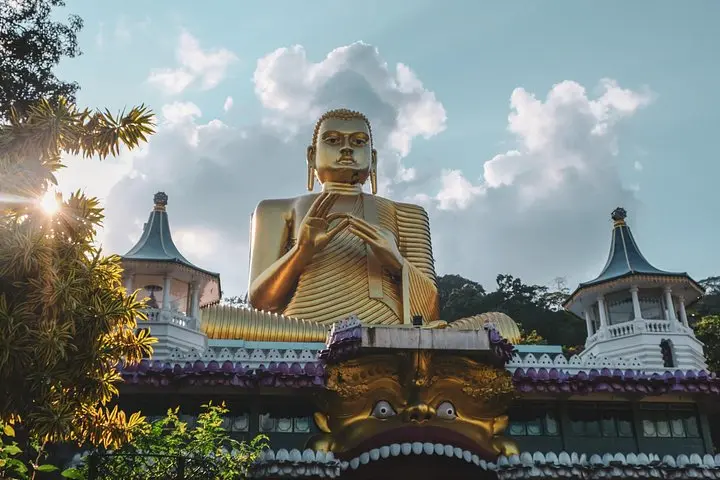
About 24 kilometers away, Dambulla Cave Temple offers another chapter: a complex of five caves used for worship since at least the first century BCE. Inside, 153 Buddha statues and painted ceilings move from devotional calm to almost theatrical display, the walls repainted over centuries but still carrying motifs of royal life and sacred geography.
Geology frames both sites. Sigiriya is a hardened volcanic plug — a solitary, erosion-resistant column left when surrounding softer rock wore away. Dambulla occupies a low volcanic ridge whose caves were adapted for monastic use. Together they show how topography shaped spiritual and political choices in Sri Lanka’s dry zone.
Practical guidance: this is a long day — expect 10–14 hours from hotel pickup to return. The Sigiriya ascent involves roughly 1,000–1,300 steps across stone and metal walkways and a 200-meter gain; wear sturdy closed-toe shoes with good grip. Dambulla requires removed footwear and modest dress (shoulders and knees covered); carry a scarf to comply with temple etiquette. Start early to avoid midday heat and to catch the fresher light for photography.
Bring at least 2 liters of water, sun protection and small change for entrance fees, bottled drinks, and tips. Guides available at Sigiriya provide context you won’t get alone — the museum at the base condenses competing theories about the site’s original purpose, while local vendors offer fresh king coconut and fruit if you need a quick recharge.
Timing and respect make the day work: move deliberately on stair sections, pause at the fortress terraces for wind and views, and keep camera flash off inside the caves. For travelers with a moderate level of fitness this is an unforgettable synthesis of landscape, power and faith — a full day that rewards the climb with vistas and history.
Expect a sustained climb of roughly 1,000–1,300 steps with exposed sections; take your time and rest on the terraces if needed.
Yes—footwear must be removed before entering the cave temples; socks are acceptable but avoid revealing clothing.
This tour’s inclusions vary by operator—bring local cash for any admissions or confirm with the provider at booking.
Sigiriya’s upper platforms require stair climbing and are not wheelchair accessible; Dambulla has fewer stairs but uneven ground inside the caves.
Photography is generally allowed at Sigiriya; inside Dambulla, avoid flash photography and respect any posted restrictions.
Water (2L+), sun protection, a scarf for temples, sturdy shoes, small change, and a light rain jacket in wet months.
OTN WORLD PVT LTD operates guided outdoor trips and adventures with an emphasis on safety, stewardship, and memorable experiences.
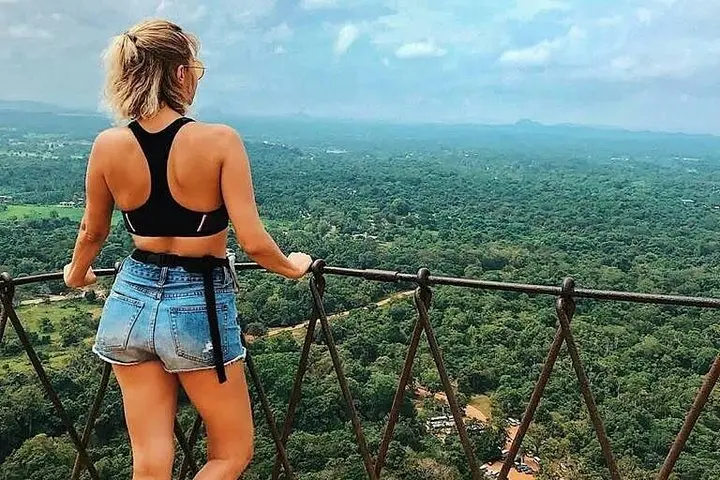

You step off the air-conditioned van into a wash of heat and green — rice paddies and scrub opening to a vertical island of stone that pins the sky. Sigiriya, the “Lion Rock,” rises nearly 200 meters above the plain, its sheer face a challenge that dares you to climb. The path begins with manicured gardens and ponds; by mid-morning you’re threading metal staircases past fresco panels, then through the carved lion paws into the fortress belly, where a platform rewards you with an uncluttered sweep across the central dry zone.
You step off the air-conditioned van into a wash of heat and green — rice paddies and scrub opening to a vertical island of stone that pins the sky. Sigiriya, the “Lion Rock,” rises nearly 200 meters above the plain, its sheer face a challenge that dares you to climb. The path begins with manicured gardens and ponds; by mid-morning you’re threading metal staircases past fresco panels, then through the carved lion paws into the fortress belly, where a platform rewards you with an uncluttered sweep across the central dry zone.
The day moves in time with two different histories. At Sigiriya you’re tracing the brief, ostentatious reign of King Kassapa (5th century CE), who crowned this rock with a palace and terraced gardens and painted the rock face with half-hidden frescoes of courtly women. Below, the site’s hydraulic engineering — reservoirs, moats and fountains — reveals a sophisticated approach to urban design that predates many better-known medieval capitals.
About 24 kilometers away, Dambulla Cave Temple offers another chapter: a complex of five caves used for worship since at least the first century BCE. Inside, 153 Buddha statues and painted ceilings move from devotional calm to almost theatrical display, the walls repainted over centuries but still carrying motifs of royal life and sacred geography.
Geology frames both sites. Sigiriya is a hardened volcanic plug — a solitary, erosion-resistant column left when surrounding softer rock wore away. Dambulla occupies a low volcanic ridge whose caves were adapted for monastic use. Together they show how topography shaped spiritual and political choices in Sri Lanka’s dry zone.
Practical guidance: this is a long day — expect 10–14 hours from hotel pickup to return. The Sigiriya ascent involves roughly 1,000–1,300 steps across stone and metal walkways and a 200-meter gain; wear sturdy closed-toe shoes with good grip. Dambulla requires removed footwear and modest dress (shoulders and knees covered); carry a scarf to comply with temple etiquette. Start early to avoid midday heat and to catch the fresher light for photography.
Bring at least 2 liters of water, sun protection and small change for entrance fees, bottled drinks, and tips. Guides available at Sigiriya provide context you won’t get alone — the museum at the base condenses competing theories about the site’s original purpose, while local vendors offer fresh king coconut and fruit if you need a quick recharge.
Timing and respect make the day work: move deliberately on stair sections, pause at the fortress terraces for wind and views, and keep camera flash off inside the caves. For travelers with a moderate level of fitness this is an unforgettable synthesis of landscape, power and faith — a full day that rewards the climb with vistas and history.