THE ADVENTURE COLLECTIVE® · Independent discovery and booking for outdoor travel

Ascend Palacio Barolo's lighthouse on a 90‑minute guided tour that decodes Dante-inspired architecture and ends at a 360° mirador. Expect narrow stairs, a preserved 1920s office, and sweeping views over Buenos Aires to the Río de la Plata.
Ascend Palacio Barolo's lighthouse on a 90‑minute guided tour that decodes Dante-inspired architecture and ends at a 360° mirador. Expect narrow stairs, a preserved 1920s office, and sweeping views over Buenos Aires to the Río de la Plata.
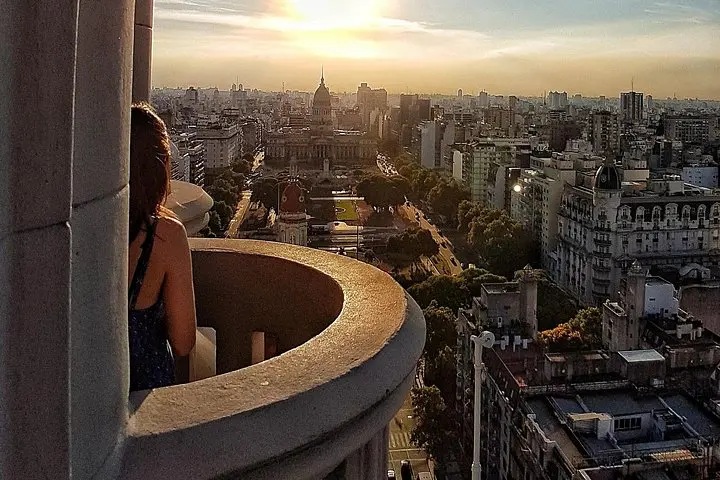
You step inside a hushed lobby where marble cools your palms and a guide's voice threads Dante through stone. Light slants along carved banisters as you rise in the elevator to the 14th floor; from there the staircase narrows, each step taking you deeper into symbolism until the city spills open on all sides from the lighthouse mirador.
Verified experiences and guided adventures in the surrounding area.
Operated by Tangol · Buenos Aires, Ciudad Autónoma de Buenos Aires
You step inside a hushed lobby where marble cools your palms and a guide's voice threads Dante through stone. Light slants along carved banisters as you rise in the elevator to the 14th floor; from there the staircase narrows, each step taking you deeper into symbolism until the city spills open on all sides from the lighthouse mirador.
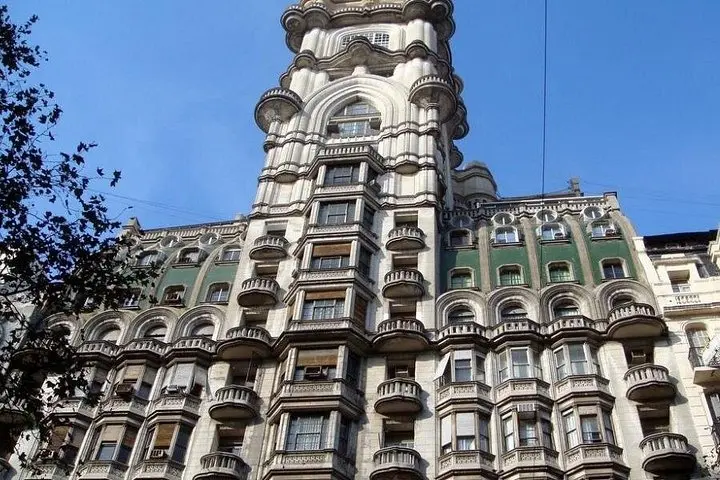
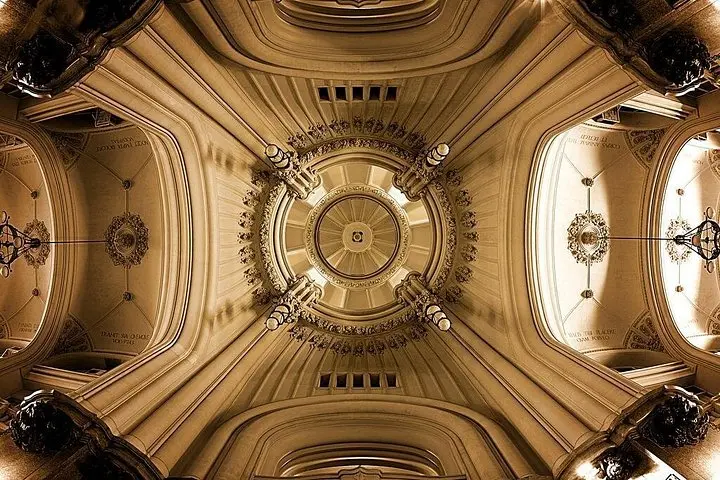
Palacio Barolo was conceived in the 1920s by architect Mario Palanti for Italian patron Luis Barolo, a building mapped to Dante’s Divine Comedy: floors echo Hell, Purgatory and Paradise in architectural allegory. Its masonry and ornament reflect early-20th-century Buenos Aires ambitions, and the preserved 1920s office on the seventh floor feels like a paused moment in time.
Geologically the view is dominated by the flat Río de la Plata plain — the river seems to push the skyline toward the horizon — while culturally the avenue below hums with cafés, government buildings and street life shaped by immigration and civic politics.
Practicalities: tours run about 90 minutes, include elevator access up to the 14th floor and a steep climb up eight narrow flights to the lighthouse; comfortable footwear and a bottle of water are recommended. The guide explains the Freemasonry and literary references as you move through restricted areas, then opens the 360° viewing balconies where you can see from the historic center to the river.
Spots are limited and the lighthouse can close in severe weather. The experience suits visitors who can manage tight stairways and wish to pair architectural history with one of Buenos Aires’ most panoramic urban views.
The guided experience lasts about 90 minutes and includes elevator access to the 14th floor, visits to restricted areas like the 7th-floor office and 13th terrace, plus the climb to the panoramic mirador.
Yes—after the elevator to the 14th floor you must climb approximately eight steep, narrow flights; the tour is not recommended for those who cannot manage stairs or for pregnant travelers.
Photography is allowed on the terraces and in most public areas—be mindful of other visitors and any restricted rooms where flash or tripods may be prohibited.
All sales are final per the booking terms; there are no refunds for cancellations, so confirm plans before purchasing.
Tangol operates guided outdoor trips and adventures with an emphasis on safety, stewardship, and memorable experiences.
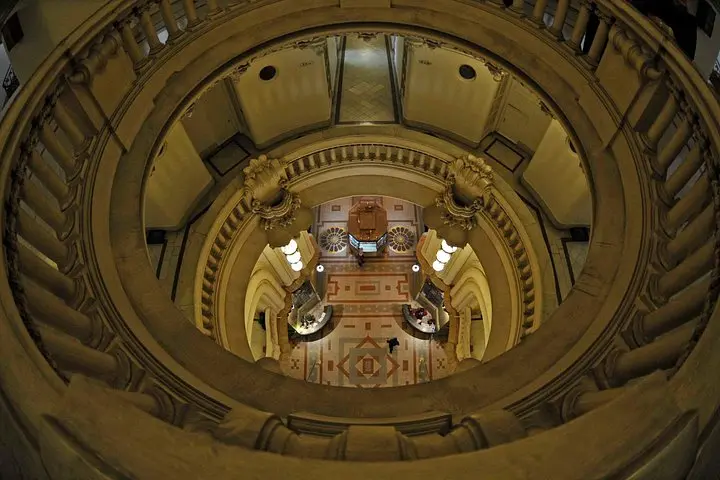
You step inside a hushed lobby where marble cools your palms and a guide's voice threads Dante through stone. Light slants along carved banisters as you rise in the elevator to the 14th floor; from there the staircase narrows, each step taking you deeper into symbolism until the city spills open on all sides from the lighthouse mirador.
You step inside a hushed lobby where marble cools your palms and a guide's voice threads Dante through stone. Light slants along carved banisters as you rise in the elevator to the 14th floor; from there the staircase narrows, each step taking you deeper into symbolism until the city spills open on all sides from the lighthouse mirador.
Palacio Barolo was conceived in the 1920s by architect Mario Palanti for Italian patron Luis Barolo, a building mapped to Dante’s Divine Comedy: floors echo Hell, Purgatory and Paradise in architectural allegory. Its masonry and ornament reflect early-20th-century Buenos Aires ambitions, and the preserved 1920s office on the seventh floor feels like a paused moment in time.
Geologically the view is dominated by the flat Río de la Plata plain — the river seems to push the skyline toward the horizon — while culturally the avenue below hums with cafés, government buildings and street life shaped by immigration and civic politics.
Practicalities: tours run about 90 minutes, include elevator access up to the 14th floor and a steep climb up eight narrow flights to the lighthouse; comfortable footwear and a bottle of water are recommended. The guide explains the Freemasonry and literary references as you move through restricted areas, then opens the 360° viewing balconies where you can see from the historic center to the river.
Spots are limited and the lighthouse can close in severe weather. The experience suits visitors who can manage tight stairways and wish to pair architectural history with one of Buenos Aires’ most panoramic urban views.