THE ADVENTURE COLLECTIVE® · Independent discovery and booking for outdoor travel

An 11‑hour private day trip from Colombo takes you to Sigiriya’s lofty rock palace and the painted caves of Dambulla. Expect a steep climb, vivid frescoes, and a deep dive into Sri Lanka’s ancient kings and cave temples.
An 11‑hour private day trip from Colombo takes you to Sigiriya’s lofty rock palace and the painted caves of Dambulla. Expect a steep climb, vivid frescoes, and a deep dive into Sri Lanka’s ancient kings and cave temples.
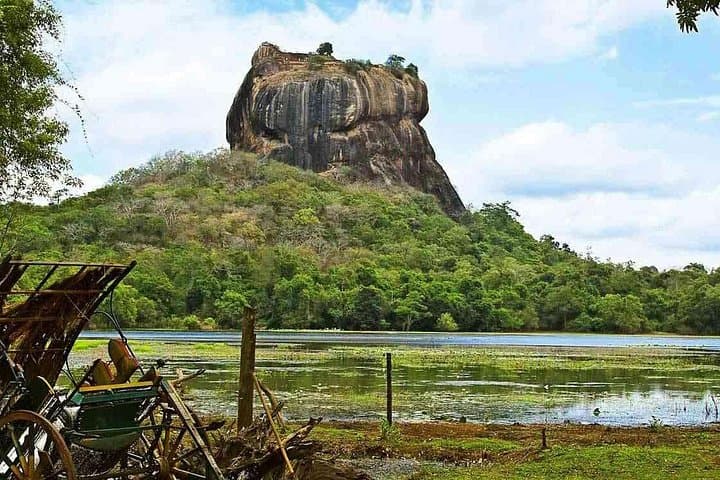
You step out of the air‑conditioned van into a heat that smells faintly of wet earth and incense. The plain opens in every direction—paddy fields, scrub, and a lone monolith rising like a deliberate punctuation mark: Sigiriya. From the road the rock looks impossible to climb, a sheer column of ancient stone holding a ruined palace and frescoes that still hold their color after fifteen centuries.
Verified experiences and guided adventures in the surrounding area.
Operated by Lakpura LLC · Sigiriya, Central Province
You step out of the air‑conditioned van into a heat that smells faintly of wet earth and incense. The plain opens in every direction—paddy fields, scrub, and a lone monolith rising like a deliberate punctuation mark: Sigiriya. From the road the rock looks impossible to climb, a sheer column of ancient stone holding a ruined palace and frescoes that still hold their color after fifteen centuries.
The tour moves with purpose. After a highway drive from Colombo across the Central Plains, the first stop is Sigiriya Rock Fortress. King Kasyapa transformed this 200‑meter summit into a fortified palace in the 5th century, carving out terraces, moats, and water gardens that still pull sunlight into mirrorlike ponds. The climb uses a chain of stairways and iron walkways—expect several hundred to roughly a thousand steps depending on which route you take—each switchback revealing new views and fragments of the castle's engineering: hydraulic channels, terraced gardens, and the famed mirror wall with its faint ancient graffiti.
Halfway up, the frescoes appear—painted on sheltered ledges, their pigments stubbornly bright. They are intimate and human, a visual argument across time. At the summit, the flattened rock gives a panorama that explains why Kasyapa chose this spot: an unreadable grid of fields and lakes, the moat like a drawn circle where a palace once stood.
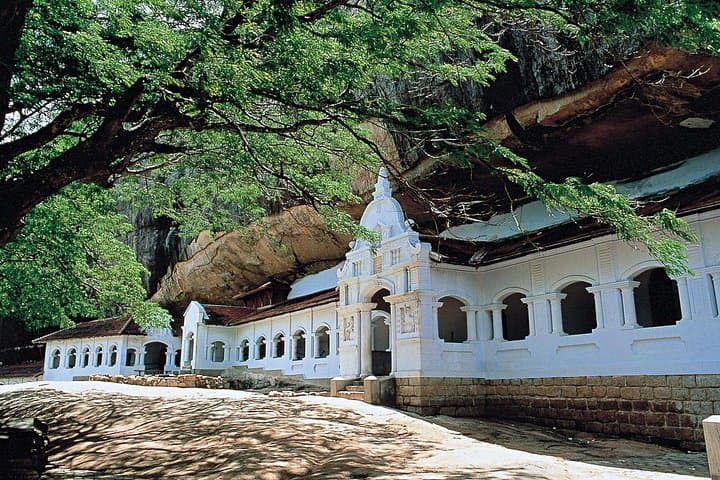
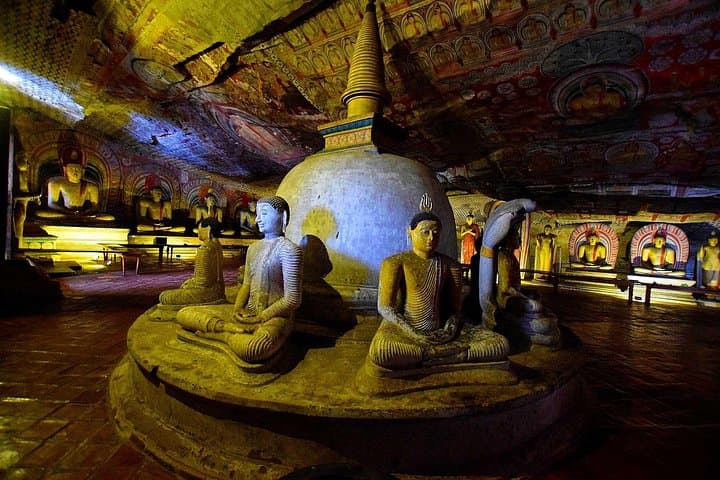
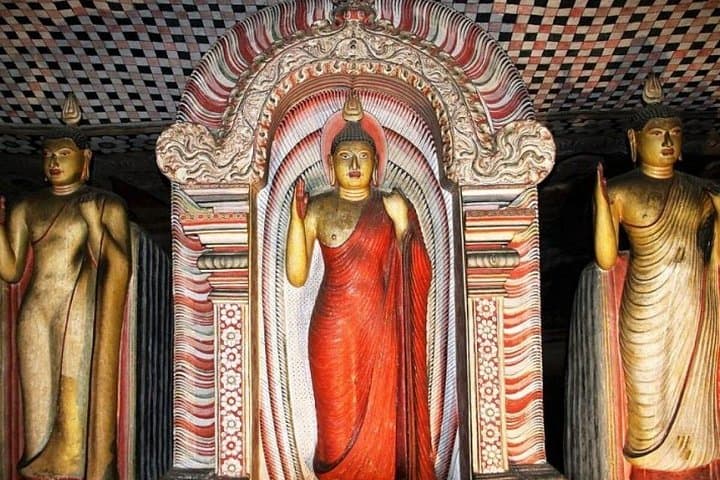
Dambulla Cave Temple is quieter, a short drive away, and a different kind of awe. Five caves carved into a granite outcrop hold over 150 statues and murals spanning millennia, some work dating to the 1st century BCE. The cool, shadowed chambers insist on slower movements; bronze Buddha figures watch over painted scenes from the life of Siddhartha, while Hindu figures remind you of the region's complex religious history.
Practical edge: this is an 11‑hour day with significant walking and short drives between sites. Bring a hat, sturdy shoes with good grip, and modest clothing suitable for temples—knees and shoulders should be covered at Dambulla. Entrance fees are paid on site, and while drivers and guides handle logistics, carry small notes for tips and shrine donations. Start early to avoid the heat and the crowds at Sigiriya; late afternoon light softens the rock for photos but the climb back can be hotter.
The trip stitches together landscape, engineering, and devotion. It’s a day where geology becomes architecture and where the human impulse to mark high ground created works that still push visitors to look up—and then climb.
No; entrance tickets are purchased at the site. The guide or driver will help arrange tickets, but bring cash or a card for admissions.
The ascent involves steep staircases and some metal ladders; expect roughly 800–1,200 steps depending on the path—moderate fitness required.
Children who can handle stairs will manage, but the climb is not recommended for those with serious mobility limitations or severe vertigo.
Lunch is not listed as included. Many tours stop at a local restaurant en route where you can buy hot meals—confirm with your operator in advance.
Photography is allowed in many areas of Dambulla, but flashes can be restricted near delicate frescoes—follow onsite signs and guide advice.
Expect roughly 3.5–4.5 hours one way depending on traffic; the full itinerary is an 11‑hour day including drives and time at both sites.
Lakpura LLC operates guided outdoor trips and adventures with an emphasis on safety, stewardship, and memorable experiences.
You step out of the air‑conditioned van into a heat that smells faintly of wet earth and incense. The plain opens in every direction—paddy fields, scrub, and a lone monolith rising like a deliberate punctuation mark: Sigiriya. From the road the rock looks impossible to climb, a sheer column of ancient stone holding a ruined palace and frescoes that still hold their color after fifteen centuries.
You step out of the air‑conditioned van into a heat that smells faintly of wet earth and incense. The plain opens in every direction—paddy fields, scrub, and a lone monolith rising like a deliberate punctuation mark: Sigiriya. From the road the rock looks impossible to climb, a sheer column of ancient stone holding a ruined palace and frescoes that still hold their color after fifteen centuries.
The tour moves with purpose. After a highway drive from Colombo across the Central Plains, the first stop is Sigiriya Rock Fortress. King Kasyapa transformed this 200‑meter summit into a fortified palace in the 5th century, carving out terraces, moats, and water gardens that still pull sunlight into mirrorlike ponds. The climb uses a chain of stairways and iron walkways—expect several hundred to roughly a thousand steps depending on which route you take—each switchback revealing new views and fragments of the castle's engineering: hydraulic channels, terraced gardens, and the famed mirror wall with its faint ancient graffiti.
Halfway up, the frescoes appear—painted on sheltered ledges, their pigments stubbornly bright. They are intimate and human, a visual argument across time. At the summit, the flattened rock gives a panorama that explains why Kasyapa chose this spot: an unreadable grid of fields and lakes, the moat like a drawn circle where a palace once stood.
Dambulla Cave Temple is quieter, a short drive away, and a different kind of awe. Five caves carved into a granite outcrop hold over 150 statues and murals spanning millennia, some work dating to the 1st century BCE. The cool, shadowed chambers insist on slower movements; bronze Buddha figures watch over painted scenes from the life of Siddhartha, while Hindu figures remind you of the region's complex religious history.
Practical edge: this is an 11‑hour day with significant walking and short drives between sites. Bring a hat, sturdy shoes with good grip, and modest clothing suitable for temples—knees and shoulders should be covered at Dambulla. Entrance fees are paid on site, and while drivers and guides handle logistics, carry small notes for tips and shrine donations. Start early to avoid the heat and the crowds at Sigiriya; late afternoon light softens the rock for photos but the climb back can be hotter.
The trip stitches together landscape, engineering, and devotion. It’s a day where geology becomes architecture and where the human impulse to mark high ground created works that still push visitors to look up—and then climb.