THE ADVENTURE COLLECTIVE® · Independent discovery and booking for outdoor travel

Ascend the dramatic Sigiriya rock fortress, then slip into village life and plains-side birdwatching on a full-day circuit that mixes archaeology, culture, and wildlife. This itinerary pairs a challenging climb with immersive local experiences and accessible wetland birding.
Ascend the dramatic Sigiriya rock fortress, then slip into village life and plains-side birdwatching on a full-day circuit that mixes archaeology, culture, and wildlife. This itinerary pairs a challenging climb with immersive local experiences and accessible wetland birding.
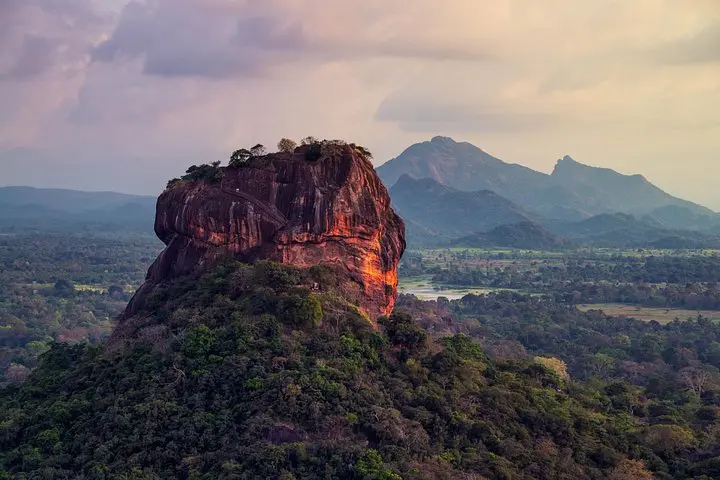
You arrive before the heat settles — the rock is a dark thumb of stone rising out of a flat green sea, cliffs slicing the skyline like something snapped from the earth and set upright. As you walk toward Sigiriya, the fortress grows in scale: sheer, vertical, and improbably human. Monkeys thread the scrubby branches beneath the foot of the rock; the air smells of wet earth and curry from nearby kitchens. Your guide folds maps into stories that make the carved staircases and fresco gallery feel less like tourist stops and more like chapters of a lived history.
Verified experiences and guided adventures in the surrounding area.
Operated by Lakpura LLC · Sigiriya, Central Province
You arrive before the heat settles — the rock is a dark thumb of stone rising out of a flat green sea, cliffs slicing the skyline like something snapped from the earth and set upright. As you walk toward Sigiriya, the fortress grows in scale: sheer, vertical, and improbably human. Monkeys thread the scrubby branches beneath the foot of the rock; the air smells of wet earth and curry from nearby kitchens. Your guide folds maps into stories that make the carved staircases and fresco gallery feel less like tourist stops and more like chapters of a lived history.
Sigiriya was a bold experiment in landscape control. Built in the 5th century AD by King Kasyapa, the rock-top palace and its surrounding gardens were an assertion of power — engineered pools, boulder-lined pathways, and mirror-like water gardens that still read as sophisticated urban design. The frescoes halfway up the climb, bright fragments of pigment on an unforgiving surface, are intimate relics of a courtly aesthetic. Geologically, Sigiriya is a hardened magma plug that resisted erosion while the surrounding plains wore away — a slow rebellion of stone that now demands respect from climbers and conservationists alike.
Beyond the fortress, the day eases into the countryside: a village tour takes you into patchwork rice fields, along earthen tracks, and onto an ox cart if you want it. You’ll try shortbread-like hoppers and learn how coconut sambal is pounded and brightened with lime. Later, Habarana Lake waits, a sedate mirror for kingfishers and herons. Birdwatching here is quiet work — you follow the reeds, binoculars pressed to your face, and listen as the lake announces the presence of painted storks or the quick, metallic call of a white-throated kingfisher.
Practical guidance: this is a long day — expect 9–10 hours round trip with hotel pickup in an air-conditioned vehicle. The Sigiriya climb involves uneven stone steps and metal staircases; allow two hours for ascent, exploration, and descent. Bring a liter of water (one is provided), sun protection, and light layers for early morning and late afternoon. Wear sturdy shoes with decent grip; the rock can be slick after rain and the fresco gallery requires careful movement. Respect local customs at village visits — ask before photographing people and take cues from your guide. For birding, bring binoculars and a field guide or app; Habarana’s wetlands are best in the cooler morning or late afternoon when birds are active.
This itinerary balances monumental history, rural culture, and a soft wilderness experience — all in a single, well-paced day. The rock demands attention, the village rewards curiosity, and the lake quietly reminds you how alive the lowlands can be.
Expect about 60–90 minutes to ascend depending on fitness and stops; the climb includes uneven stone steps and metal stairways with sections that are quite steep.
This tour description notes admission is not included—check with the operator and plan to buy tickets at the site or through your provider in advance.
Yes; Sri Lankan village meals commonly include vegetarian options—notify the operator of dietary needs when booking.
Possibly—small mammals and monkeys are common around the rock and wetland margins, but sightings aren’t guaranteed.
The climb may be challenging for very young children or people with limited mobility; the village and lake visits are more accessible alternatives on the same day.
Tipping is discretionary but common; a modest amount per person for the guide and driver (adjusted to service level) is appreciated.
Lakpura LLC operates guided outdoor trips and adventures with an emphasis on safety, stewardship, and memorable experiences.
You arrive before the heat settles — the rock is a dark thumb of stone rising out of a flat green sea, cliffs slicing the skyline like something snapped from the earth and set upright. As you walk toward Sigiriya, the fortress grows in scale: sheer, vertical, and improbably human. Monkeys thread the scrubby branches beneath the foot of the rock; the air smells of wet earth and curry from nearby kitchens. Your guide folds maps into stories that make the carved staircases and fresco gallery feel less like tourist stops and more like chapters of a lived history.
You arrive before the heat settles — the rock is a dark thumb of stone rising out of a flat green sea, cliffs slicing the skyline like something snapped from the earth and set upright. As you walk toward Sigiriya, the fortress grows in scale: sheer, vertical, and improbably human. Monkeys thread the scrubby branches beneath the foot of the rock; the air smells of wet earth and curry from nearby kitchens. Your guide folds maps into stories that make the carved staircases and fresco gallery feel less like tourist stops and more like chapters of a lived history.
Sigiriya was a bold experiment in landscape control. Built in the 5th century AD by King Kasyapa, the rock-top palace and its surrounding gardens were an assertion of power — engineered pools, boulder-lined pathways, and mirror-like water gardens that still read as sophisticated urban design. The frescoes halfway up the climb, bright fragments of pigment on an unforgiving surface, are intimate relics of a courtly aesthetic. Geologically, Sigiriya is a hardened magma plug that resisted erosion while the surrounding plains wore away — a slow rebellion of stone that now demands respect from climbers and conservationists alike.
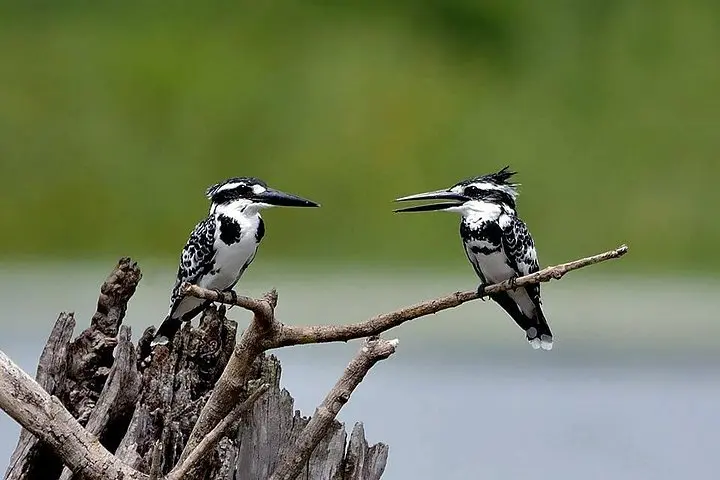
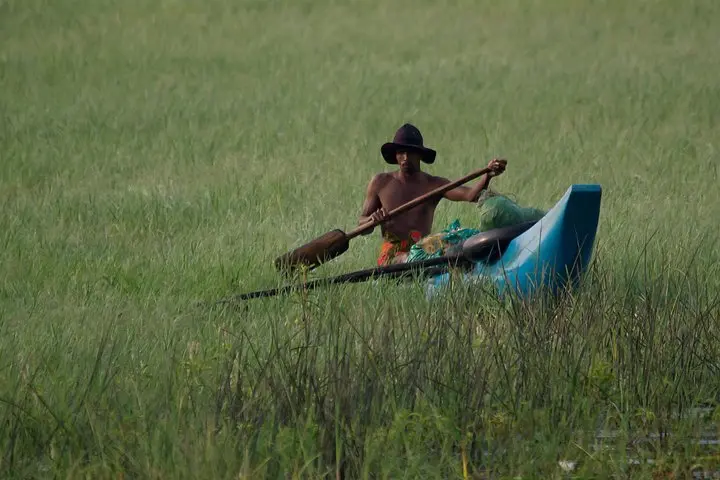
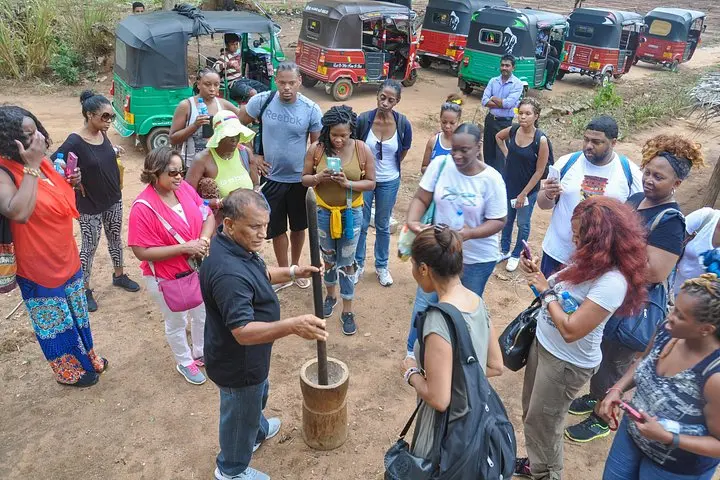
Beyond the fortress, the day eases into the countryside: a village tour takes you into patchwork rice fields, along earthen tracks, and onto an ox cart if you want it. You’ll try shortbread-like hoppers and learn how coconut sambal is pounded and brightened with lime. Later, Habarana Lake waits, a sedate mirror for kingfishers and herons. Birdwatching here is quiet work — you follow the reeds, binoculars pressed to your face, and listen as the lake announces the presence of painted storks or the quick, metallic call of a white-throated kingfisher.
Practical guidance: this is a long day — expect 9–10 hours round trip with hotel pickup in an air-conditioned vehicle. The Sigiriya climb involves uneven stone steps and metal staircases; allow two hours for ascent, exploration, and descent. Bring a liter of water (one is provided), sun protection, and light layers for early morning and late afternoon. Wear sturdy shoes with decent grip; the rock can be slick after rain and the fresco gallery requires careful movement. Respect local customs at village visits — ask before photographing people and take cues from your guide. For birding, bring binoculars and a field guide or app; Habarana’s wetlands are best in the cooler morning or late afternoon when birds are active.
This itinerary balances monumental history, rural culture, and a soft wilderness experience — all in a single, well-paced day. The rock demands attention, the village rewards curiosity, and the lake quietly reminds you how alive the lowlands can be.