THE ADVENTURE COLLECTIVE® · Independent discovery and booking for outdoor travel

Walk Newbury’s living history with an offline audio guide that leads you from the library mosaic to the Tudor Cloth Hall. Expect medieval churches, canal towpaths, market squares and Victorian civic architecture on a 90–120 minute self-guided route.
Walk Newbury’s living history with an offline audio guide that leads you from the library mosaic to the Tudor Cloth Hall. Expect medieval churches, canal towpaths, market squares and Victorian civic architecture on a 90–120 minute self-guided route.
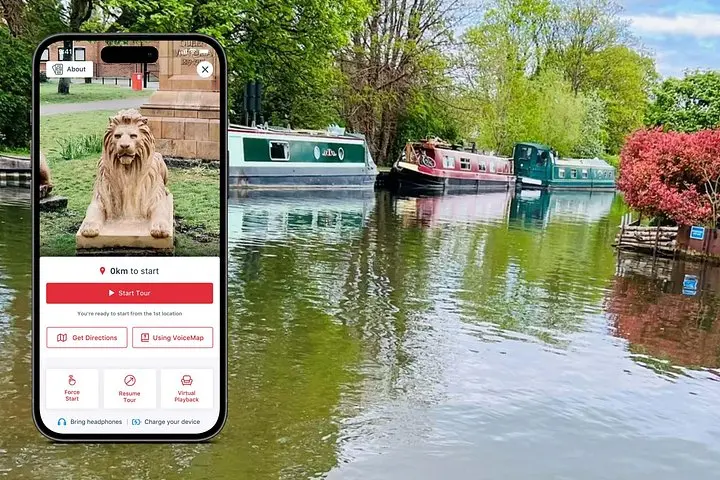
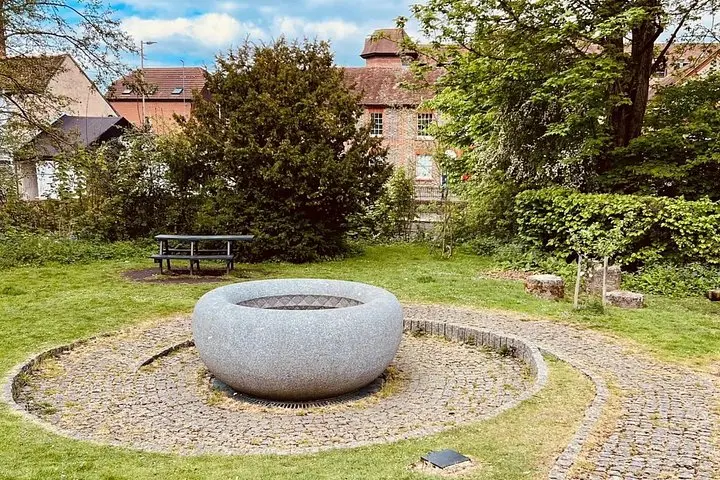
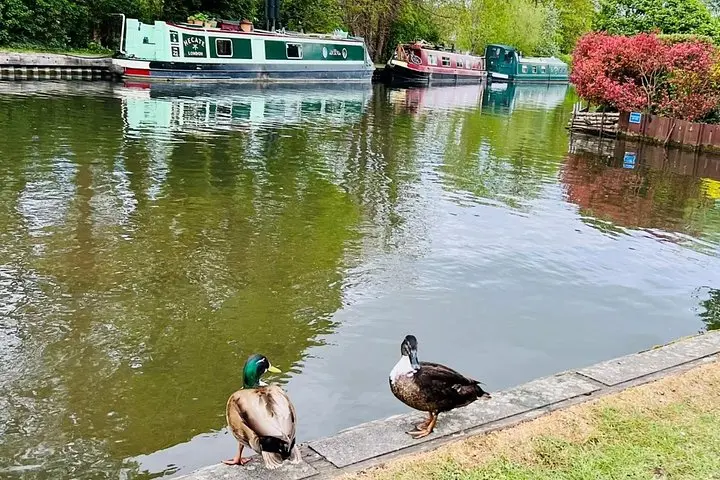
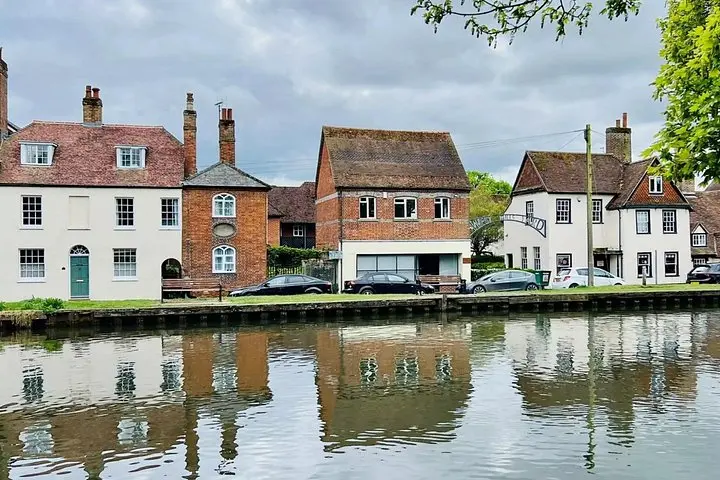
You begin at the large mosaic outside Newbury Library, the town unfurling ahead like pages in a field guide. Cobbled market lanes give way to Georgian facades, a proud medieval church towers into the sky, and the canal slips past with a low, confident glide that seems to dare you to follow.
Verified experiences and guided adventures in the surrounding area.
Operated by VoiceMap Audio Tours · Newbury, Berkshire
You begin at the large mosaic outside Newbury Library, the town unfurling ahead like pages in a field guide. Cobbled market lanes give way to Georgian facades, a proud medieval church towers into the sky, and the canal slips past with a low, confident glide that seems to dare you to follow.
This route traces nearly a millennium of place-making: a Saxon settlement that grew into a medieval market hub, the wealth of wool merchants who financed grand churches and the Tudor Cloth Hall crowned by the dragon weathervane 'Blaze.' Later Victorian prosperity stamped the town centre with Gothic Revival civic architecture, while the Kennet and Avon canal rewired local trade and linked Newbury to the wider region. Geologically, you walk the Kennet Valley—river terraces and chalk downland visible on the outskirts—terrain that shaped transport and settlement patterns for centuries.
The audio tour delivers architectural detail, anecdote, and practical orientation as you pass market stalls, the restored towpath, and the Victorian clock tower. Local color crops up—Michael Bond’s statue, lanes where canal commerce once hummed, and green spaces converted from medieval common land.
Practical tips: allow 90–120 minutes, bring a charged phone with downloaded offline maps and audio, and wear comfortable walking shoes for mixed paved and towpath surfaces. The route is wheelchair accessible in most parts, and stops at cafes and public toilets make pacing easy. Visit early to avoid market crowds, and leave time to linger at the Cloth Hall for exhibits on Newbury’s textile past.
The guided playback begins at the Newbury Library mosaic and concludes at the Tudor Cloth Hall in the town centre.
Most streets and key points are wheelchair accessible; the provider notes all areas and surfaces are accessible but check specific towpath sections for seasonally uneven patches.
Expect 90–120 minutes at a steady pace; allow extra time for museum stops, cafes or market browsing.
No—download the audio and maps in advance for offline use, which is recommended to avoid relying on local mobile coverage.
VoiceMap Audio Tours operates guided outdoor trips and adventures with an emphasis on safety, stewardship, and memorable experiences.
You begin at the large mosaic outside Newbury Library, the town unfurling ahead like pages in a field guide. Cobbled market lanes give way to Georgian facades, a proud medieval church towers into the sky, and the canal slips past with a low, confident glide that seems to dare you to follow.
You begin at the large mosaic outside Newbury Library, the town unfurling ahead like pages in a field guide. Cobbled market lanes give way to Georgian facades, a proud medieval church towers into the sky, and the canal slips past with a low, confident glide that seems to dare you to follow.
This route traces nearly a millennium of place-making: a Saxon settlement that grew into a medieval market hub, the wealth of wool merchants who financed grand churches and the Tudor Cloth Hall crowned by the dragon weathervane 'Blaze.' Later Victorian prosperity stamped the town centre with Gothic Revival civic architecture, while the Kennet and Avon canal rewired local trade and linked Newbury to the wider region. Geologically, you walk the Kennet Valley—river terraces and chalk downland visible on the outskirts—terrain that shaped transport and settlement patterns for centuries.
The audio tour delivers architectural detail, anecdote, and practical orientation as you pass market stalls, the restored towpath, and the Victorian clock tower. Local color crops up—Michael Bond’s statue, lanes where canal commerce once hummed, and green spaces converted from medieval common land.
Practical tips: allow 90–120 minutes, bring a charged phone with downloaded offline maps and audio, and wear comfortable walking shoes for mixed paved and towpath surfaces. The route is wheelchair accessible in most parts, and stops at cafes and public toilets make pacing easy. Visit early to avoid market crowds, and leave time to linger at the Cloth Hall for exhibits on Newbury’s textile past.