THE ADVENTURE COLLECTIVE® · Independent discovery and booking for outdoor travel

Walk between Punic sanctuaries, Roman baths, and ancient ports on a focused three-hour private tour of Carthage. Expect coastal limestone paths, mosaics, and guided interpretation that brings Punic and Roman layers to life.
Walk between Punic sanctuaries, Roman baths, and ancient ports on a focused three-hour private tour of Carthage. Expect coastal limestone paths, mosaics, and guided interpretation that brings Punic and Roman layers to life.
You step onto sun-warmed limestone above the Mediterranean; salt-scented wind pushes back your hair and a guide gestures toward a sweep of ruins that have faced these waters for millennia. The path moves between low stone walls, mosaics peeking from shaded rooms, and the ruined colonnades of baths that once hosted an empire.
Verified experiences and guided adventures in the surrounding area.
Operated by Le Lemon Tour · Carthage, Tunis
You step onto sun-warmed limestone above the Mediterranean; salt-scented wind pushes back your hair and a guide gestures toward a sweep of ruins that have faced these waters for millennia. The path moves between low stone walls, mosaics peeking from shaded rooms, and the ruined colonnades of baths that once hosted an empire.
Carthage began as a Phoenician trading post and grew into the capital of the Punic world before Roman conquest reshaped its street grid and monuments. Geology here is coastal limestone and clay terraces—fine for walking but prone to sharp edges and loose gravel in places. Culturally, the site layers Phoenician ritual spaces, the Tophet burial grounds, and expansive Roman engineering: ports, villas with mosaic floors, and the Antonine Baths facing the sea.
On a three-hour private walk you’ll move through the Punic sanctuary, the Magon quarter, the ancient ports and Antonine Baths, pause at Roman villas to study tessellated mosaics, and finish at the open-air theatre. The guide interprets material culture and points out erosion patterns and restoration efforts.
Practical notes: expect 2–4 miles of walking on uneven ground, minimal elevation, and generous sun exposure. Wear sturdy shoes, carry water and sunscreen, and plan this outing in the cooler morning or late afternoon to avoid the hottest hours. Bring a passport for admission and a charged phone for your mobile ticket; the private format means a focused pace and the chance to ask detailed historical questions.
Yes—this private tour includes admission to the specific points of interest listed in the itinerary, as noted in the tour details.
The tour lasts about 2–3 hours and typically covers 2–4 miles (3–6 km) on mostly flat but uneven terrain.
Mobile or paper tickets are accepted; bring the mobile ticket on your phone or a printed copy as backup.
The operator advises it is not recommended for travelers with poor cardiovascular health due to walking and warm conditions; consult the provider if in doubt.
Le Lemon Tour operates guided outdoor trips and adventures with an emphasis on safety, stewardship, and memorable experiences.
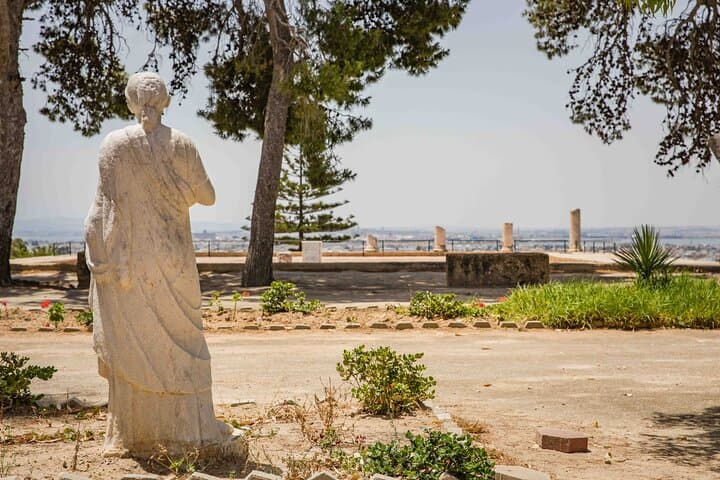


You step onto sun-warmed limestone above the Mediterranean; salt-scented wind pushes back your hair and a guide gestures toward a sweep of ruins that have faced these waters for millennia. The path moves between low stone walls, mosaics peeking from shaded rooms, and the ruined colonnades of baths that once hosted an empire.
You step onto sun-warmed limestone above the Mediterranean; salt-scented wind pushes back your hair and a guide gestures toward a sweep of ruins that have faced these waters for millennia. The path moves between low stone walls, mosaics peeking from shaded rooms, and the ruined colonnades of baths that once hosted an empire.
Carthage began as a Phoenician trading post and grew into the capital of the Punic world before Roman conquest reshaped its street grid and monuments. Geology here is coastal limestone and clay terraces—fine for walking but prone to sharp edges and loose gravel in places. Culturally, the site layers Phoenician ritual spaces, the Tophet burial grounds, and expansive Roman engineering: ports, villas with mosaic floors, and the Antonine Baths facing the sea.
On a three-hour private walk you’ll move through the Punic sanctuary, the Magon quarter, the ancient ports and Antonine Baths, pause at Roman villas to study tessellated mosaics, and finish at the open-air theatre. The guide interprets material culture and points out erosion patterns and restoration efforts.
Practical notes: expect 2–4 miles of walking on uneven ground, minimal elevation, and generous sun exposure. Wear sturdy shoes, carry water and sunscreen, and plan this outing in the cooler morning or late afternoon to avoid the hottest hours. Bring a passport for admission and a charged phone for your mobile ticket; the private format means a focused pace and the chance to ask detailed historical questions.