THE ADVENTURE COLLECTIVE® · Independent discovery and booking for outdoor travel

Spend a day hiking coastal cliffs and biodiversity-rich reserves north of Santiago. This guided tour pairs short, dramatic cliff walks with wildlife viewing, a local seafood lunch, and a beach finish at Playa Las Cujas.
Spend a day hiking coastal cliffs and biodiversity-rich reserves north of Santiago. This guided tour pairs short, dramatic cliff walks with wildlife viewing, a local seafood lunch, and a beach finish at Playa Las Cujas.
Salt wind carries the first light out over rocky terraces as you step off the minivan and onto a narrow coastal shoulder. The trail falls away toward the Pacific, alternating between low scrub and flat, eroded platforms that open like natural balconies to the sea. Gulls and the occasional shape of a resting sea lion punctuate the horizon; waves push and retreat with a steady, impatient patience.
Verified experiences and guided adventures in the surrounding area.
Operated by Larus.Travel · Los Molles, Valparaíso
Salt wind carries the first light out over rocky terraces as you step off the minivan and onto a narrow coastal shoulder. The trail falls away toward the Pacific, alternating between low scrub and flat, eroded platforms that open like natural balconies to the sea. Gulls and the occasional shape of a resting sea lion punctuate the horizon; waves push and retreat with a steady, impatient patience.
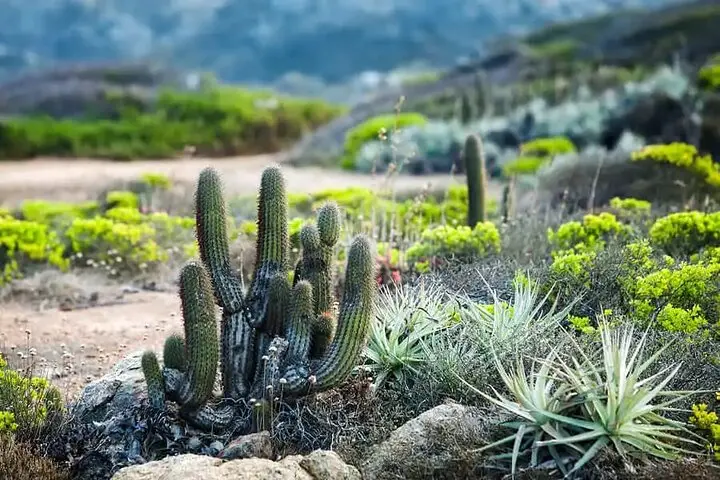
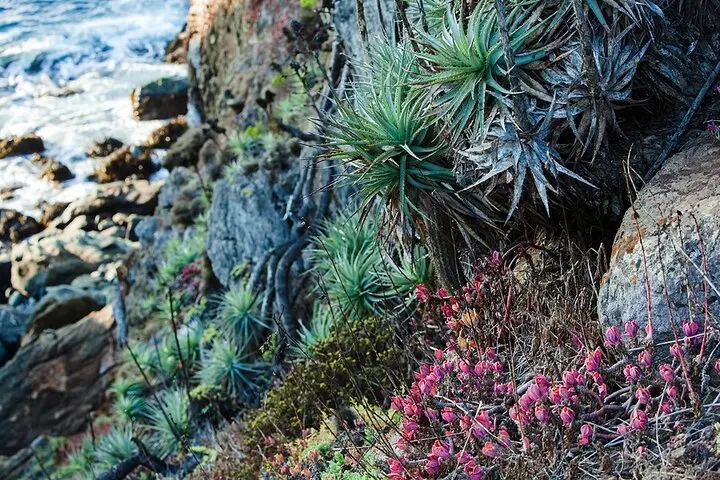
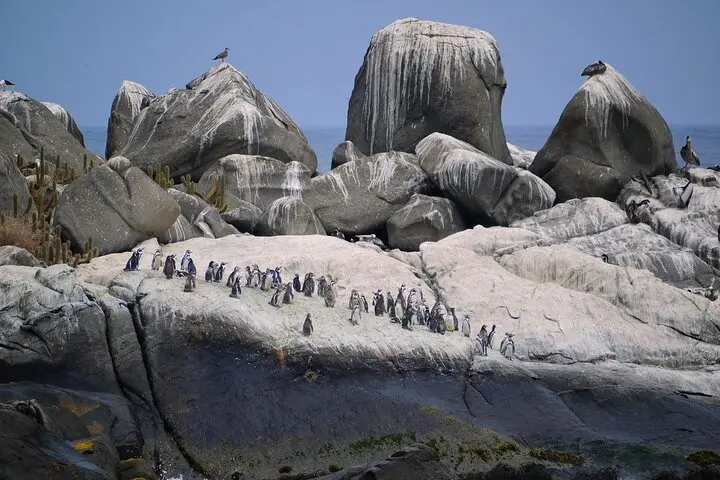
This stretch of Chile’s central coast is sculpted by strong currents and the Humboldt upwelling—the geology shows in steep cliffs, sandstone terraces, and vertical blowholes locals call “cold geysers.” The Puquén reserve protects roughly 300 species of plants and animals, many endemic or listed in Chile’s Red Book; further along, the Isla Cachagua natural monument shelters seabirds, including Humboldt penguins that depend on the productive coastal waters. The human history here mixes small fishing villages and coastal ranching, with place names preserved from indigenous Mapuche and coastal communities.
Expect an accessible day: a couple of hours of guided hiking along cliff-edge trails, wildlife observation from safe viewpoints, a village lunch of fresh seafood, and a gentle 1.5‑mile coastal walk ending at Playa Las Cujas. Bring sun protection, steady footwear for uneven sandstone and narrow paths, and binoculars for birdwatching. Timing matters—mornings are cooler and bird activity higher; bring layers for the changing wind and plan transport back to Santiago before dusk.
The guided route includes two short walking segments (roughly 1.5–2 hours and 1.5 miles) on uneven coastal trails; most people with basic mobility can complete it.
Yes—Isla Cachagua and nearby coastal shelves support seabirds and occasional Humboldt penguin sightings; sea lions are often visible from the shore platforms.
Yes—private transportation from Santiago and entrance fees specified in the tour inclusions are included in the booking.
Wear grippy shoes, layered clothing including a windproof outer layer, sun protection, and bring a refillable water bottle.
Larus.Travel operates guided outdoor trips and adventures with an emphasis on safety, stewardship, and memorable experiences.
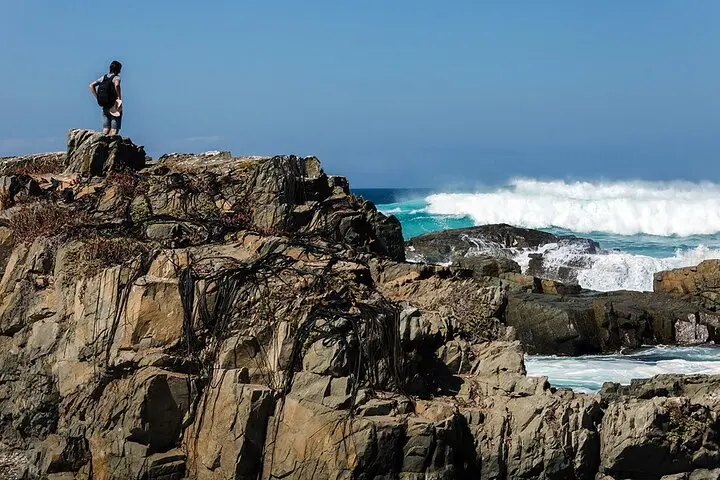
Salt wind carries the first light out over rocky terraces as you step off the minivan and onto a narrow coastal shoulder. The trail falls away toward the Pacific, alternating between low scrub and flat, eroded platforms that open like natural balconies to the sea. Gulls and the occasional shape of a resting sea lion punctuate the horizon; waves push and retreat with a steady, impatient patience.
Salt wind carries the first light out over rocky terraces as you step off the minivan and onto a narrow coastal shoulder. The trail falls away toward the Pacific, alternating between low scrub and flat, eroded platforms that open like natural balconies to the sea. Gulls and the occasional shape of a resting sea lion punctuate the horizon; waves push and retreat with a steady, impatient patience.
This stretch of Chile’s central coast is sculpted by strong currents and the Humboldt upwelling—the geology shows in steep cliffs, sandstone terraces, and vertical blowholes locals call “cold geysers.” The Puquén reserve protects roughly 300 species of plants and animals, many endemic or listed in Chile’s Red Book; further along, the Isla Cachagua natural monument shelters seabirds, including Humboldt penguins that depend on the productive coastal waters. The human history here mixes small fishing villages and coastal ranching, with place names preserved from indigenous Mapuche and coastal communities.
Expect an accessible day: a couple of hours of guided hiking along cliff-edge trails, wildlife observation from safe viewpoints, a village lunch of fresh seafood, and a gentle 1.5‑mile coastal walk ending at Playa Las Cujas. Bring sun protection, steady footwear for uneven sandstone and narrow paths, and binoculars for birdwatching. Timing matters—mornings are cooler and bird activity higher; bring layers for the changing wind and plan transport back to Santiago before dusk.