THE ADVENTURE COLLECTIVE® · Independent discovery and booking for outdoor travel

Ride the Coastal Pacific from Christchurch to Picton for raw coastal scenery where ocean meets mountains. This practical guide explains what to expect—timing, wildlife, carriage features and how to prepare for the wind-swept viewing decks.
Ride the Coastal Pacific from Christchurch to Picton for raw coastal scenery where ocean meets mountains. This practical guide explains what to expect—timing, wildlife, carriage features and how to prepare for the wind-swept viewing decks.
The carriage eases out of Christchurch and the city gives way to wide plains, then the sea takes over—white-capped and restless—pressing tight against a line of rail cut into cliffs. Passengers move to open-air viewing decks where wind and salt meet like old rivals; gulls wheel and the land leans up into the Seaward Kaikōura Range.
Verified experiences and guided adventures in the surrounding area.
Operated by Great Journeys New Zealand · Christchurch, Canterbury
The carriage eases out of Christchurch and the city gives way to wide plains, then the sea takes over—white-capped and restless—pressing tight against a line of rail cut into cliffs. Passengers move to open-air viewing decks where wind and salt meet like old rivals; gulls wheel and the land leans up into the Seaward Kaikōura Range.
This stretch of the South Island follows rail built in stages through the early 20th century to link coastal communities and ports. Geologically it reads as recent uplift and marine terraces: steep ranges thrust up from the Pacific by tectonic forces, beaches of cobble and sand shaped by strong coastal currents. Māori place names and Kaikōura’s fishing heritage mark the route—seafood towns and wharves still central to local life.
Expect long windows, GPS-triggered audio commentary, licensed café service and moments when the train hugs 98 km of exposed coastline. Trains run scheduled services that can take roughly 3¼ to 6¼ hours depending on the timetable and stops; check-in is advised at least 20 minutes before departure. The journey is accessible—wheelchair and stroller friendly—and infants may ride on laps.
Practical edge: dress in layers and bring wind protection for open decks, carry binoculars for seals, seabirds and offshore whales, and pack motion-sickness remedies if you’re prone. Cameras with spare batteries are useful—the light changes fast along the coast. The train is a low-effort way to experience dramatic geology and coastal wildlife while leaving the driving to someone else.
Schedules vary by service and stops; expect roughly 3.25 to 6.25 hours depending on the timetable and any intermediate station stops.
Yes—there is a licensed café carriage offering snacks and light meals for purchase, but you may prefer to bring your own food for dietary needs or longer runs.
The service is wheelchair accessible and stroller friendly; passengers should advise at booking if travelling with a wheelchair to ensure assistance.
This particular service lists all sales final with no refunds; review the booking terms before purchase and arrive at least 20 minutes prior to departure.
Great Journeys New Zealand operates guided outdoor trips and adventures with an emphasis on safety, stewardship, and memorable experiences.
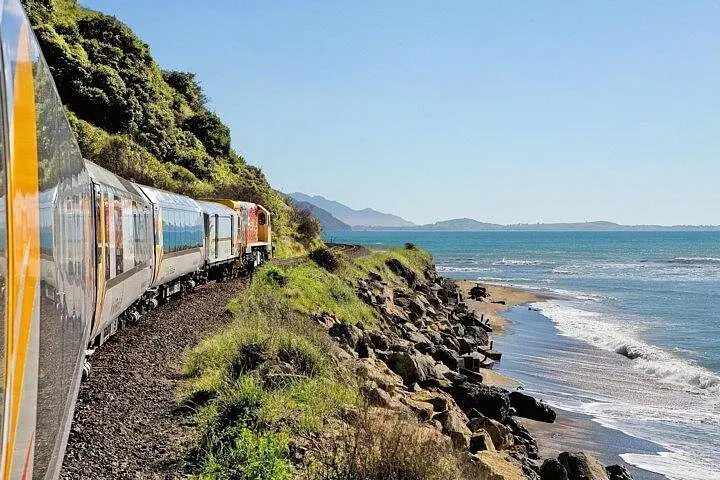
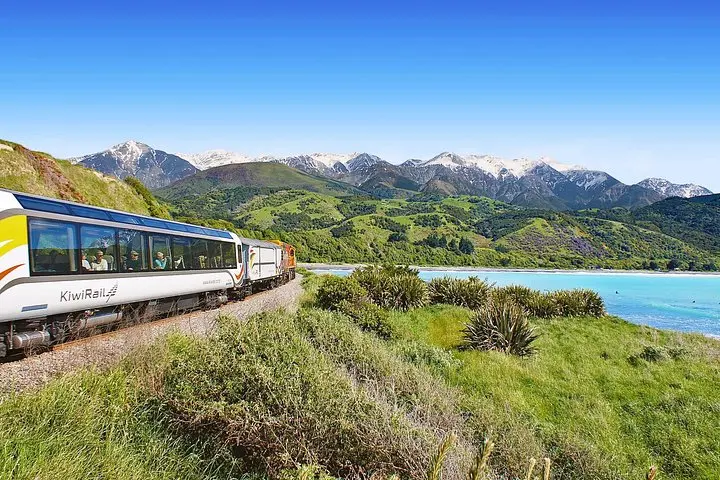
The carriage eases out of Christchurch and the city gives way to wide plains, then the sea takes over—white-capped and restless—pressing tight against a line of rail cut into cliffs. Passengers move to open-air viewing decks where wind and salt meet like old rivals; gulls wheel and the land leans up into the Seaward Kaikōura Range.
The carriage eases out of Christchurch and the city gives way to wide plains, then the sea takes over—white-capped and restless—pressing tight against a line of rail cut into cliffs. Passengers move to open-air viewing decks where wind and salt meet like old rivals; gulls wheel and the land leans up into the Seaward Kaikōura Range.
This stretch of the South Island follows rail built in stages through the early 20th century to link coastal communities and ports. Geologically it reads as recent uplift and marine terraces: steep ranges thrust up from the Pacific by tectonic forces, beaches of cobble and sand shaped by strong coastal currents. Māori place names and Kaikōura’s fishing heritage mark the route—seafood towns and wharves still central to local life.
Expect long windows, GPS-triggered audio commentary, licensed café service and moments when the train hugs 98 km of exposed coastline. Trains run scheduled services that can take roughly 3¼ to 6¼ hours depending on the timetable and stops; check-in is advised at least 20 minutes before departure. The journey is accessible—wheelchair and stroller friendly—and infants may ride on laps.
Practical edge: dress in layers and bring wind protection for open decks, carry binoculars for seals, seabirds and offshore whales, and pack motion-sickness remedies if you’re prone. Cameras with spare batteries are useful—the light changes fast along the coast. The train is a low-effort way to experience dramatic geology and coastal wildlife while leaving the driving to someone else.