THE ADVENTURE COLLECTIVE® · Independent discovery and booking for outdoor travel

Leave the coast for three days of big-country game drives across Tsavo East and Tsavo West. Expect dramatic geological features, rivers that collect hippos by the dozen, and close encounters with elephants, lions, and abundant birdlife.
Leave the coast for three days of big-country game drives across Tsavo East and Tsavo West. Expect dramatic geological features, rivers that collect hippos by the dozen, and close encounters with elephants, lions, and abundant birdlife.
Morning light strips the coast behind you and the land opens into a wide red plain where acacia crowns cut sharp silhouettes against the sky. Within hours the road leaves coconut palms and salt air behind; the savannah takes over, and the dry earth seems to hum with the promise of large-game sightings. Vehicles thread between termite mounds and riverine belts while elephants move like slow weather across the plains.
Verified experiences and guided adventures in the surrounding area.
Operated by Johnbow Tours And Travel · Voi, Taita-Taveta
Morning light strips the coast behind you and the land opens into a wide red plain where acacia crowns cut sharp silhouettes against the sky. Within hours the road leaves coconut palms and salt air behind; the savannah takes over, and the dry earth seems to hum with the promise of large-game sightings. Vehicles thread between termite mounds and riverine belts while elephants move like slow weather across the plains.
Tsavo’s story is both natural and human: the rail line and the legendary late-19th-century “man-eaters” of Tsavo shaped colonial memory, while volcanic forces left Shetani Lava’s black folds and the clear, life-giving Mzima Springs. Tsavo East’s open grasslands favor sprawling herds and the red-stained elephants that pass between the parks; Tsavo West introduces rocky ridges, green springs, and hippo-fed waterways.
Culturally, small towns and nearby lodge communities support conservation work and visitor services—expect game drives timed for dawn and dusk, two comfortable lodge nights (Voi Wildlife Lodge and Ngulia Safari Lodge are typical), and local guides who read spoor and patience alike.
Practical edge: bring neutral clothing, a good telephoto or binoculars, refillable water, and sun protection; game viewing is best early and late, while mid-day is rest time. Roads can be dusty or rough—private transport is included and lodges handle meals and permits. The trip is vehicle-based, accessible to most fitness levels, and rewards patience: here, animals set the pace and the landscape keeps your attention.
Private transport, two nights’ lodge accommodation, meals as listed (breakfasts, lunches, dinners), mineral water, park fees and guided game drives are typically included—confirm on booking.
Yes; the itinerary is vehicle-based and marked as suitable for all fitness levels, but check accessibility needs with the operator for transfers and lodge facilities.
Dry months (June–October and January–February) offer easier game-viewing as animals concentrate near water; the short rains (October–December) can improve birding but make some tracks dustier or muddier.
Visitors should check current health advisories—yellow fever proof may be required depending on origin, and routine vaccinations are recommended; visas for Kenya are generally obtained in advance online for many nationalities.
Johnbow Tours And Travel operates guided outdoor trips and adventures with an emphasis on safety, stewardship, and memorable experiences.
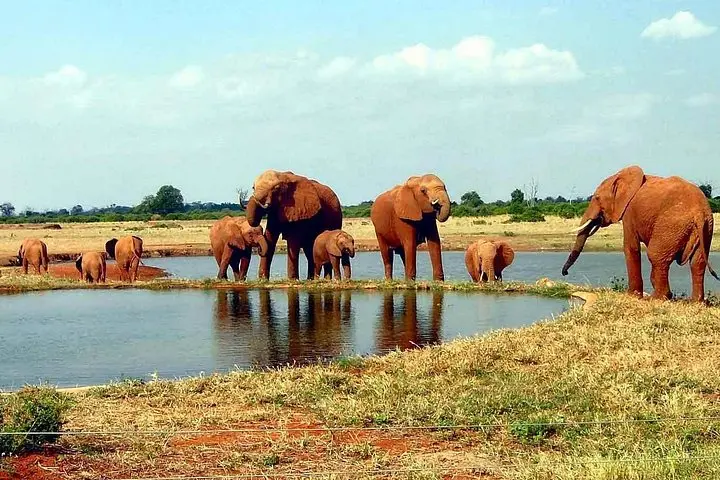
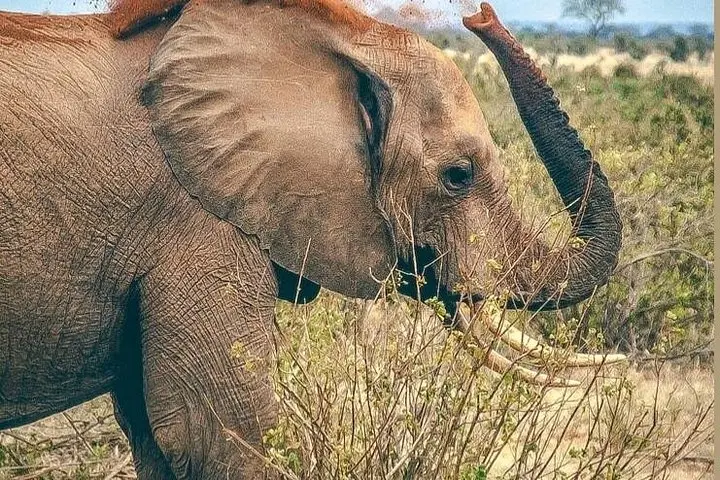
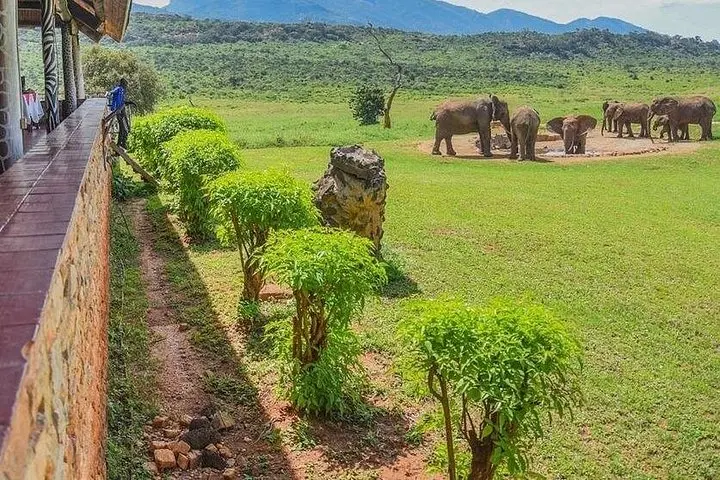
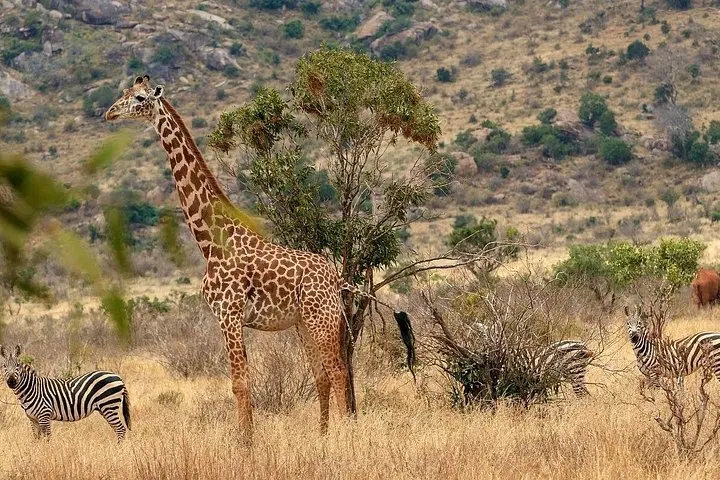
Morning light strips the coast behind you and the land opens into a wide red plain where acacia crowns cut sharp silhouettes against the sky. Within hours the road leaves coconut palms and salt air behind; the savannah takes over, and the dry earth seems to hum with the promise of large-game sightings. Vehicles thread between termite mounds and riverine belts while elephants move like slow weather across the plains.
Morning light strips the coast behind you and the land opens into a wide red plain where acacia crowns cut sharp silhouettes against the sky. Within hours the road leaves coconut palms and salt air behind; the savannah takes over, and the dry earth seems to hum with the promise of large-game sightings. Vehicles thread between termite mounds and riverine belts while elephants move like slow weather across the plains.
Tsavo’s story is both natural and human: the rail line and the legendary late-19th-century “man-eaters” of Tsavo shaped colonial memory, while volcanic forces left Shetani Lava’s black folds and the clear, life-giving Mzima Springs. Tsavo East’s open grasslands favor sprawling herds and the red-stained elephants that pass between the parks; Tsavo West introduces rocky ridges, green springs, and hippo-fed waterways.
Culturally, small towns and nearby lodge communities support conservation work and visitor services—expect game drives timed for dawn and dusk, two comfortable lodge nights (Voi Wildlife Lodge and Ngulia Safari Lodge are typical), and local guides who read spoor and patience alike.
Practical edge: bring neutral clothing, a good telephoto or binoculars, refillable water, and sun protection; game viewing is best early and late, while mid-day is rest time. Roads can be dusty or rough—private transport is included and lodges handle meals and permits. The trip is vehicle-based, accessible to most fitness levels, and rewards patience: here, animals set the pace and the landscape keeps your attention.