THE ADVENTURE COLLECTIVE® · Independent discovery and booking for outdoor travel

Take an open-air trike along the southwest coast of Mallorca for a five- to six-hour guided loop through the Serra de Tramuntana, seaside overlooks and quiet villages. Learn basic vehicle handling, stop for panoramic miradors and sample pockets of local culture away from the main resorts.
Take an open-air trike along the southwest coast of Mallorca for a five- to six-hour guided loop through the Serra de Tramuntana, seaside overlooks and quiet villages. Learn basic vehicle handling, stop for panoramic miradors and sample pockets of local culture away from the main resorts.
The road opens like a ribbon along the sea and the trike hums beneath you—three wheels, an open cockpit and wind that keeps conversation clipped to shouts and laughter. You move from scrubby coastal turns into the raw limestone shoulders of the Serra de Tramuntana, cliffs dropping to bays where the Mediterranean dares you to look over the rail.
Verified experiences and guided adventures in the surrounding area.
Operated by Trike & Quad Shop Paguera · Palma de Mallorca, Balearic Islands
The road opens like a ribbon along the sea and the trike hums beneath you—three wheels, an open cockpit and wind that keeps conversation clipped to shouts and laughter. You move from scrubby coastal turns into the raw limestone shoulders of the Serra de Tramuntana, cliffs dropping to bays where the Mediterranean dares you to look over the rail.
Mallorca's southwest has been shaped by maritime trade and mountain agriculture: terraces carved centuries ago, stone hamlets that grew around olive presses and fishing coves. The Tramuntana range is UNESCO-listed for its cultural landscape and the route passes villages—Esporles, Estellencs, Andratx—each with narrow streets and simple stone architecture that reflect a mix of Catalan and seafaring tradition.
Geologically the cliffs are folded limestone, eroded into steep ridgelines and hidden coves; sea-worn rock and pine scrub frame views of the Malgrats islets off Santa Ponsa. Culturally the area balances tourism with local fisheries and small-scale vineyards—stop at a mirador and you’ll see terraced fields and yacht masts in the same glance.
Practical guide: tours run 5–6 hours, helmets and cold drinks included; drivers must present a valid licence and be comfortable with hand-throttle operation. Roads in the Tramuntana are narrow and winding—take corners deliberately, keep speed moderate, and follow the guide. Bring layered sun protection, closed-toe shoes, and a small daypack for water and a camera. Expect frequent photo stops, short walks at viewpoints, and reachable seaside jetties where you can stretch legs and cool off.
Yes — the driver must present an original valid driving licence and be comfortable using a hand-throttle; passengers do not need a licence.
Each trike carries 1–3 people depending on configuration; children from 6 years old are permitted but cannot sit alone in the back.
The operator notes wheelchair accessibility for some areas, but the trikes themselves require stepping in; contact the operator to confirm specific needs.
Tours may be cancelled for bad weather or insufficient participants; cancel at least 24 hours for a full refund according to the policy.
Trike & Quad Shop Paguera operates guided outdoor trips and adventures with an emphasis on safety, stewardship, and memorable experiences.
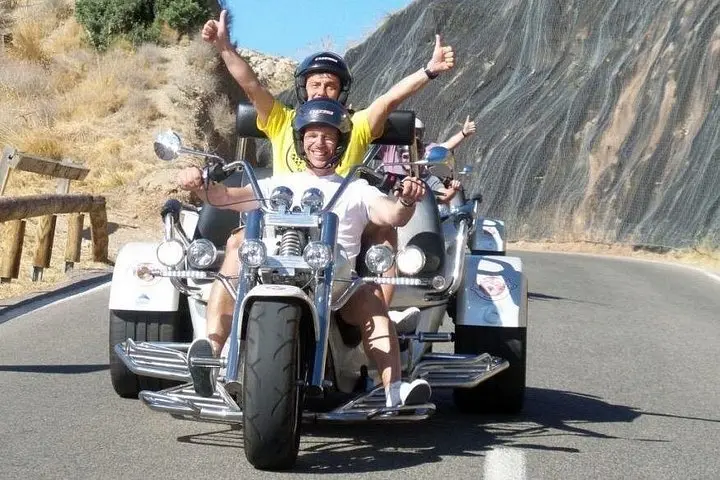

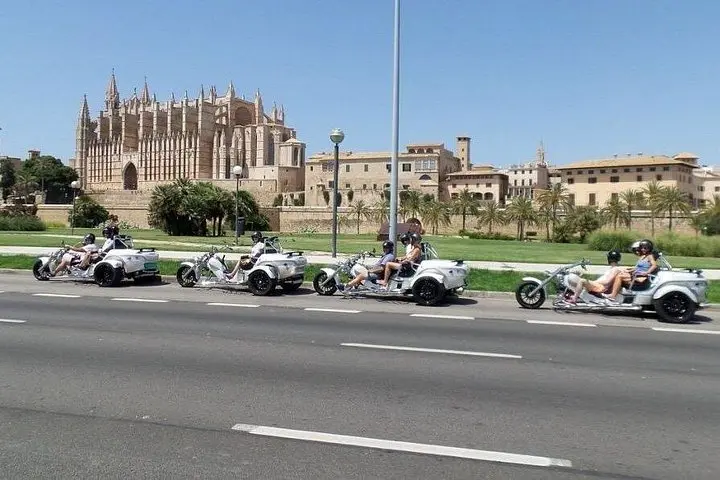
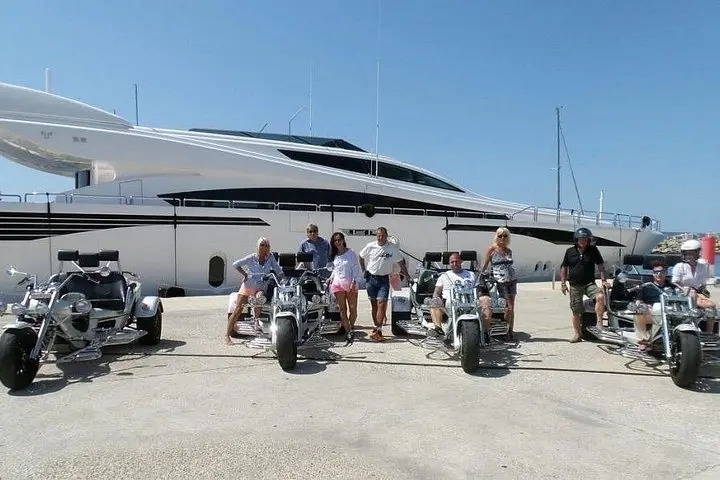
The road opens like a ribbon along the sea and the trike hums beneath you—three wheels, an open cockpit and wind that keeps conversation clipped to shouts and laughter. You move from scrubby coastal turns into the raw limestone shoulders of the Serra de Tramuntana, cliffs dropping to bays where the Mediterranean dares you to look over the rail.
The road opens like a ribbon along the sea and the trike hums beneath you—three wheels, an open cockpit and wind that keeps conversation clipped to shouts and laughter. You move from scrubby coastal turns into the raw limestone shoulders of the Serra de Tramuntana, cliffs dropping to bays where the Mediterranean dares you to look over the rail.
Mallorca's southwest has been shaped by maritime trade and mountain agriculture: terraces carved centuries ago, stone hamlets that grew around olive presses and fishing coves. The Tramuntana range is UNESCO-listed for its cultural landscape and the route passes villages—Esporles, Estellencs, Andratx—each with narrow streets and simple stone architecture that reflect a mix of Catalan and seafaring tradition.
Geologically the cliffs are folded limestone, eroded into steep ridgelines and hidden coves; sea-worn rock and pine scrub frame views of the Malgrats islets off Santa Ponsa. Culturally the area balances tourism with local fisheries and small-scale vineyards—stop at a mirador and you’ll see terraced fields and yacht masts in the same glance.
Practical guide: tours run 5–6 hours, helmets and cold drinks included; drivers must present a valid licence and be comfortable with hand-throttle operation. Roads in the Tramuntana are narrow and winding—take corners deliberately, keep speed moderate, and follow the guide. Bring layered sun protection, closed-toe shoes, and a small daypack for water and a camera. Expect frequent photo stops, short walks at viewpoints, and reachable seaside jetties where you can stretch legs and cool off.