THE ADVENTURE COLLECTIVE® · Independent discovery and booking for outdoor travel

A compact seaside via ferrata on the Costa Brava that threads limestone cliffs and pine-scented ledges. This guided 3–4 hour route pairs technical exposure with Mediterranean views, ideal for hikers wanting an introduction to aided climbing.
A compact seaside via ferrata on the Costa Brava that threads limestone cliffs and pine-scented ledges. This guided 3–4 hour route pairs technical exposure with Mediterranean views, ideal for hikers wanting an introduction to aided climbing.
You step off the trail and hear the Mediterranean before you see it — a bright ribbon of water flashing against limestone teeth. The route at Cala del Molí runs along sea-scrubbed cliffs and through a pine fringe, alternating short vertical pitches, exposed ledges and a suspended bridge that looks down onto wave-sculpted coves.
Verified experiences and guided adventures in the surrounding area.
Operated by eXperiencies Costa Brava · Sant Feliu de Guíxols, Catalonia
You step off the trail and hear the Mediterranean before you see it — a bright ribbon of water flashing against limestone teeth. The route at Cala del Molí runs along sea-scrubbed cliffs and through a pine fringe, alternating short vertical pitches, exposed ledges and a suspended bridge that looks down onto wave-sculpted coves.
The ferrata tradition in northern Spain borrows from Alpine practice but here it’s colored by the Costa Brava’s fisher-village history: centuries of coastal paths that linked small harbors and watchposts. The cliffs are Cretaceous and Miocene limestones, fractured and karst-carved, offering pockets and edges where engineers placed rungs and cables to make the cliffs accessible.
Locals prize this stretch for its shoreward views and compact, technical lines; guides often point out the old shepherd trails and remnants of WWII coastal defenses. Expect sea breezes that can shift quickly, salt on your gloves and the call of gulls as constant companions.
Practically, the tour runs 3–4 hours with a two-minute approach from the meeting point. Guides outfit you with harness, lanyards and helmet, walk through clipping technique and lead you through two sections—an introductory traverse and a more demanding cliff run. Moderate fitness, steady footing and no severe fear of exposure are required.
Bring layered clothing, sturdy shoes with grippy soles, and plan hydration and sun protection: water and snacks are provided, but you’ll feel better carrying your own supply. Morning or late-afternoon departures reduce peak sun and make the sea glow from the cliff’s edge.
No technical climbing experience is required—guides teach use of the harness, lanyards and clipping technique; a basic comfort with exposure is helpful.
The tour requires a minimum height around 1.50 m (check specific booking requirements); guides set age and ability limits for safety.
Sant Feliu de Guíxols is accessible by regional bus from Girona; Barcelona is about 1.5–2 hours by car or public transport plus a local transfer—confirm meeting point details with your operator.
Operators cancel for poor weather that makes the route unsafe and offer full refunds if canceled at least 24 hours in advance; confirm the provider’s policy when booking.
eXperiencies Costa Brava operates guided outdoor trips and adventures with an emphasis on safety, stewardship, and memorable experiences.
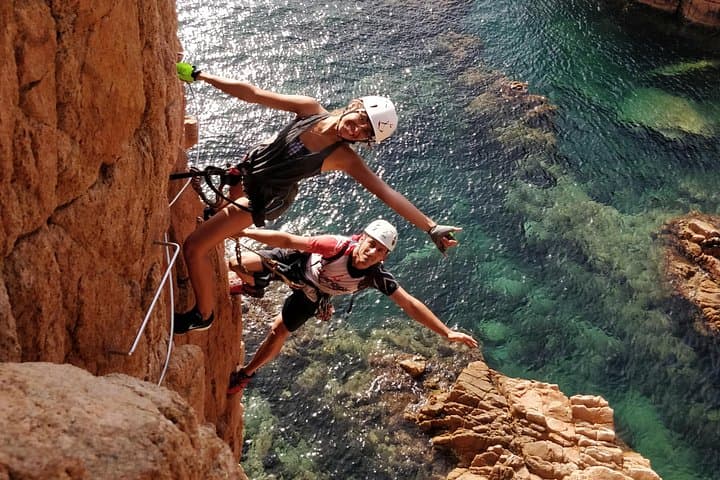


You step off the trail and hear the Mediterranean before you see it — a bright ribbon of water flashing against limestone teeth. The route at Cala del Molí runs along sea-scrubbed cliffs and through a pine fringe, alternating short vertical pitches, exposed ledges and a suspended bridge that looks down onto wave-sculpted coves.
You step off the trail and hear the Mediterranean before you see it — a bright ribbon of water flashing against limestone teeth. The route at Cala del Molí runs along sea-scrubbed cliffs and through a pine fringe, alternating short vertical pitches, exposed ledges and a suspended bridge that looks down onto wave-sculpted coves.
The ferrata tradition in northern Spain borrows from Alpine practice but here it’s colored by the Costa Brava’s fisher-village history: centuries of coastal paths that linked small harbors and watchposts. The cliffs are Cretaceous and Miocene limestones, fractured and karst-carved, offering pockets and edges where engineers placed rungs and cables to make the cliffs accessible.
Locals prize this stretch for its shoreward views and compact, technical lines; guides often point out the old shepherd trails and remnants of WWII coastal defenses. Expect sea breezes that can shift quickly, salt on your gloves and the call of gulls as constant companions.
Practically, the tour runs 3–4 hours with a two-minute approach from the meeting point. Guides outfit you with harness, lanyards and helmet, walk through clipping technique and lead you through two sections—an introductory traverse and a more demanding cliff run. Moderate fitness, steady footing and no severe fear of exposure are required.
Bring layered clothing, sturdy shoes with grippy soles, and plan hydration and sun protection: water and snacks are provided, but you’ll feel better carrying your own supply. Morning or late-afternoon departures reduce peak sun and make the sea glow from the cliff’s edge.