THE ADVENTURE COLLECTIVE® · Independent discovery and booking for outdoor travel

Experience Mallorca’s rocky edge with a guided coasteering tour—scramble rock ledges, enter sea caves, and progress from low jumps to higher drops under professional supervision. This three-hour outing pairs snorkeling and abseils with local coastal geology and practical safety.
Experience Mallorca’s rocky edge with a guided coasteering tour—scramble rock ledges, enter sea caves, and progress from low jumps to higher drops under professional supervision. This three-hour outing pairs snorkeling and abseils with local coastal geology and practical safety.
A rash of salt wind and spray hits first—rock teeth and smooth ledges alternate as the group moves along a raw stretch of Mallorcan coast. The sea dares you from below: a small cove, a narrow cave mouth, a low platform that leads to a clean drop into aquamarine water. Guides set the pace, pointing out footholds, timing jumps and calling out currents as participants rotate through climbs, swims, abseils and controlled falls.
Verified experiences and guided adventures in the surrounding area.
Operated by Mon d'Aventura · Palma, Balearic Islands
A rash of salt wind and spray hits first—rock teeth and smooth ledges alternate as the group moves along a raw stretch of Mallorcan coast. The sea dares you from below: a small cove, a narrow cave mouth, a low platform that leads to a clean drop into aquamarine water. Guides set the pace, pointing out footholds, timing jumps and calling out currents as participants rotate through climbs, swims, abseils and controlled falls.
Mallorca’s coastline is largely Miocene limestone shaped by tectonic uplift and millennia of wave action; narrow inlets and sea caves were once hidden harbors for local fishermen and, in earlier centuries, smugglers. The work of wind and water leaves pocketed rock, overhangs and pebble beaches that make coasteering here both technical and scenic. Local culture still values the sea—many coastal villages retain small harbors and fishing traditions that riders will spot from high ledges.
Practically, expect a 3‑hour guided outing that blends short scrambles with timed cliff jumps (levels usually start low and build to higher platforms), snorkeling in calm stretches and one or two assisted abseils into water. Guides provide safety briefings, helmets and buoyancy aids, and they choose routes based on tide and swell.
Plan to arrive in swimwear with a spare change of clothes, wear closed-toe water shoes and use reef-safe sunscreen. If you’re comfortable swimming in open water and have a basic level of fitness, this is an accessible, adrenaline-rich way to read the coast from its edge while staying anchored in safety protocols.
No; guides teach basic techniques on site and routes are chosen to match group ability, though comfort with heights helps.
Basic swimming ability is required because the route includes open-water swims and water entries; flotation devices are provided but you must be able to float and follow instructions.
Heights vary by route and conditions; guides typically progress from low (1–2 m) to higher jumps (up to ~8–10 m) only for those who opt in and demonstrate readiness.
Tours are adjusted or cancelled if swell, wind or visibility make the route unsafe; operators prioritize safety and will reschedule when possible.
Mon d'Aventura operates guided outdoor trips and adventures with an emphasis on safety, stewardship, and memorable experiences.
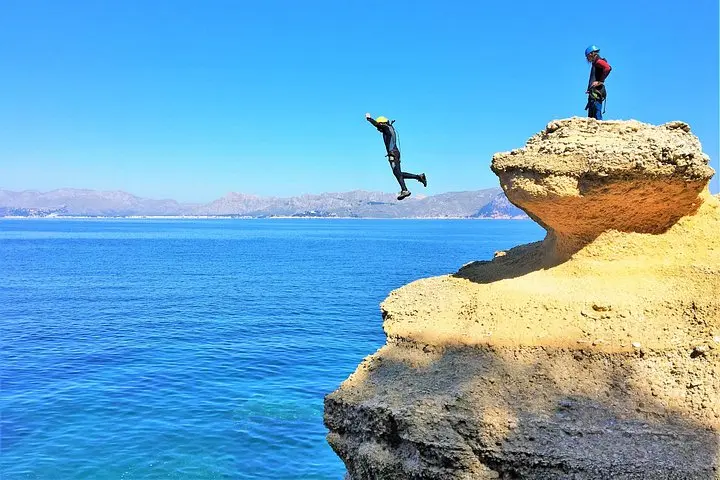
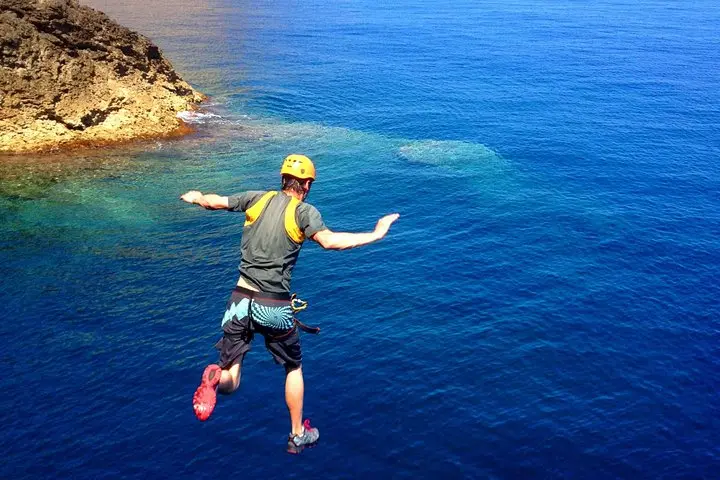
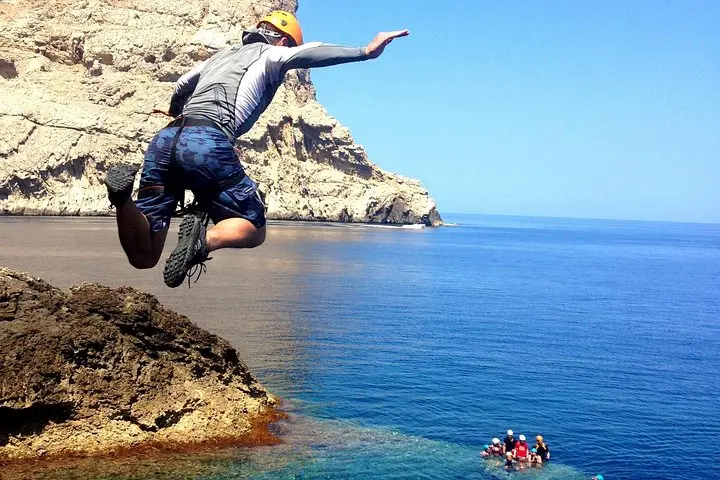
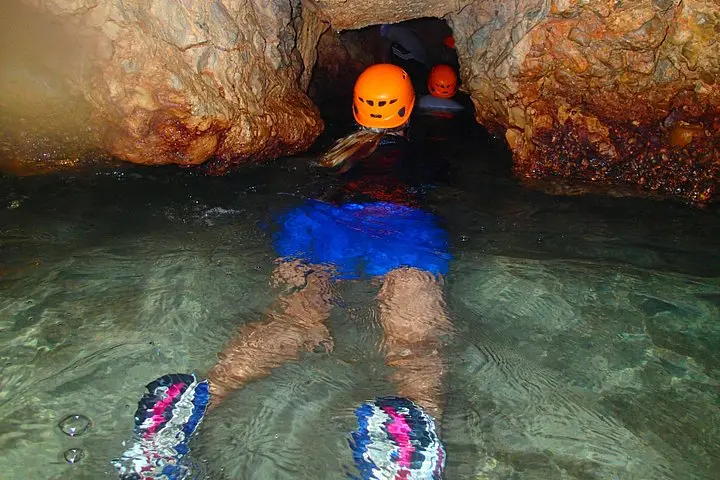
A rash of salt wind and spray hits first—rock teeth and smooth ledges alternate as the group moves along a raw stretch of Mallorcan coast. The sea dares you from below: a small cove, a narrow cave mouth, a low platform that leads to a clean drop into aquamarine water. Guides set the pace, pointing out footholds, timing jumps and calling out currents as participants rotate through climbs, swims, abseils and controlled falls.
A rash of salt wind and spray hits first—rock teeth and smooth ledges alternate as the group moves along a raw stretch of Mallorcan coast. The sea dares you from below: a small cove, a narrow cave mouth, a low platform that leads to a clean drop into aquamarine water. Guides set the pace, pointing out footholds, timing jumps and calling out currents as participants rotate through climbs, swims, abseils and controlled falls.
Mallorca’s coastline is largely Miocene limestone shaped by tectonic uplift and millennia of wave action; narrow inlets and sea caves were once hidden harbors for local fishermen and, in earlier centuries, smugglers. The work of wind and water leaves pocketed rock, overhangs and pebble beaches that make coasteering here both technical and scenic. Local culture still values the sea—many coastal villages retain small harbors and fishing traditions that riders will spot from high ledges.
Practically, expect a 3‑hour guided outing that blends short scrambles with timed cliff jumps (levels usually start low and build to higher platforms), snorkeling in calm stretches and one or two assisted abseils into water. Guides provide safety briefings, helmets and buoyancy aids, and they choose routes based on tide and swell.
Plan to arrive in swimwear with a spare change of clothes, wear closed-toe water shoes and use reef-safe sunscreen. If you’re comfortable swimming in open water and have a basic level of fitness, this is an accessible, adrenaline-rich way to read the coast from its edge while staying anchored in safety protocols.