THE ADVENTURE COLLECTIVE® · Independent discovery and booking for outdoor travel

An immersive 3-day trek through Colca Canyon from Arequipa to Puno—see condors at Cruz del Cóndor, hike to the Sangalle oasis and soak in Andean hot springs. Expect steep descents, high-altitude passes and close encounters with traditional canyon villages.
An immersive 3-day trek through Colca Canyon from Arequipa to Puno—see condors at Cruz del Cóndor, hike to the Sangalle oasis and soak in Andean hot springs. Expect steep descents, high-altitude passes and close encounters with traditional canyon villages.
The jeep slips out of Arequipa before dawn and the Andean morning opens up: a high volcanic rim at 4,800 m, chill air that pricks the lungs, and a road that drops toward a canyon so deep the river seems to whisper from another world.
Verified experiences and guided adventures in the surrounding area.
Operated by IZI PERU · Cabanaconde, Arequipa Region
The jeep slips out of Arequipa before dawn and the Andean morning opens up: a high volcanic rim at 4,800 m, chill air that pricks the lungs, and a road that drops toward a canyon so deep the river seems to whisper from another world.
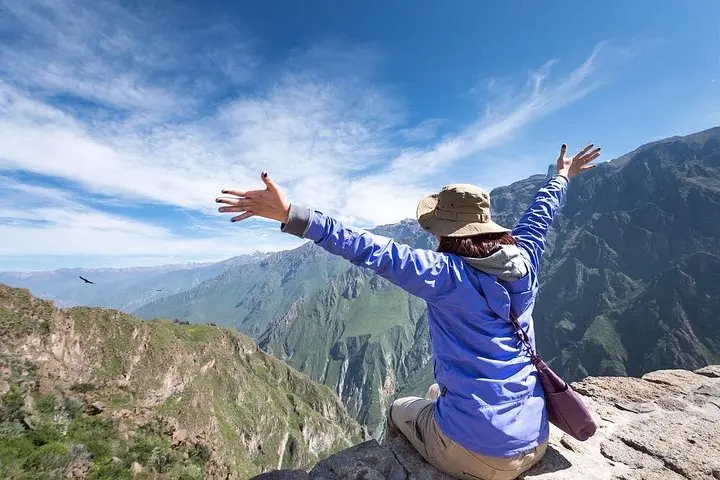
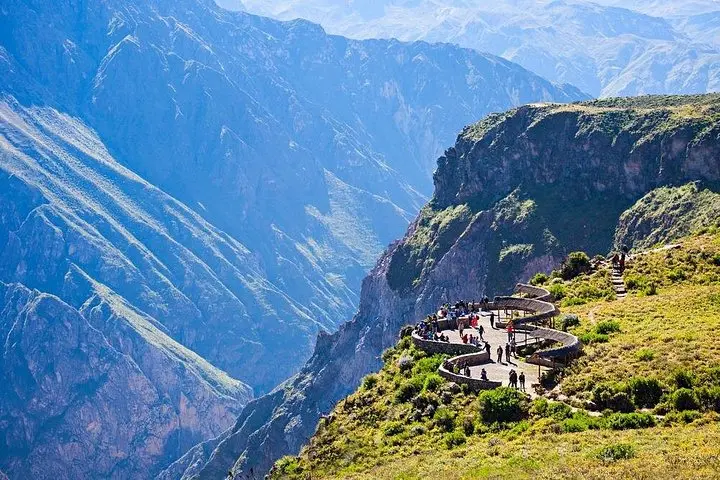
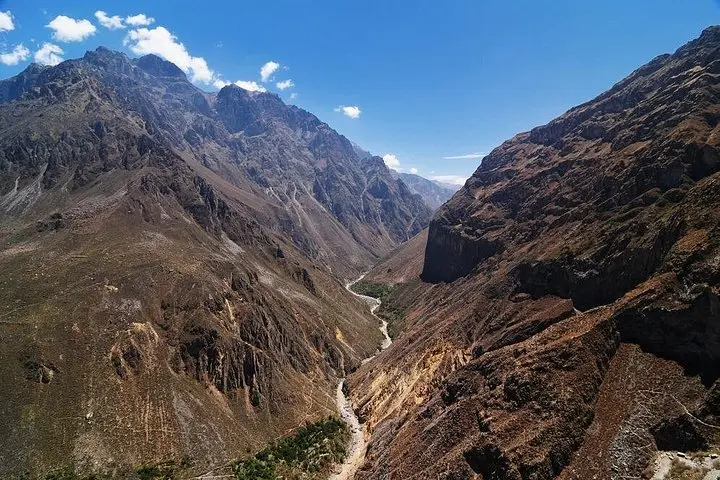
Over three days this route threads volcanic viewpoints, colonial villages and the Cruz del Cóndor lookout where the canyon widens and condors wheel with patient authority. Geologically the Colca is a carved fault escarpment — layered volcanic rock and sediment cut by the Colca River — that creates steep terraces (andenes) and sudden elevation shifts. Local Quechua-descended communities—Cabanaconde, Chivay, Pinchollo—keep traditional agriculture and handicrafts alive; you’ll cross a suspension bridge and pass small fields irrigated by ancient canals.
Expect steep stone steps, loose scree and narrow switchbacks: Day 1 includes a 3–4 hour hike from the canyon rim toward San Juan de Chuccho (roughly 6–10 km with 700–900 m descent sections). Day 2 drops to the Oasis of Sangalle (approx. 1,000–1,200 m net descent, 2–3 hours) where natural pools hover around 20°C. Day 3 is a steady 2–3 hour ascent back to Cabanaconde before the return to Chivay and the La Calera hot springs.
Practical edge: altitude is the real challenge—acclimatize in Arequipa, carry 2–3 L water, use trekking poles and sturdy shoes, and plan slow pace on ascents. Early starts, layered sun protection and cash for small village expenses round out a trip that balances raw geology, highland culture and wildlife spectacle.
The return involves sustained uphill for about 2–3 hours with roughly 800–1,200 m of elevation gain depending on start point; go slowly and use poles.
Yes—the Cruz del Cóndor viewpoint is the best spot to observe Andean condors; sightings are common in calm morning thermals but never guaranteed.
Visits to La Calera hot springs near Chivay are part of the itinerary on day 3, though entry fees or extra time may depend on schedule and group choices.
Moderate hiking experience is recommended: trails are uneven and altitude is significant, but technical climbing skills are not required.
IZI PERU operates guided outdoor trips and adventures with an emphasis on safety, stewardship, and memorable experiences.
The jeep slips out of Arequipa before dawn and the Andean morning opens up: a high volcanic rim at 4,800 m, chill air that pricks the lungs, and a road that drops toward a canyon so deep the river seems to whisper from another world.
The jeep slips out of Arequipa before dawn and the Andean morning opens up: a high volcanic rim at 4,800 m, chill air that pricks the lungs, and a road that drops toward a canyon so deep the river seems to whisper from another world.
Over three days this route threads volcanic viewpoints, colonial villages and the Cruz del Cóndor lookout where the canyon widens and condors wheel with patient authority. Geologically the Colca is a carved fault escarpment — layered volcanic rock and sediment cut by the Colca River — that creates steep terraces (andenes) and sudden elevation shifts. Local Quechua-descended communities—Cabanaconde, Chivay, Pinchollo—keep traditional agriculture and handicrafts alive; you’ll cross a suspension bridge and pass small fields irrigated by ancient canals.
Expect steep stone steps, loose scree and narrow switchbacks: Day 1 includes a 3–4 hour hike from the canyon rim toward San Juan de Chuccho (roughly 6–10 km with 700–900 m descent sections). Day 2 drops to the Oasis of Sangalle (approx. 1,000–1,200 m net descent, 2–3 hours) where natural pools hover around 20°C. Day 3 is a steady 2–3 hour ascent back to Cabanaconde before the return to Chivay and the La Calera hot springs.
Practical edge: altitude is the real challenge—acclimatize in Arequipa, carry 2–3 L water, use trekking poles and sturdy shoes, and plan slow pace on ascents. Early starts, layered sun protection and cash for small village expenses round out a trip that balances raw geology, highland culture and wildlife spectacle.