THE ADVENTURE COLLECTIVE® · Independent discovery and booking for outdoor travel

Spend a full day exploring Colca Canyon’s towering walls, watch Andean condors wheel from the miradors, soak in Yanque’s hot springs, and visit traditional villages. This accessible but long day trip pairs dramatic geology with living highland culture.
Spend a full day exploring Colca Canyon’s towering walls, watch Andean condors wheel from the miradors, soak in Yanque’s hot springs, and visit traditional villages. This accessible but long day trip pairs dramatic geology with living highland culture.
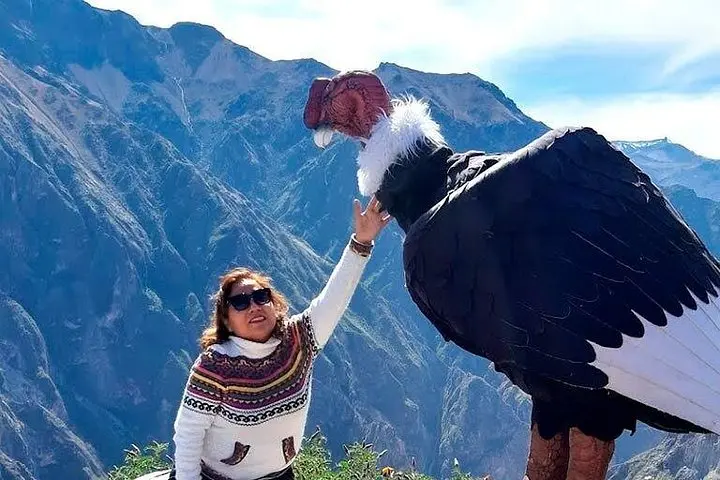
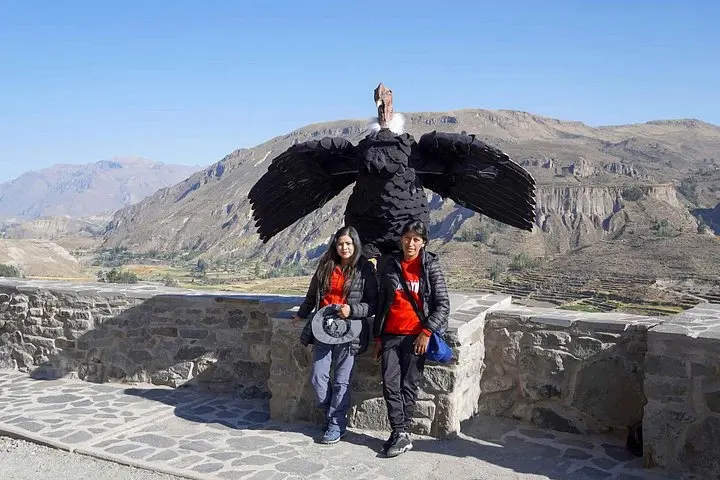
The day opens before dawn as the bus climbs from dusty highland roads into a thinning air that seems to sharpen color. By the time the first mirador arrives, the canyon is a carved wound in the earth: sheer walls stepping down into light and shadow, and the wind already tuning the valley. The condors arrive like slow punctuation—broad wings catching thermals and daring you to follow.
Verified experiences and guided adventures in the surrounding area.
Operated by Descubriendo Destinos · Chivay, Arequipa
The day opens before dawn as the bus climbs from dusty highland roads into a thinning air that seems to sharpen color. By the time the first mirador arrives, the canyon is a carved wound in the earth: sheer walls stepping down into light and shadow, and the wind already tuning the valley. The condors arrive like slow punctuation—broad wings catching thermals and daring you to follow.
Colca is ancient carved landscape and living culture. Pre-Inca and Inca terraces quilt the slopes, proof of agricultural engineering that keeps communities fed at altitude. Geologically, the canyon is a collision story: uplifted volcanic ranges and river incision have created one of the world’s deepest canyons, with viewpoints that reveal layers of volcanic ash, tufa, and compacted sediment.
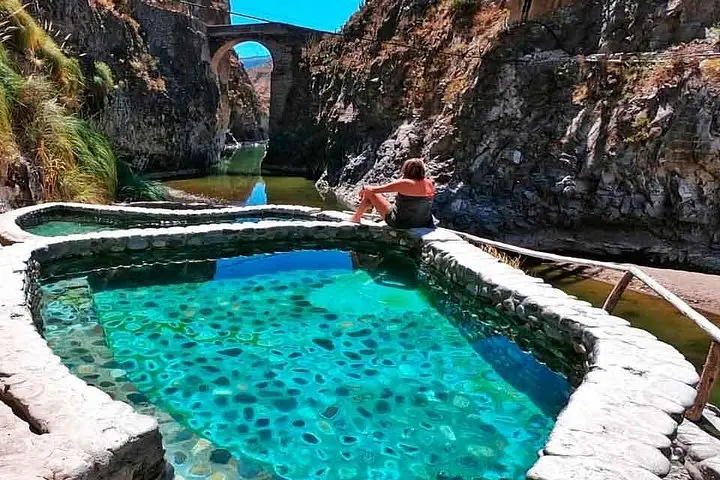
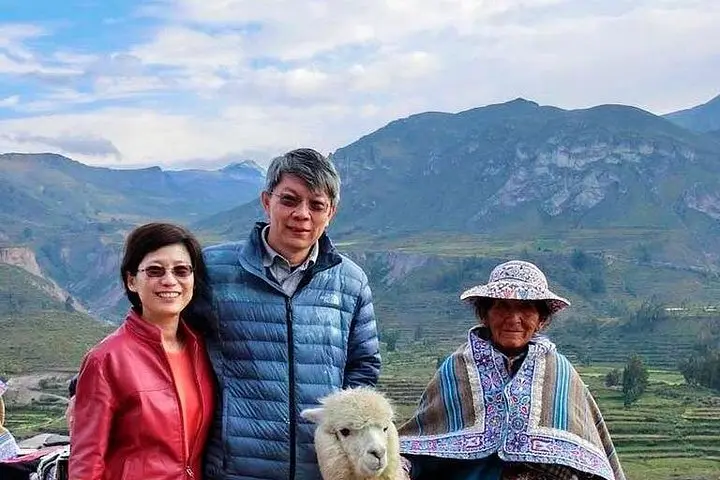
Villages such as Yanque and Chivay retain colonial churches, bustling local markets, and the gentle economy of alpaca and llama herding. Hot springs in Yanque—35–38°C—offer practical relief after a long morning of sightseeing.
Practical guidance: this is a long day (14+ hours) with a high-point at Patapampa (~4,910 m); expect cold, strong sun, and limited walking—mostly short viewpoint trails and village strolls. Bring sun protection, water, and layered clothing. Allow time to acclimatize if coming from sea level; altitude is the main challenge rather than technical difficulty.
Plan for early departures, a mix of photo stops and short hikes, and modest local meals. Respect terraces and livestock, keep a slow pace, and you'll leave with condor photos and a clearer sense of how people live with the Andes’ big geometry.
The itinerary is a full-day trip of roughly 14–15 hours, typically returning to the pickup point in the evening; exact times depend on pickup location and traffic.
Yes—walking is light and the tour is marketed as suitable for all fitness levels, but families should be mindful of altitude and bring appropriate supplies.
Condors are frequent at the main mirador, especially in morning thermals, but sightings cannot be guaranteed; guides choose prime viewing times to maximize the chance.
Breakfast and guide services are included; hot spring access is usually available but check whether entry fees or optional swims are covered on your booking.
Descubriendo Destinos operates guided outdoor trips and adventures with an emphasis on safety, stewardship, and memorable experiences.
The day opens before dawn as the bus climbs from dusty highland roads into a thinning air that seems to sharpen color. By the time the first mirador arrives, the canyon is a carved wound in the earth: sheer walls stepping down into light and shadow, and the wind already tuning the valley. The condors arrive like slow punctuation—broad wings catching thermals and daring you to follow.
The day opens before dawn as the bus climbs from dusty highland roads into a thinning air that seems to sharpen color. By the time the first mirador arrives, the canyon is a carved wound in the earth: sheer walls stepping down into light and shadow, and the wind already tuning the valley. The condors arrive like slow punctuation—broad wings catching thermals and daring you to follow.
Colca is ancient carved landscape and living culture. Pre-Inca and Inca terraces quilt the slopes, proof of agricultural engineering that keeps communities fed at altitude. Geologically, the canyon is a collision story: uplifted volcanic ranges and river incision have created one of the world’s deepest canyons, with viewpoints that reveal layers of volcanic ash, tufa, and compacted sediment.
Villages such as Yanque and Chivay retain colonial churches, bustling local markets, and the gentle economy of alpaca and llama herding. Hot springs in Yanque—35–38°C—offer practical relief after a long morning of sightseeing.
Practical guidance: this is a long day (14+ hours) with a high-point at Patapampa (~4,910 m); expect cold, strong sun, and limited walking—mostly short viewpoint trails and village strolls. Bring sun protection, water, and layered clothing. Allow time to acclimatize if coming from sea level; altitude is the main challenge rather than technical difficulty.
Plan for early departures, a mix of photo stops and short hikes, and modest local meals. Respect terraces and livestock, keep a slow pace, and you'll leave with condor photos and a clearer sense of how people live with the Andes’ big geometry.