THE ADVENTURE COLLECTIVE® · Independent discovery and booking for outdoor travel

Glide past Cologne’s cathedral, riverside museums and Hohenzollern Bridge on a compact one-hour Rhine cruise. Learn the city’s 2,000-year history via onboard audio while enjoying panoramic deck views and the option to sample a local Kölsch.
Glide past Cologne’s cathedral, riverside museums and Hohenzollern Bridge on a compact one-hour Rhine cruise. Learn the city’s 2,000-year history via onboard audio while enjoying panoramic deck views and the option to sample a local Kölsch.
The boat slips away from the quay and the Rhine takes the lead: barges drift like slow punctuation, riverbanks sliding past with the cathedral rising as the steady climax of the city skyline. In one hour the cruise traces Cologne’s historic spine—church spires, modern harbor cranes, and the chocolate museum’s riverside façade—while an onboard audio guide relays two millennia of Roman, medieval, and industrial stories.
Verified experiences and guided adventures in the surrounding area.
Operated by Koln-Dusseldorfer · Cologne, North Rhine-Westphalia
The boat slips away from the quay and the Rhine takes the lead: barges drift like slow punctuation, riverbanks sliding past with the cathedral rising as the steady climax of the city skyline. In one hour the cruise traces Cologne’s historic spine—church spires, modern harbor cranes, and the chocolate museum’s riverside façade—while an onboard audio guide relays two millennia of Roman, medieval, and industrial stories.
Cologne grew from a Roman military outpost into a medieval trade hub; the Cathedral (Kölner Dom) that dominates the view was begun in the 13th century and finished only in the 19th. The river itself carved the city’s fortunes, carrying timber, trade and, more recently, commuter traffic. Modern Rheinauhafen contrasts glass-and-concrete harbor buildings with old warehouses, giving the route a layered geology of human projects rather than bedrock.
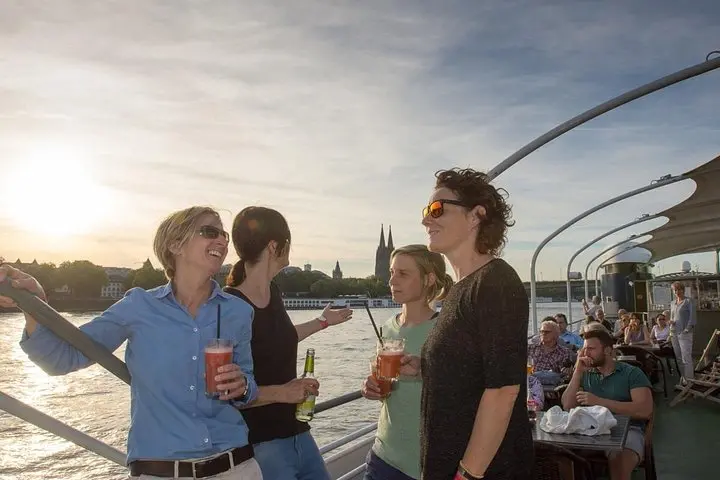
For travelers this is an easy, sensory short tour: panoramic windows and open decks put the city’s architecture and river life front and center. Expect multilingual audio commentary, the chance to buy a freshly tapped Kölsch on board, and clear viewpoints of Hohenzollern Bridge where couples leave padlocks. The one-hour cruise is best as a first orientation or a relaxed break between museums — arrive 15 minutes early, dress for wind off the water, and hold small items when on deck.
Practical note: boats run year-round but departures change with daylight and events; tickets are typically mobile or paper and sell out on summer afternoons. This cruise is low-effort and high-visibility: ideal for travelers wanting a compact, informative look at Cologne from the river.
Most departures are from the river quays near the Deutsches Sport & Olympia Museum and close to the cathedral—check your ticket for the exact pier and arrive early.
Yes; the onboard audio tour typically includes English plus several other major languages—confirm language options at booking.
Yes, freshly tapped Kölsch and other beverages are sold on board; payment methods vary but card is usually accepted.
Many sightseeing boats offer level boarding or ramp access—contact the operator ahead of time to confirm vessel accessibility and assistance needs.
Koln-Dusseldorfer operates guided outdoor trips and adventures with an emphasis on safety, stewardship, and memorable experiences.
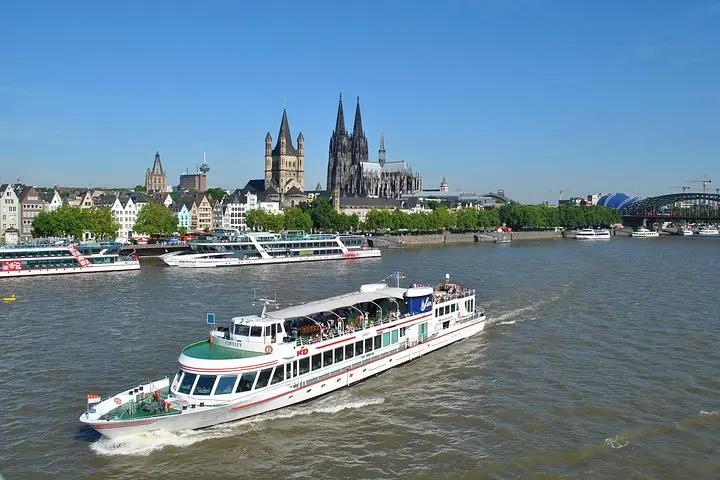
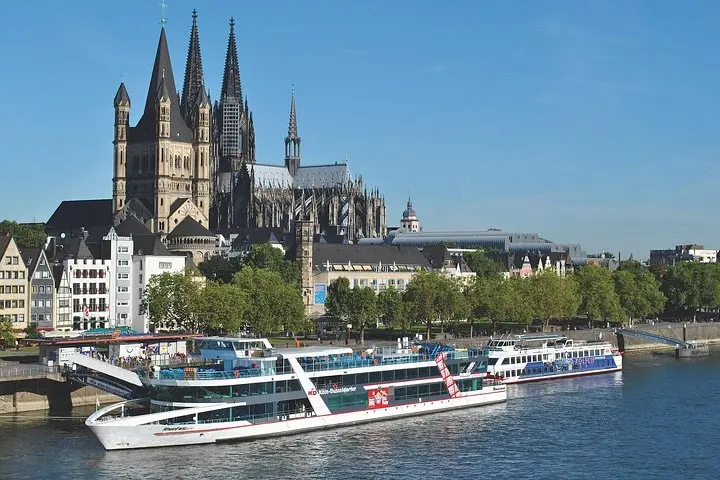
The boat slips away from the quay and the Rhine takes the lead: barges drift like slow punctuation, riverbanks sliding past with the cathedral rising as the steady climax of the city skyline. In one hour the cruise traces Cologne’s historic spine—church spires, modern harbor cranes, and the chocolate museum’s riverside façade—while an onboard audio guide relays two millennia of Roman, medieval, and industrial stories.
The boat slips away from the quay and the Rhine takes the lead: barges drift like slow punctuation, riverbanks sliding past with the cathedral rising as the steady climax of the city skyline. In one hour the cruise traces Cologne’s historic spine—church spires, modern harbor cranes, and the chocolate museum’s riverside façade—while an onboard audio guide relays two millennia of Roman, medieval, and industrial stories.
Cologne grew from a Roman military outpost into a medieval trade hub; the Cathedral (Kölner Dom) that dominates the view was begun in the 13th century and finished only in the 19th. The river itself carved the city’s fortunes, carrying timber, trade and, more recently, commuter traffic. Modern Rheinauhafen contrasts glass-and-concrete harbor buildings with old warehouses, giving the route a layered geology of human projects rather than bedrock.
For travelers this is an easy, sensory short tour: panoramic windows and open decks put the city’s architecture and river life front and center. Expect multilingual audio commentary, the chance to buy a freshly tapped Kölsch on board, and clear viewpoints of Hohenzollern Bridge where couples leave padlocks. The one-hour cruise is best as a first orientation or a relaxed break between museums — arrive 15 minutes early, dress for wind off the water, and hold small items when on deck.
Practical note: boats run year-round but departures change with daylight and events; tickets are typically mobile or paper and sell out on summer afternoons. This cruise is low-effort and high-visibility: ideal for travelers wanting a compact, informative look at Cologne from the river.