THE ADVENTURE COLLECTIVE® · Independent discovery and booking for outdoor travel

Walk Cologne at your own pace with a mobile app that maps 20 historic stops across 3.5 km. From Roman sewers to WWII sites and a classic Kölsch pub, this self-guided tour blends archaeology, wartime history and local flavors into a single half-day route.
Walk Cologne at your own pace with a mobile app that maps 20 historic stops across 3.5 km. From Roman sewers to WWII sites and a classic Kölsch pub, this self-guided tour blends archaeology, wartime history and local flavors into a single half-day route.
You begin at the foot of Cologne Cathedral, its carved entrance a cool hush against the river breeze. The Rhine pushes low and steady beside you; bridges arc across it like chapters of the city’s story. This self-guided route threads 20 sites across roughly 3.5 km, moving from exposed Roman foundations through cobbled market squares to the austere stone of a former Gestapo prison.
Verified experiences and guided adventures in the surrounding area.
Operated by Tourific · Cologne, North Rhine-Westphalia
You begin at the foot of Cologne Cathedral, its carved entrance a cool hush against the river breeze. The Rhine pushes low and steady beside you; bridges arc across it like chapters of the city’s story. This self-guided route threads 20 sites across roughly 3.5 km, moving from exposed Roman foundations through cobbled market squares to the austere stone of a former Gestapo prison.
Cologne’s layers are tangible: Roman walls and sewers speak to 2,000 years of settlement, Gothic masonry reaches skyward from medieval mercantile wealth, and scarred bridges recall the city’s strategic role in World War II. Cultural signposts — Eau de Cologne workshops, Heumarkt’s festival history, and a Kölsch tavern where locals toast in small glasses — anchor the walk in daily life as much as in archives.
The app supplies audio narration, images, and an offline map so you can pace yourself without a data connection; expect about 2.5 hours if you pause for readings and a beer. Terrain is city center: paved streets, tram-friendly routes and frequent steps; elevation change is minimal but watch for uneven cobbles and tram tracks.
Practical guidance: download the tour and media before you leave, carry a charged phone and a portable battery, wear sturdy walking shoes, and time your walk for morning or late afternoon to avoid midday crowds. Public transport links at both ends let you shorten or extend the route; this is an urban exploration that rewards curiosity and plain-good planning.
The route covers about 3.5 km and is designed to be completed in roughly 2.5 hours including stops at highlights.
No—once downloaded the app provides offline access to audio, images and maps for the entire tour.
Much of the city center is paved and tram-accessible, but cobblestones, steps and occasional narrow passages may present challenges; check individual stops for accessibility details.
Yes—the self-guided format lets you join, shorten or extend the walk; public transport and tram stops are available near most points.
Tourific operates guided outdoor trips and adventures with an emphasis on safety, stewardship, and memorable experiences.
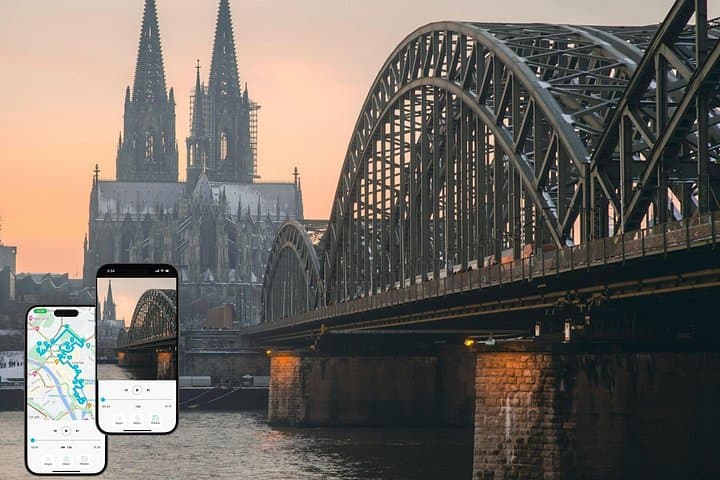



You begin at the foot of Cologne Cathedral, its carved entrance a cool hush against the river breeze. The Rhine pushes low and steady beside you; bridges arc across it like chapters of the city’s story. This self-guided route threads 20 sites across roughly 3.5 km, moving from exposed Roman foundations through cobbled market squares to the austere stone of a former Gestapo prison.
You begin at the foot of Cologne Cathedral, its carved entrance a cool hush against the river breeze. The Rhine pushes low and steady beside you; bridges arc across it like chapters of the city’s story. This self-guided route threads 20 sites across roughly 3.5 km, moving from exposed Roman foundations through cobbled market squares to the austere stone of a former Gestapo prison.
Cologne’s layers are tangible: Roman walls and sewers speak to 2,000 years of settlement, Gothic masonry reaches skyward from medieval mercantile wealth, and scarred bridges recall the city’s strategic role in World War II. Cultural signposts — Eau de Cologne workshops, Heumarkt’s festival history, and a Kölsch tavern where locals toast in small glasses — anchor the walk in daily life as much as in archives.
The app supplies audio narration, images, and an offline map so you can pace yourself without a data connection; expect about 2.5 hours if you pause for readings and a beer. Terrain is city center: paved streets, tram-friendly routes and frequent steps; elevation change is minimal but watch for uneven cobbles and tram tracks.
Practical guidance: download the tour and media before you leave, carry a charged phone and a portable battery, wear sturdy walking shoes, and time your walk for morning or late afternoon to avoid midday crowds. Public transport links at both ends let you shorten or extend the route; this is an urban exploration that rewards curiosity and plain-good planning.