THE ADVENTURE COLLECTIVE® · Independent discovery and booking for outdoor travel

Crossing Sri Lanka’s lowlands, this full-day shuttle stops at Yapahuwa Old Kingdom—a 13th-century hill-fort and monastery with an ornamental stairway and panoramic views. Ideal for travelers who want history, short climbs, and a compact archaeological visit without the long drive from Colombo.
Crossing Sri Lanka’s lowlands, this full-day shuttle stops at Yapahuwa Old Kingdom—a 13th-century hill-fort and monastery with an ornamental stairway and panoramic views. Ideal for travelers who want history, short climbs, and a compact archaeological visit without the long drive from Colombo.
You arrive from Colombo as the road slips past paddy fields and low hills; the fortress rock of Yapahuwa rises like an old guard over the plain, its weathered stone stairway daring you skyward. A single ornamental stair—carved and partly restored—pulls the eye, and the climb rewards you with broad views over scrubland and distant village roofs, especially striking as the sun leans toward evening.
Verified experiences and guided adventures in the surrounding area.
Operated by Tuktukdude Leisure · Yapahuwa, North Western Province
You arrive from Colombo as the road slips past paddy fields and low hills; the fortress rock of Yapahuwa rises like an old guard over the plain, its weathered stone stairway daring you skyward. A single ornamental stair—carved and partly restored—pulls the eye, and the climb rewards you with broad views over scrubland and distant village roofs, especially striking as the sun leans toward evening.
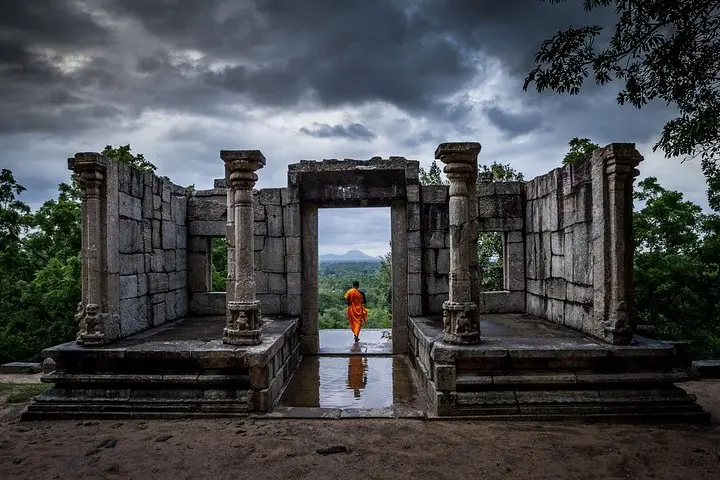
Yapahuwa served as a short-lived inland capital in the 13th century under King Buwanekabahu (1273). The site combines military architecture and monastic presence: fortress walls and defensive earthworks sit beside the remains of a stupa, a bodhi tree enclosure and cave cells used by Buddhist monks. Local lore ties Yapahuwa to the safekeeping of the sacred Tooth Relic—one of several safe houses for relics during turbulent medieval times.
Geologically the site is a rocky outcrop of ancient metamorphic rock common to Sri Lanka’s central lowlands; erosion has left steep faces and a compact summit area. Culturally, visits move through living village life—vendors, temple activity and seasonal festivals influence the rhythm of a day here.
Practical guidance: this is a full-day excursion (about 10 hours round-trip with road transfer). Expect uneven stone steps and short steep sections; bring sturdy shoes, sun protection and at least 1–2 liters of water. Photography is rewarding at sunset but be mindful of fragile ruins and local customs at religious features. The tour typically includes hotel pickup, bottled water and light snacks—confirm pickup point and any entrance fees ahead of time.
Most standard shuttle tours do not include archaeological site entrance fees—confirm with the operator and be prepared to pay locally if required.
Plan on 30–60 minutes to explore the main stairway, summit ruins and viewpoints; longer if you linger for photography.
The tour includes an experienced guide from the operator; ask in advance about language needs when booking.
Access involves steep stone steps and uneven terrain; it is not recommended for travelers with serious mobility limitations.
Tuktukdude Leisure operates guided outdoor trips and adventures with an emphasis on safety, stewardship, and memorable experiences.
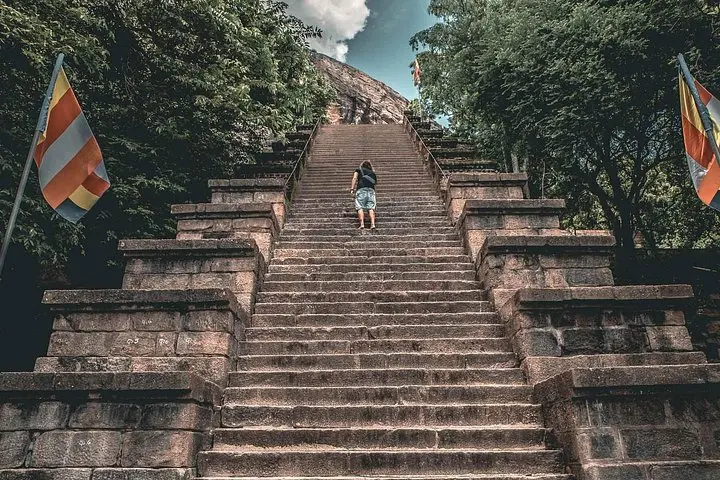
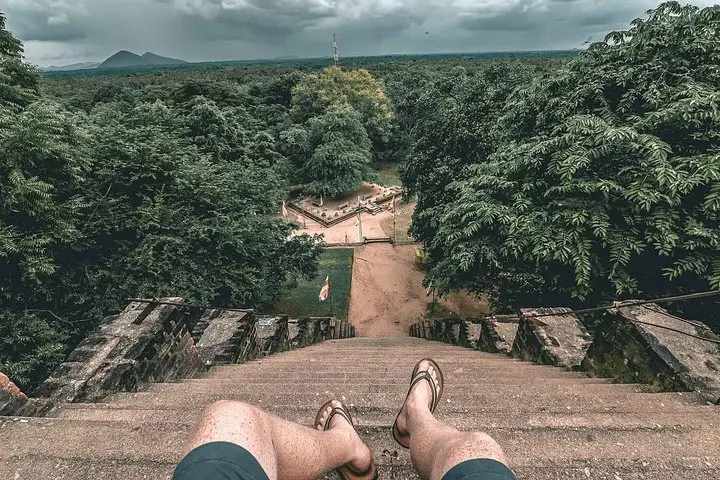
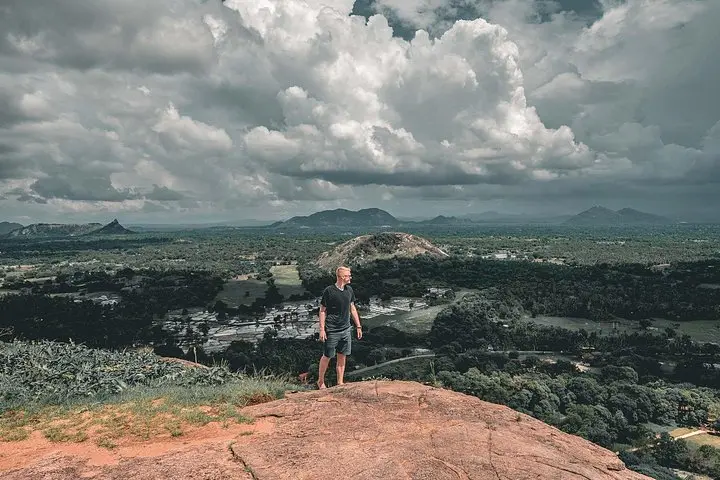
You arrive from Colombo as the road slips past paddy fields and low hills; the fortress rock of Yapahuwa rises like an old guard over the plain, its weathered stone stairway daring you skyward. A single ornamental stair—carved and partly restored—pulls the eye, and the climb rewards you with broad views over scrubland and distant village roofs, especially striking as the sun leans toward evening.
You arrive from Colombo as the road slips past paddy fields and low hills; the fortress rock of Yapahuwa rises like an old guard over the plain, its weathered stone stairway daring you skyward. A single ornamental stair—carved and partly restored—pulls the eye, and the climb rewards you with broad views over scrubland and distant village roofs, especially striking as the sun leans toward evening.
Yapahuwa served as a short-lived inland capital in the 13th century under King Buwanekabahu (1273). The site combines military architecture and monastic presence: fortress walls and defensive earthworks sit beside the remains of a stupa, a bodhi tree enclosure and cave cells used by Buddhist monks. Local lore ties Yapahuwa to the safekeeping of the sacred Tooth Relic—one of several safe houses for relics during turbulent medieval times.
Geologically the site is a rocky outcrop of ancient metamorphic rock common to Sri Lanka’s central lowlands; erosion has left steep faces and a compact summit area. Culturally, visits move through living village life—vendors, temple activity and seasonal festivals influence the rhythm of a day here.
Practical guidance: this is a full-day excursion (about 10 hours round-trip with road transfer). Expect uneven stone steps and short steep sections; bring sturdy shoes, sun protection and at least 1–2 liters of water. Photography is rewarding at sunset but be mindful of fragile ruins and local customs at religious features. The tour typically includes hotel pickup, bottled water and light snacks—confirm pickup point and any entrance fees ahead of time.