THE ADVENTURE COLLECTIVE® · Independent discovery and booking for outdoor travel

Learn to photograph the Milky Way and moonlit mountain scenes on a guided night session outside Idaho Springs. This field class mixes hands-on camera instruction with carefully chosen Rocky Mountain viewpoints to minimize light pollution and maximize star-filled compositions.
Learn to photograph the Milky Way and moonlit mountain scenes on a guided night session outside Idaho Springs. This field class mixes hands-on camera instruction with carefully chosen Rocky Mountain viewpoints to minimize light pollution and maximize star-filled compositions.
The high-clear night opens slowly: a cold breath of alpine air, the dark silhouette of the Continental Divide cutting the horizon, and a slow spill of stars that seem to press closer as your eyes adjust. On a clear, mild night outside Idaho Springs, this guided astrophotography experience places you at seasonal viewpoints where the Milky Way, moonlit ridges, and constellations dominate the sky.
Verified experiences and guided adventures in the surrounding area.
Operated by Maggie Martin · Idaho Springs, Colorado
The high-clear night opens slowly: a cold breath of alpine air, the dark silhouette of the Continental Divide cutting the horizon, and a slow spill of stars that seem to press closer as your eyes adjust. On a clear, mild night outside Idaho Springs, this guided astrophotography experience places you at seasonal viewpoints where the Milky Way, moonlit ridges, and constellations dominate the sky.
These roads and overlooks sit on terrain carved by Pleistocene glaciers and uplifted by the same tectonics that formed the Front Range. Nearby towns like Idaho Springs and Georgetown began as 19th-century mining camps; their preserved stone buildings and surviving rail grades remind you this is a cultural landscape shaped by extraction, transit, and now outdoor recreation.
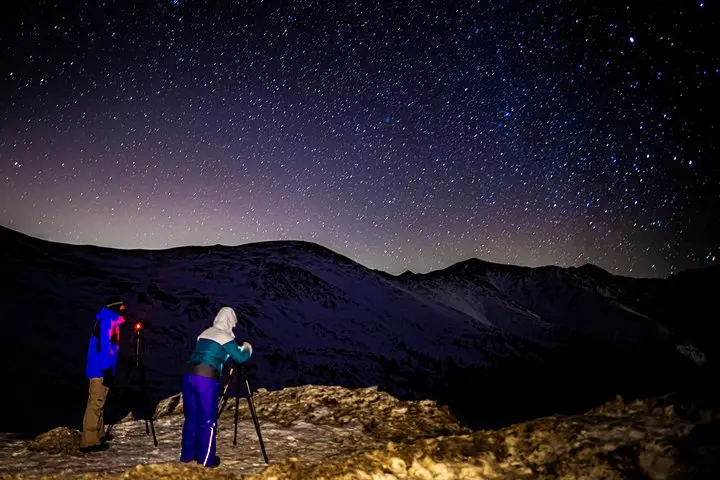
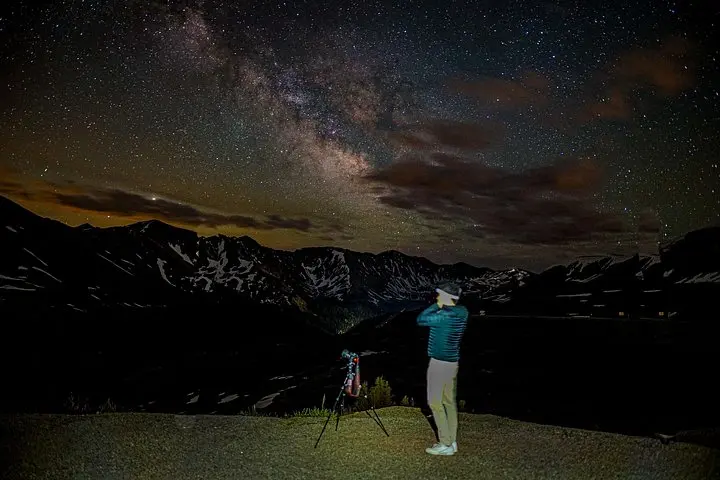
The class covers practical camera settings (long exposure, high ISO, manual focus), composition techniques for star fields and lunar portraiture, and hands-on setup with tripods and red-light headlamps. Instructors scout locations to minimize light pollution and pick foregrounds — an old ore bin, a wind-scoured pine, a creek bend — to anchor nightscapes.
Plan for altitude, cold, and variable terrain: dress in insulating layers, arrive 30–45 minutes before sunset, and bring a fully charged camera battery and extra memory. A red-filtered headlamp preserves night vision while you tweak settings. Expect gentle walks to viewpoints rather than long hikes, but prepare for rocky footing and brief exposures to open wind.
This outing is part lesson, part field session — ideal for photographers who want to learn technique while standing beneath an expansive Rocky Mountain sky.
Meet at the Gateway Georgetown Visitors Center (across from the Circle K) as indicated in your confirmation; transport to viewpoints is included when applicable.
Yes—participants should bring a camera with manual exposure control; basic instruction is provided but trip equipment does not include loaner cameras.
Yes—this experience is designed for all skill levels and covers camera settings, focusing, and composition for night photography.
Full refunds are available if you cancel at least 24 hours before departure; the operator may also cancel for bad weather or insufficient travelers.
Maggie Martin operates guided outdoor trips and adventures with an emphasis on safety, stewardship, and memorable experiences.
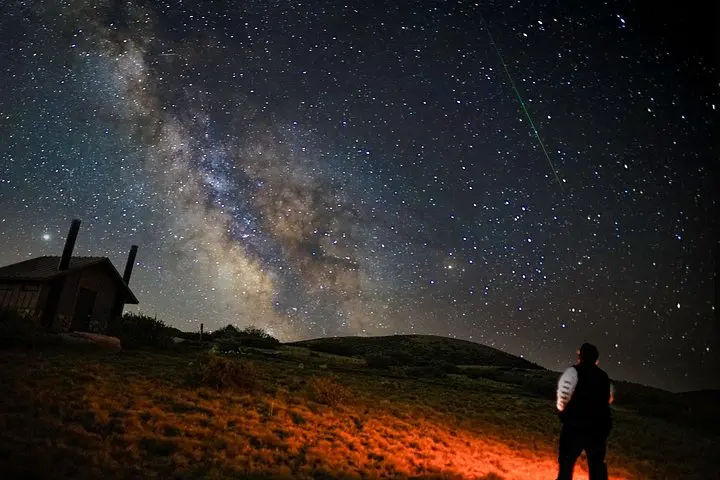
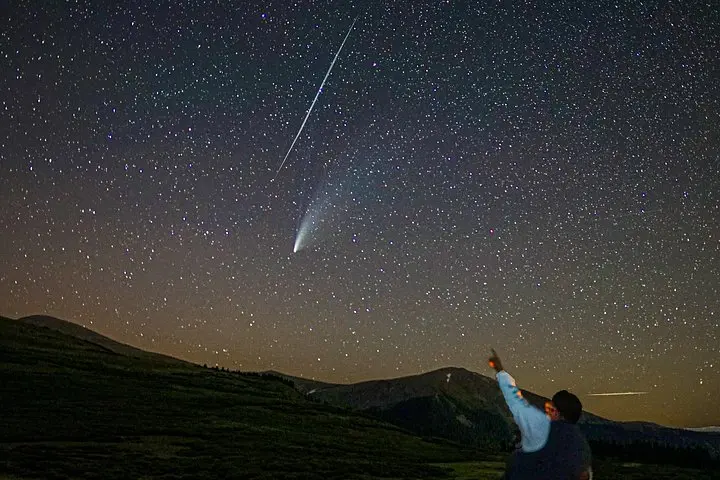
The high-clear night opens slowly: a cold breath of alpine air, the dark silhouette of the Continental Divide cutting the horizon, and a slow spill of stars that seem to press closer as your eyes adjust. On a clear, mild night outside Idaho Springs, this guided astrophotography experience places you at seasonal viewpoints where the Milky Way, moonlit ridges, and constellations dominate the sky.
The high-clear night opens slowly: a cold breath of alpine air, the dark silhouette of the Continental Divide cutting the horizon, and a slow spill of stars that seem to press closer as your eyes adjust. On a clear, mild night outside Idaho Springs, this guided astrophotography experience places you at seasonal viewpoints where the Milky Way, moonlit ridges, and constellations dominate the sky.
These roads and overlooks sit on terrain carved by Pleistocene glaciers and uplifted by the same tectonics that formed the Front Range. Nearby towns like Idaho Springs and Georgetown began as 19th-century mining camps; their preserved stone buildings and surviving rail grades remind you this is a cultural landscape shaped by extraction, transit, and now outdoor recreation.
The class covers practical camera settings (long exposure, high ISO, manual focus), composition techniques for star fields and lunar portraiture, and hands-on setup with tripods and red-light headlamps. Instructors scout locations to minimize light pollution and pick foregrounds — an old ore bin, a wind-scoured pine, a creek bend — to anchor nightscapes.
Plan for altitude, cold, and variable terrain: dress in insulating layers, arrive 30–45 minutes before sunset, and bring a fully charged camera battery and extra memory. A red-filtered headlamp preserves night vision while you tweak settings. Expect gentle walks to viewpoints rather than long hikes, but prepare for rocky footing and brief exposures to open wind.
This outing is part lesson, part field session — ideal for photographers who want to learn technique while standing beneath an expansive Rocky Mountain sky.