THE ADVENTURE COLLECTIVE® · Independent discovery and booking for outdoor travel

Explore Rome like a small-group VIP: descend into the Colosseum’s underground, stand on the arena floor, then walk the Roman Forum and Palatine Hill with an expert guide. Expect 2.5 hours of uneven stone, short stair climbs, and concentrated history.
Explore Rome like a small-group VIP: descend into the Colosseum’s underground, stand on the arena floor, then walk the Roman Forum and Palatine Hill with an expert guide. Expect 2.5 hours of uneven stone, short stair climbs, and concentrated history.
You pass through a gate once opened to gladiators and animals, and the stones close behind with a low, historic hush. The underground beneath the Colosseum feels cooler, darker — a working sub-stage where ropes, cages and ramps once delivered spectacle to an empire. From the partially reconstructed arena floor you can look up at tiers that once held tens of thousands, then climb to the second level for a broad, urban view where Rome’s layers — imperial ruins, Renaissance rooftops, and modern traffic — sit cheek by jowl.
Verified experiences and guided adventures in the surrounding area.
Operated by The Empireverse · Rome, Lazio
You pass through a gate once opened to gladiators and animals, and the stones close behind with a low, historic hush. The underground beneath the Colosseum feels cooler, darker — a working sub-stage where ropes, cages and ramps once delivered spectacle to an empire. From the partially reconstructed arena floor you can look up at tiers that once held tens of thousands, then climb to the second level for a broad, urban view where Rome’s layers — imperial ruins, Renaissance rooftops, and modern traffic — sit cheek by jowl.
This 2.5‑hour guided experience threads three landmarks: the Colosseum’s restricted underground and arena floor, the Roman Forum’s political spine along the Via Sacra, and Palatine Hill’s imperial terraces. The Colosseum itself dates to AD 70–80 under Vespasian and Titus; the Forum grew as Rome’s commercial and religious center; Palatine preserves traces of aristocratic houses and city origin myths going back to the 8th century BC.
Geology here is exposed: travertine blocks, tufa foundations, and compacted Roman concrete that have borne millennia of use. Cultural notes surface in the guide’s stories — the rituals of the Vestal Virgins, the pomp of triumphal processions, and the later reuse of marble for churches.
Practicalities: expect roughly 1–2 km of walking on uneven ancient stone and gravel with several flights of stairs and narrow ramps. Small groups (max six) move quickly; headsets are provided. Wear supportive shoes, bring a refillable water bottle and sun protection, and allow extra time for public-transport connections. If you have mobility or cardiovascular issues, check accessibility details before booking — some underground areas require steps and standing. This tour offers intimate access; arrive rested and ready to read the city through its oldest stones.
Yes — this tour provides access to the Colosseum’s underground chambers and a partially reconstructed arena floor as described, with admission included.
There are several flights of stairs and uneven ramps; the tour notes stroller access for infants but sections of the underground may not be suitable for strollers or visitors with limited mobility.
This particular listing provides an English-speaking official guide and headsets so you can hear clearly in small groups up to six.
Yes — the Colosseum is well served by metro (Line B) and several bus lines; allow extra time for security queues and ticket checks.
The Empireverse operates guided outdoor trips and adventures with an emphasis on safety, stewardship, and memorable experiences.
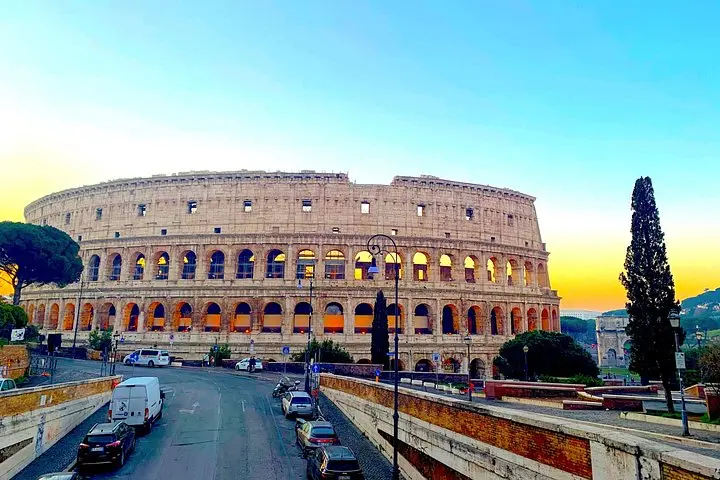
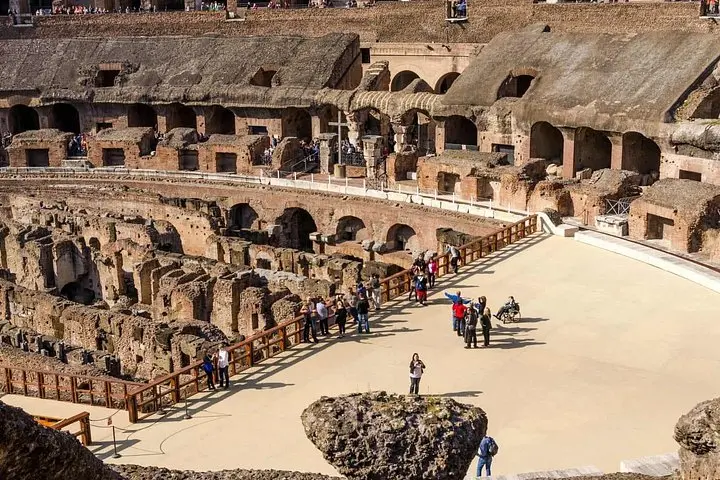
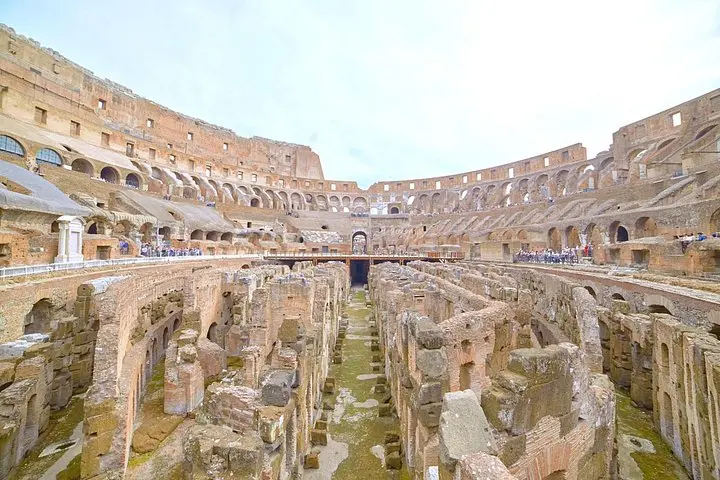
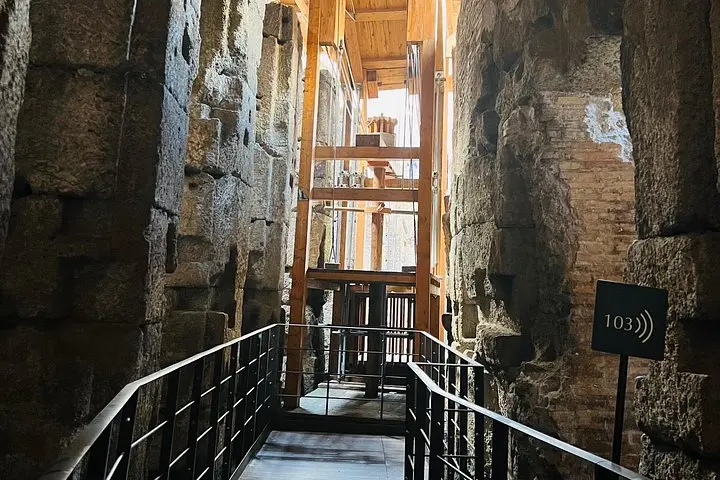
You pass through a gate once opened to gladiators and animals, and the stones close behind with a low, historic hush. The underground beneath the Colosseum feels cooler, darker — a working sub-stage where ropes, cages and ramps once delivered spectacle to an empire. From the partially reconstructed arena floor you can look up at tiers that once held tens of thousands, then climb to the second level for a broad, urban view where Rome’s layers — imperial ruins, Renaissance rooftops, and modern traffic — sit cheek by jowl.
You pass through a gate once opened to gladiators and animals, and the stones close behind with a low, historic hush. The underground beneath the Colosseum feels cooler, darker — a working sub-stage where ropes, cages and ramps once delivered spectacle to an empire. From the partially reconstructed arena floor you can look up at tiers that once held tens of thousands, then climb to the second level for a broad, urban view where Rome’s layers — imperial ruins, Renaissance rooftops, and modern traffic — sit cheek by jowl.
This 2.5‑hour guided experience threads three landmarks: the Colosseum’s restricted underground and arena floor, the Roman Forum’s political spine along the Via Sacra, and Palatine Hill’s imperial terraces. The Colosseum itself dates to AD 70–80 under Vespasian and Titus; the Forum grew as Rome’s commercial and religious center; Palatine preserves traces of aristocratic houses and city origin myths going back to the 8th century BC.
Geology here is exposed: travertine blocks, tufa foundations, and compacted Roman concrete that have borne millennia of use. Cultural notes surface in the guide’s stories — the rituals of the Vestal Virgins, the pomp of triumphal processions, and the later reuse of marble for churches.
Practicalities: expect roughly 1–2 km of walking on uneven ancient stone and gravel with several flights of stairs and narrow ramps. Small groups (max six) move quickly; headsets are provided. Wear supportive shoes, bring a refillable water bottle and sun protection, and allow extra time for public-transport connections. If you have mobility or cardiovascular issues, check accessibility details before booking — some underground areas require steps and standing. This tour offers intimate access; arrive rested and ready to read the city through its oldest stones.