THE ADVENTURE COLLECTIVE® · Independent discovery and booking for outdoor travel

Skip the logistics and focus on the view: this private, door‑to‑door tour delivers the Pyramids of Giza with comfort and curated photo stops. Expect guided access to the plateau, local insights, and practical advice for a smoother visit.
Skip the logistics and focus on the view: this private, door‑to‑door tour delivers the Pyramids of Giza with comfort and curated photo stops. Expect guided access to the plateau, local insights, and practical advice for a smoother visit.
Morning light cuts across the Giza Plateau as a new, air-conditioned minibus eases onto the service road. The guide opens the door and the scale of the place hits first: a wall of stone that has been unmoved for 4,500 years, sand shifting at its base and tourists rearranging themselves for the classic profile shot.
Verified experiences and guided adventures in the surrounding area.
Operated by Hakaptah Tours · Giza, Cairo Governorate
Morning light cuts across the Giza Plateau as a new, air-conditioned minibus eases onto the service road. The guide opens the door and the scale of the place hits first: a wall of stone that has been unmoved for 4,500 years, sand shifting at its base and tourists rearranging themselves for the classic profile shot.
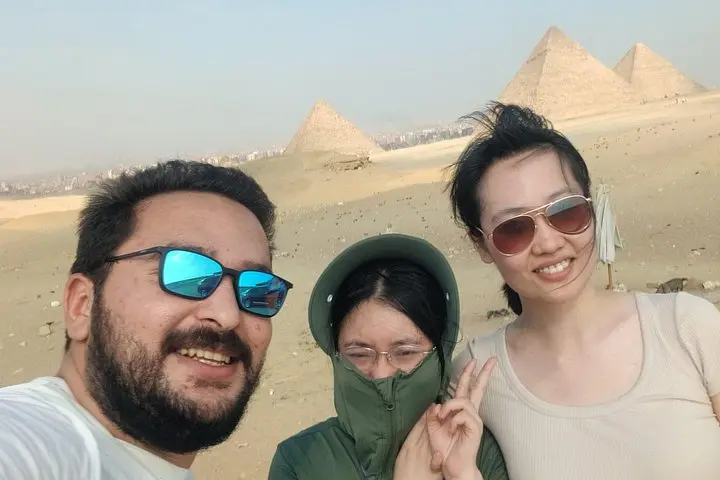
This is a landscape shaped by human ambition and limestone geology. The Great Pyramid of Khufu, the slightly smaller Khafre with its residual casing near the summit, and Menkaure’s compact geometry mark successive royal projects that transformed local bedrock into calibrated monuments. Nearby, the Sphinx keeps its guarded stance, carved from the same Tura limestone that frames the necropolis. Local history spills out in mastabas and lesser tombs — including the quieter funerary chapel of Meresankh — that reward a slow, curious walk.
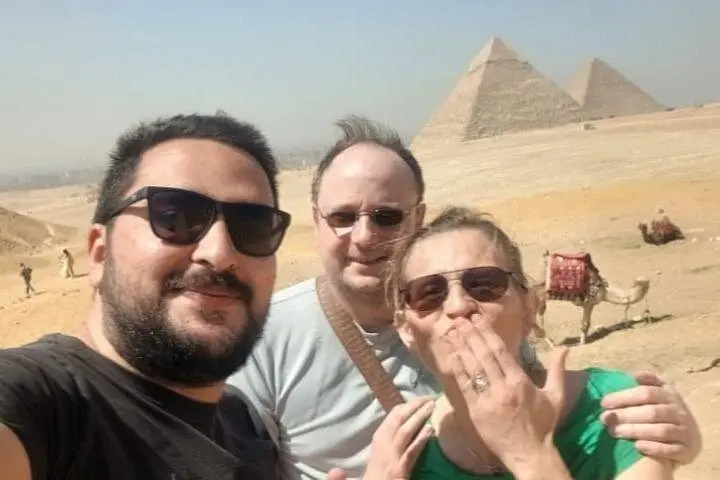
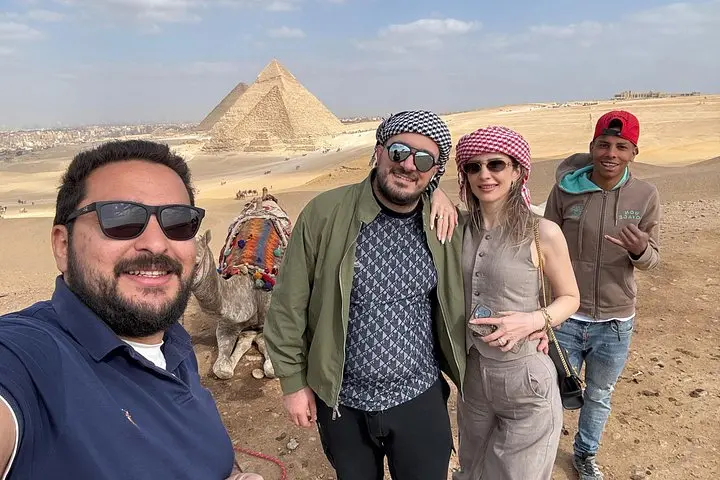
Culturally, the plateau is still a working place: camel handlers, vendors, and guides read the light and the best photo angles. Practical realities matter: most entrance fees and interior pyramid access require separate tickets; some viewpoints are best at dawn or late afternoon when heat and crowds are lower.
For a comfort-focused visit expect door-to-door pickup, bottled water, and a professionally guided route that prioritizes photo vantage points and easy pacing. Wear sturdy shoes for uneven, sandy ground, bring sun protection and cash for tips. Respect signage: climbing the pyramids is prohibited and heavily fined. With basic planning, this tour turns one of the ancient world’s grandest sites into an accessible, efficient day that leaves space for awe.
Most standard tours do not include official entrance tickets or interior pyramid access; confirm with your operator as interior tickets are limited and separate.
Tours vary; this private option offers flexible timing between about 1 hour and up to 8 hours depending on chosen stops and pacing.
Interior access exists but requires a separate ticket and is subject to strict capacity limits and age/health restrictions—book early if this matters.
Camel rides are offered by local handlers; they are generally safe if you follow the handler’s instructions, but ride quality and price should be agreed upfront.
Hakaptah Tours operates guided outdoor trips and adventures with an emphasis on safety, stewardship, and memorable experiences.
Morning light cuts across the Giza Plateau as a new, air-conditioned minibus eases onto the service road. The guide opens the door and the scale of the place hits first: a wall of stone that has been unmoved for 4,500 years, sand shifting at its base and tourists rearranging themselves for the classic profile shot.
Morning light cuts across the Giza Plateau as a new, air-conditioned minibus eases onto the service road. The guide opens the door and the scale of the place hits first: a wall of stone that has been unmoved for 4,500 years, sand shifting at its base and tourists rearranging themselves for the classic profile shot.
This is a landscape shaped by human ambition and limestone geology. The Great Pyramid of Khufu, the slightly smaller Khafre with its residual casing near the summit, and Menkaure’s compact geometry mark successive royal projects that transformed local bedrock into calibrated monuments. Nearby, the Sphinx keeps its guarded stance, carved from the same Tura limestone that frames the necropolis. Local history spills out in mastabas and lesser tombs — including the quieter funerary chapel of Meresankh — that reward a slow, curious walk.
Culturally, the plateau is still a working place: camel handlers, vendors, and guides read the light and the best photo angles. Practical realities matter: most entrance fees and interior pyramid access require separate tickets; some viewpoints are best at dawn or late afternoon when heat and crowds are lower.
For a comfort-focused visit expect door-to-door pickup, bottled water, and a professionally guided route that prioritizes photo vantage points and easy pacing. Wear sturdy shoes for uneven, sandy ground, bring sun protection and cash for tips. Respect signage: climbing the pyramids is prohibited and heavily fined. With basic planning, this tour turns one of the ancient world’s grandest sites into an accessible, efficient day that leaves space for awe.