THE ADVENTURE COLLECTIVE® · Independent discovery and booking for outdoor travel

A private day trip from Seoul that combines 2–3 hours of guided hiking on Bukhansan’s granite ridges with a local Galbi lunch and a restorative jjimjilbang spa. Ideal for groups who want a flexible route and city-side convenience.
A private day trip from Seoul that combines 2–3 hours of guided hiking on Bukhansan’s granite ridges with a local Galbi lunch and a restorative jjimjilbang spa. Ideal for groups who want a flexible route and city-side convenience.
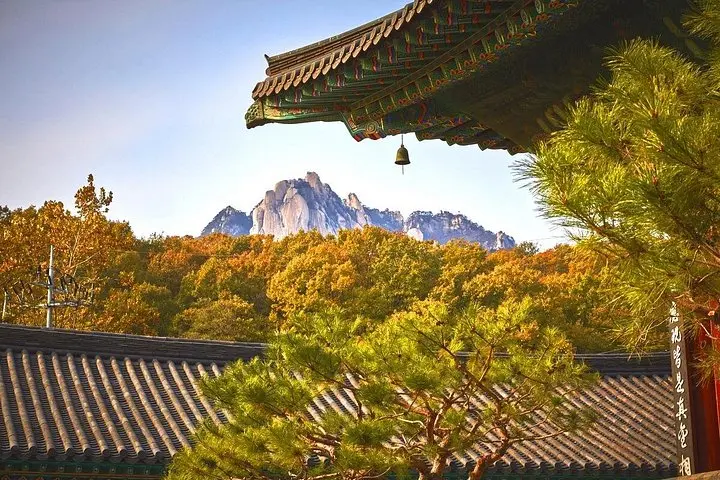
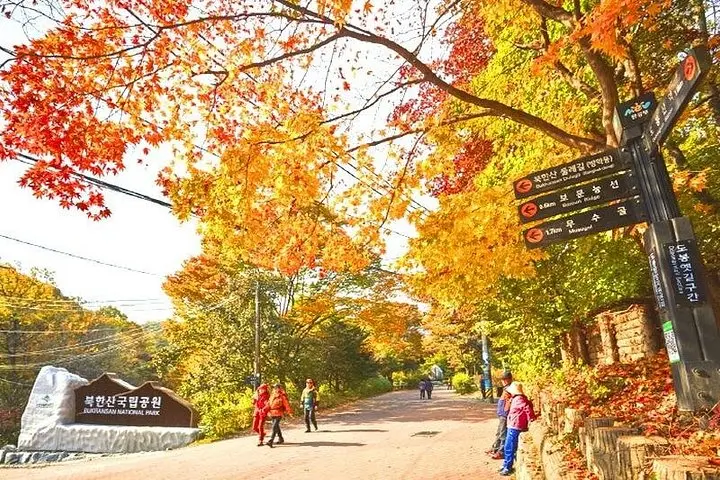
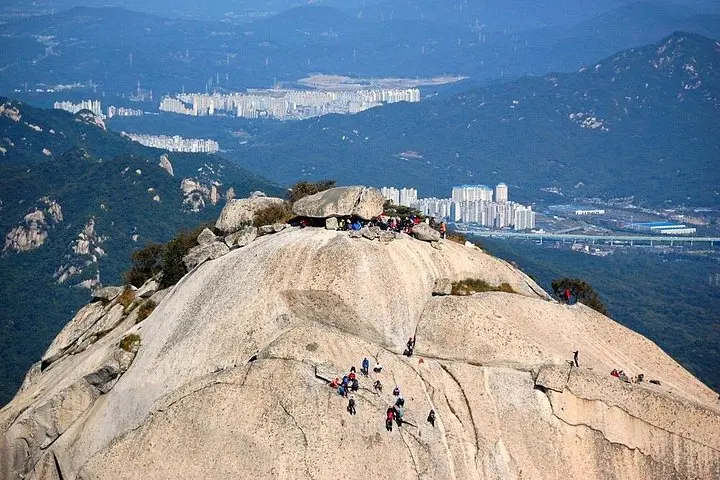
Morning light cuts across a city still yawning and you’re already on a quiet road toward Bukhansan’s granite spines. The van pulls into a small lot, heat and glass giving way to pine-scented air and the soft clack of hiking boots. Above, the ridge looks personal and immediate: steep gullies, slabs of pale granite, and a skyline of Seoul shrinking beneath you.
Verified experiences and guided adventures in the surrounding area.
Operated by Here Korea Travel · Seoul, Seoul
Morning light cuts across a city still yawning and you’re already on a quiet road toward Bukhansan’s granite spines. The van pulls into a small lot, heat and glass giving way to pine-scented air and the soft clack of hiking boots. Above, the ridge looks personal and immediate: steep gullies, slabs of pale granite, and a skyline of Seoul shrinking beneath you.
Bukhansan was named a national park in 1983, but its story stretches further back — fortress walls from the Joseon era ridge the lower slopes, and the peaks have long marked the northern approach to the capital. Geologically, the mountain is mostly Cretaceous granite sculpted into dramatic tors and terraces; Baegundae, Insubong and Mangyeongdae make up the so-called three peaks and offer the panoramic reward for the climb.
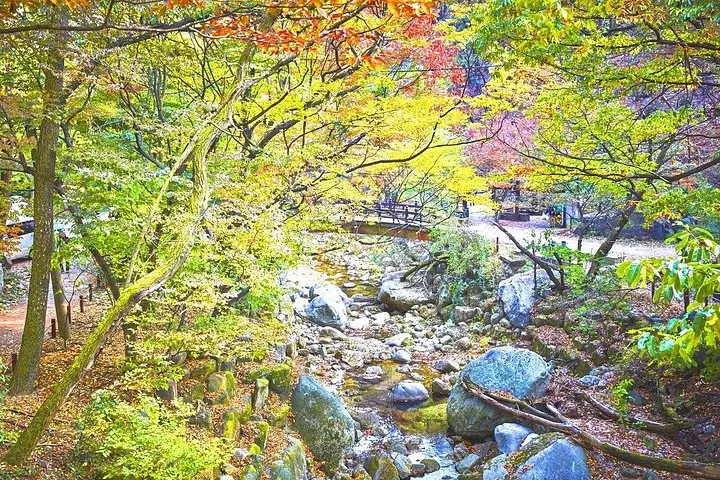
On a private tour you can choose the climb that fits your group. Beginners often take the Seunggasa route: a steady 1,300-foot (≈400 m) ascent over roughly 4 km round trip that reaches a temple clearing and an intimate summit view in about two hours. For stronger hikers, the Bibong path pushes about 1,835 feet (≈560 m) up a narrower trail that follows a mountain stream and opens to a 360-degree crest where Korean hikers will be sharing seaweed rolls, instant ramen and tea — culinary rituals as much a part of the summit scene as the rock.
After the hike, the tour folds into a local rhythm: a Galbi lunch, barbecued short ribs the way Seoulites love them, then the crowd-pleaser — a jjimjilbang, a Korean spa complex with themed saunas, soaking pools and massage rooms that lets tired muscles unspool.
Practical guide: the full experience runs 6–8 hours door-to-door. Expect 2–3 hours of hiking depending on route chosen; total elevation gain ranges from 400–560 m. Trails are stone steps, dirt switchbacks and exposed granite; good traction footwear and hiking poles are useful. Pickup from central Seoul is typically included; confirm exact hotel or meet-up point and add your country code to your phone number when booking.
Health and etiquette notes: not recommended for visitors with serious back issues or pregnancy. Bring layers — mountain temps drop quickly — and at least 1–1.5 liters of water per person for the hike. Leave no trace: pack out wrappers and avoid picking plants; the park is actively managed to preserve its fragile vegetation.
Why it works: the program pairs accessible wilderness with city comforts, and the jjimjilbang finale makes this a complete, social, restorative day — ideal for first-timers to Korean hiking culture or groups that want a private, hassle-free outdoor day just outside Seoul.
Hiking is typically 2–3 hours depending on the route selected — Seunggasa for beginners (≈2 hours) or Bibong for a longer, steeper climb (≈2–3 hours).
Yes — hotel pickup and drop-off in Seoul are included; confirm your exact pickup location when booking.
A Galbi (Korean BBQ) lunch is provided as part of the tour, plus bottled water during the day.
Yes; most jjimjilbangs are visitor-friendly with clear signs and staff who can assist; follow posted etiquette for the wet and dry areas.
Families with older children and physically able seniors can join, but the tour is not recommended for those with serious back problems or pregnancy.
No permit is required for these standard day routes, but entrance fees for the park or certain facilities are covered in the tour inclusions.
Here Korea Travel operates guided outdoor trips and adventures with an emphasis on safety, stewardship, and memorable experiences.
Morning light cuts across a city still yawning and you’re already on a quiet road toward Bukhansan’s granite spines. The van pulls into a small lot, heat and glass giving way to pine-scented air and the soft clack of hiking boots. Above, the ridge looks personal and immediate: steep gullies, slabs of pale granite, and a skyline of Seoul shrinking beneath you.
Morning light cuts across a city still yawning and you’re already on a quiet road toward Bukhansan’s granite spines. The van pulls into a small lot, heat and glass giving way to pine-scented air and the soft clack of hiking boots. Above, the ridge looks personal and immediate: steep gullies, slabs of pale granite, and a skyline of Seoul shrinking beneath you.
Bukhansan was named a national park in 1983, but its story stretches further back — fortress walls from the Joseon era ridge the lower slopes, and the peaks have long marked the northern approach to the capital. Geologically, the mountain is mostly Cretaceous granite sculpted into dramatic tors and terraces; Baegundae, Insubong and Mangyeongdae make up the so-called three peaks and offer the panoramic reward for the climb.
On a private tour you can choose the climb that fits your group. Beginners often take the Seunggasa route: a steady 1,300-foot (≈400 m) ascent over roughly 4 km round trip that reaches a temple clearing and an intimate summit view in about two hours. For stronger hikers, the Bibong path pushes about 1,835 feet (≈560 m) up a narrower trail that follows a mountain stream and opens to a 360-degree crest where Korean hikers will be sharing seaweed rolls, instant ramen and tea — culinary rituals as much a part of the summit scene as the rock.
After the hike, the tour folds into a local rhythm: a Galbi lunch, barbecued short ribs the way Seoulites love them, then the crowd-pleaser — a jjimjilbang, a Korean spa complex with themed saunas, soaking pools and massage rooms that lets tired muscles unspool.
Practical guide: the full experience runs 6–8 hours door-to-door. Expect 2–3 hours of hiking depending on route chosen; total elevation gain ranges from 400–560 m. Trails are stone steps, dirt switchbacks and exposed granite; good traction footwear and hiking poles are useful. Pickup from central Seoul is typically included; confirm exact hotel or meet-up point and add your country code to your phone number when booking.
Health and etiquette notes: not recommended for visitors with serious back issues or pregnancy. Bring layers — mountain temps drop quickly — and at least 1–1.5 liters of water per person for the hike. Leave no trace: pack out wrappers and avoid picking plants; the park is actively managed to preserve its fragile vegetation.
Why it works: the program pairs accessible wilderness with city comforts, and the jjimjilbang finale makes this a complete, social, restorative day — ideal for first-timers to Korean hiking culture or groups that want a private, hassle-free outdoor day just outside Seoul.