THE ADVENTURE COLLECTIVE® · Independent discovery and booking for outdoor travel

Embark on a challenging climb to Maglić, Bosnia’s tallest peak, crossing ancient primeval forests and trails rich with wartime history. Discover rugged alpine panoramas and the raw beauty of Sutjeska National Park on this full-day trekking adventure.
Embark on a challenging climb to Maglić, Bosnia’s tallest peak, crossing ancient primeval forests and trails rich with wartime history. Discover rugged alpine panoramas and the raw beauty of Sutjeska National Park on this full-day trekking adventure.
At dawn, the air is crisp as you depart Sarajevo, heading southeast toward the remote edges of Sutjeska National Park. Your journey begins with a gentle hike along the rim of the Perućica primeval forest, one of Europe's last ancient woodlands. Towering spruce and beech trees lean in like guardians, their branches whispering with the breeze over moss-covered trunks and undergrowth. Nearby, the Skakavac waterfall dares your attention, cascading through the dense green in a slow, thunderous pulse.
Verified experiences and guided adventures in the surrounding area.
Operated by Highlander Adventures · Sarajevo, Bosnia and Herzegovina
At dawn, the air is crisp as you depart Sarajevo, heading southeast toward the remote edges of Sutjeska National Park. Your journey begins with a gentle hike along the rim of the Perućica primeval forest, one of Europe's last ancient woodlands. Towering spruce and beech trees lean in like guardians, their branches whispering with the breeze over moss-covered trunks and undergrowth. Nearby, the Skakavac waterfall dares your attention, cascading through the dense green in a slow, thunderous pulse.
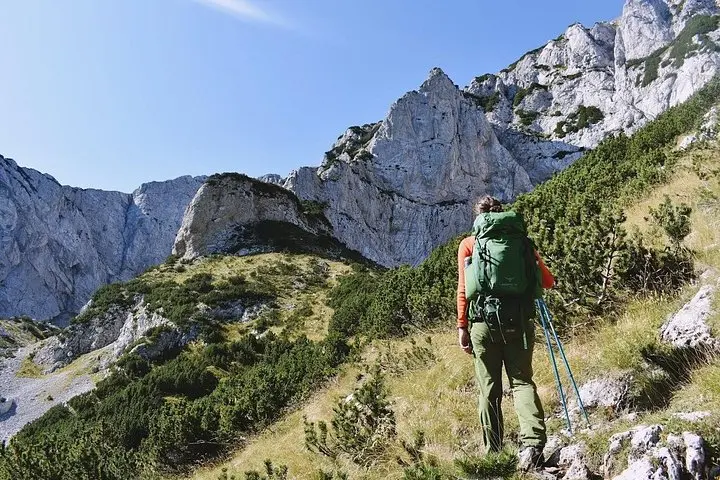
Beyond this shaded corridor, the landscape sharpens. The trail leaves the soft forest floor behind and eases onto rugged terrain along the historic Postmans' Route. This path once offered clandestine passage for partisans in World War II, threading the mountains to evade Nazi patrols. Today, it challenges modern hikers to steady footing and endurance.
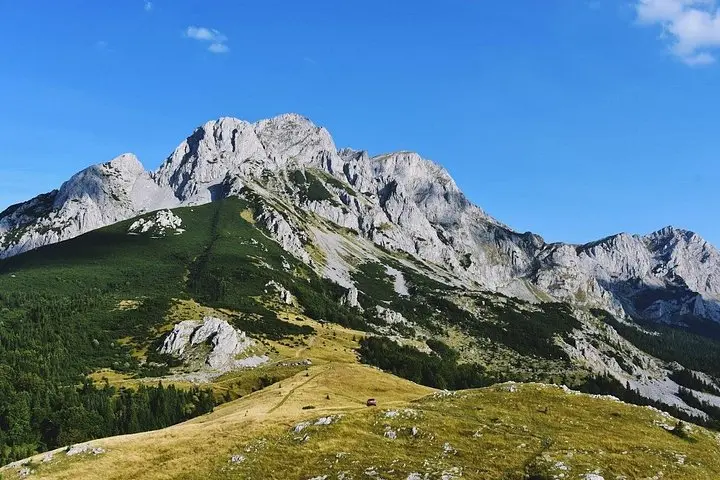
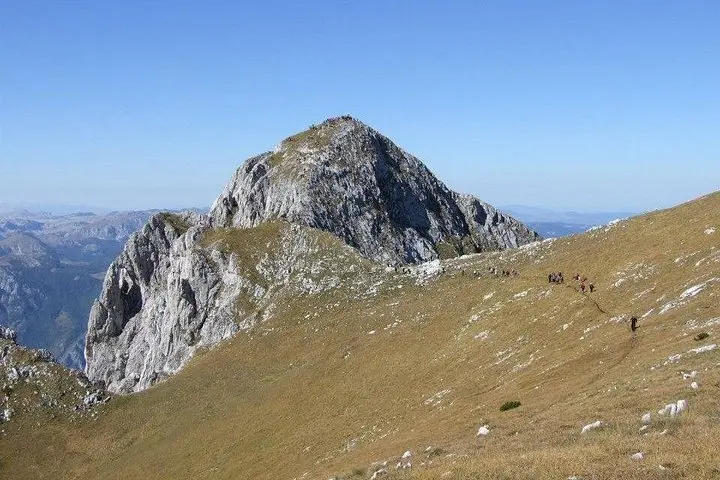
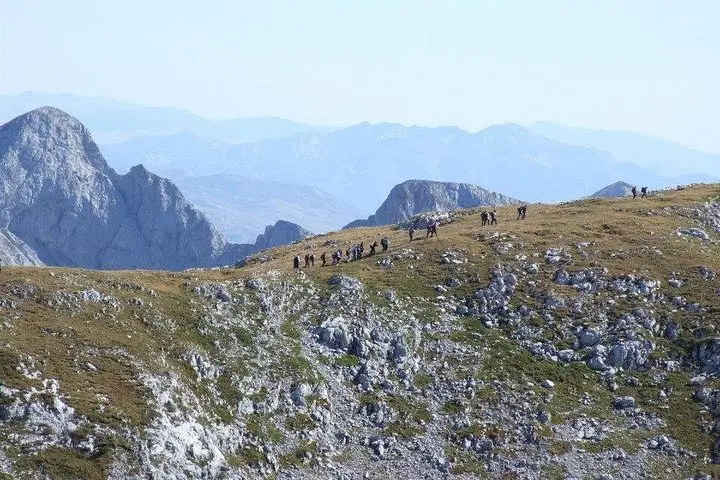
Maglić’s sheer northern face rises abruptly ahead, a jagged fortress of limestone rock that marks Bosnia’s highest summit at 2,386 meters. The ascent from here demands physical grit and surefootedness, weaving through rocky stretches and alpine meadows where wildflowers nod in the mountain winds. The panorama expands to reveal neighboring giants—Volujak and Zelengora—looming on the Montenegrin border, their spines tracing the horizon.
This single, demanding day of hiking covers around 20 kilometers with approximately 1,200 meters of elevation gain. The trail's early segment climbs gently through forested valleys, offering cover from midday sun. But as you break tree line, weather can shift abruptly; mountain clouds often gather, testing your preparedness.
En route, a picnic lunch on the summit rewards effort with open skies and sweeping views of two countries bound by these peaks. Local guides provide an added layer of safety and cultural insight, recounting the mountain’s role in regional history and its protected status within Sutjeska National Park. The park conserves a fragile ecosystem where lynx and chamois press against the edges of human passage.
Plan your climb in late spring through early fall for optimal conditions. Wear sturdy hiking boots with ankle support, carry hydration for 6–8 hours of exertion, and layer for sudden changes. While the route is the 'easiest' to the summit, it is no casual stroll—those with acrophobia or limited fitness should consider alternate routes or lower trails.
Maglić challenges both body and mind, offering not only the thrill of Bosnia’s highest peak but a step into history, nature, and landscapes rarely touched by mass tourism. The mountain does not give up its heights lightly, but rewards those willing to stand among its rocky crowns with a view few will ever know.
The route covers approximately 20 kilometers with 1,200 meters of elevation gain, generally taking 10 to 12 hours round-trip.
No technical climbing skills are needed, but hikers should be comfortable on rugged trails with some exposure to heights.
Late spring through early fall offers the safest and most stable weather conditions for the ascent.
While not legally required, a certified mountain guide is recommended for safety, navigation, and local knowledge.
You may see chamois and, with luck, Eurasian lynx, particularly in the early morning or dusk hours.
This hike is challenging and not recommended for children, beginners, or anyone with a fear of heights.
Highlander Adventures operates guided outdoor trips and adventures with an emphasis on safety, stewardship, and memorable experiences.
At dawn, the air is crisp as you depart Sarajevo, heading southeast toward the remote edges of Sutjeska National Park. Your journey begins with a gentle hike along the rim of the Perućica primeval forest, one of Europe's last ancient woodlands. Towering spruce and beech trees lean in like guardians, their branches whispering with the breeze over moss-covered trunks and undergrowth. Nearby, the Skakavac waterfall dares your attention, cascading through the dense green in a slow, thunderous pulse.
At dawn, the air is crisp as you depart Sarajevo, heading southeast toward the remote edges of Sutjeska National Park. Your journey begins with a gentle hike along the rim of the Perućica primeval forest, one of Europe's last ancient woodlands. Towering spruce and beech trees lean in like guardians, their branches whispering with the breeze over moss-covered trunks and undergrowth. Nearby, the Skakavac waterfall dares your attention, cascading through the dense green in a slow, thunderous pulse.
Beyond this shaded corridor, the landscape sharpens. The trail leaves the soft forest floor behind and eases onto rugged terrain along the historic Postmans' Route. This path once offered clandestine passage for partisans in World War II, threading the mountains to evade Nazi patrols. Today, it challenges modern hikers to steady footing and endurance.
Maglić’s sheer northern face rises abruptly ahead, a jagged fortress of limestone rock that marks Bosnia’s highest summit at 2,386 meters. The ascent from here demands physical grit and surefootedness, weaving through rocky stretches and alpine meadows where wildflowers nod in the mountain winds. The panorama expands to reveal neighboring giants—Volujak and Zelengora—looming on the Montenegrin border, their spines tracing the horizon.
This single, demanding day of hiking covers around 20 kilometers with approximately 1,200 meters of elevation gain. The trail's early segment climbs gently through forested valleys, offering cover from midday sun. But as you break tree line, weather can shift abruptly; mountain clouds often gather, testing your preparedness.
En route, a picnic lunch on the summit rewards effort with open skies and sweeping views of two countries bound by these peaks. Local guides provide an added layer of safety and cultural insight, recounting the mountain’s role in regional history and its protected status within Sutjeska National Park. The park conserves a fragile ecosystem where lynx and chamois press against the edges of human passage.
Plan your climb in late spring through early fall for optimal conditions. Wear sturdy hiking boots with ankle support, carry hydration for 6–8 hours of exertion, and layer for sudden changes. While the route is the 'easiest' to the summit, it is no casual stroll—those with acrophobia or limited fitness should consider alternate routes or lower trails.
Maglić challenges both body and mind, offering not only the thrill of Bosnia’s highest peak but a step into history, nature, and landscapes rarely touched by mass tourism. The mountain does not give up its heights lightly, but rewards those willing to stand among its rocky crowns with a view few will ever know.