THE ADVENTURE COLLECTIVE® · Independent discovery and booking for outdoor travel

Embark on Kilimanjaro’s oldest established path, the 6-day Marangu Route. From tropical rainforests to alpine deserts, this trek offers hut accommodations and steady altitude acclimatization as you ascend Africa’s highest peak.
Embark on Kilimanjaro’s oldest established path, the 6-day Marangu Route. From tropical rainforests to alpine deserts, this trek offers hut accommodations and steady altitude acclimatization as you ascend Africa’s highest peak.
The crack of dawn reveals a thick mist clinging to the dense tropical rainforest as you step through Marangu Gate, embarking on the most established trek to Tanzania's peak giant, Mount Kilimanjaro. This 6-day journey via the Marangu Route—often dubbed the "Coca-Cola" route for its relative accessibility—is a measured climb through evolving ecosystems, where shifting landscapes narrate ancient geological stories.
Verified experiences and guided adventures in the surrounding area.
Operated by Pishon Tours and Safaris Ltd · Moshi, Kilimanjaro Region
The crack of dawn reveals a thick mist clinging to the dense tropical rainforest as you step through Marangu Gate, embarking on the most established trek to Tanzania's peak giant, Mount Kilimanjaro. This 6-day journey via the Marangu Route—often dubbed the "Coca-Cola" route for its relative accessibility—is a measured climb through evolving ecosystems, where shifting landscapes narrate ancient geological stories.
This route's hallmark is its dormitory-style huts, a rare comfort amid Kilimanjaro’s challenging terrain. These shelters, each accommodating dozens of climbers, provide respite not merely for sleep but to acclimate gradually, a crucial advantage in avoiding altitude sickness.
From the rainforest's moisture-draped canopy, tall eucalyptus trees give way to moorlands speckled with giant lobelias. As you ascend from Mandara Hut (2,700m) to Horombo Hut (3,720m), the forest hesitates, as if standing back to reveal the looming twin volcanic peaks of Mawenzi and Kibo. These ancient volcanic formations have sculpted Africa’s highest summit at 5,895 meters.
The route's geology is a subtle reminder of volcanic power—loose scree and jagged lava rocks that challenge footing but invite close inspection. The saddle between Mawenzi and Kibo is a lunar desert, where the wind dares hikers onward through barren expanses, signaling the altitude’s thin air.
Cultural ties to the Chagga people surface near trailheads and villages, with guides often sharing insights into local traditions rooted in reverence for the mountain. While the landscape transforms, the spirit of Kilimanjaro remains constant—a monumental natural sentinel demanding respect and preparation.
In practical terms, climbers should be ready for daily walking distances averaging 10-12 kilometers with significant elevation gain, especially on summit day’s 13-15 hour push from Kibo Hut to Uhuru Peak and descent to Horombo Hut. Moderation and hydration are vital on this route. Footwear with solid ankle support and layered clothing adapting to fluctuating temperatures—from rainforests’ humidity to alpine cold—is a non-negotiable.
The best climbing season spans from late June to early October or mid-December to late February, avoiding the rainy spells that make trails slippery and accommodations less comfortable. Each evening in the hut offers a chance to rest, hydrate, and share stories under a high-altitude sky dusted with stars.
For those ready to experience Africa’s roof while benefiting from established infrastructure, the Marangu Route blends adventure with practicality—a gateway to an unforgettable summit where earth’s elemental forces meet human determination.
No technical climbing skills are required, but you should have good physical fitness and some hiking experience.
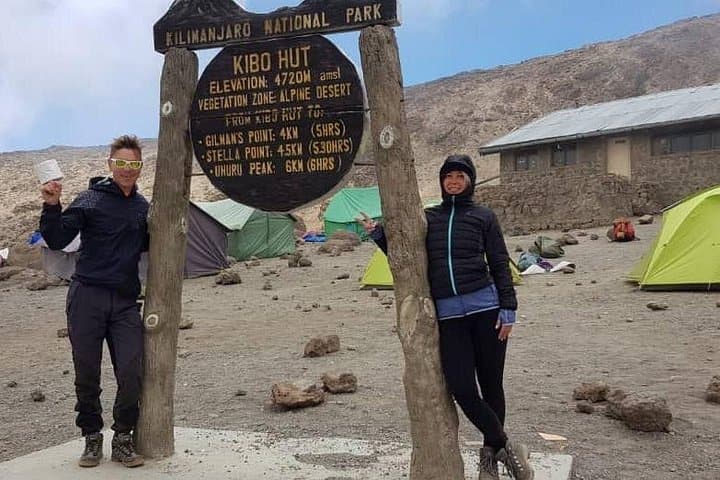
Mandara Hut is at 2,700 m, Horombo Hut at 3,720 m, Kibo Hut at 4,700 m, and the summit is 5,895 m.
Yes, the package includes breakfast, lunch, and dinner for each day on the mountain.
No, the Marangu route offers dormitory-style huts eliminating the need for camping equipment.
The route includes a rest day at Horombo Hut to help acclimatize, but altitude sickness risks remain, so pacing and hydration are important.
The ideal climbing seasons are during the dry periods: late June to early October and mid-December to late February.
Pishon Tours and Safaris Ltd operates guided outdoor trips and adventures with an emphasis on safety, stewardship, and memorable experiences.
The crack of dawn reveals a thick mist clinging to the dense tropical rainforest as you step through Marangu Gate, embarking on the most established trek to Tanzania's peak giant, Mount Kilimanjaro. This 6-day journey via the Marangu Route—often dubbed the "Coca-Cola" route for its relative accessibility—is a measured climb through evolving ecosystems, where shifting landscapes narrate ancient geological stories.
The crack of dawn reveals a thick mist clinging to the dense tropical rainforest as you step through Marangu Gate, embarking on the most established trek to Tanzania's peak giant, Mount Kilimanjaro. This 6-day journey via the Marangu Route—often dubbed the "Coca-Cola" route for its relative accessibility—is a measured climb through evolving ecosystems, where shifting landscapes narrate ancient geological stories.
This route's hallmark is its dormitory-style huts, a rare comfort amid Kilimanjaro’s challenging terrain. These shelters, each accommodating dozens of climbers, provide respite not merely for sleep but to acclimate gradually, a crucial advantage in avoiding altitude sickness.
From the rainforest's moisture-draped canopy, tall eucalyptus trees give way to moorlands speckled with giant lobelias. As you ascend from Mandara Hut (2,700m) to Horombo Hut (3,720m), the forest hesitates, as if standing back to reveal the looming twin volcanic peaks of Mawenzi and Kibo. These ancient volcanic formations have sculpted Africa’s highest summit at 5,895 meters.
The route's geology is a subtle reminder of volcanic power—loose scree and jagged lava rocks that challenge footing but invite close inspection. The saddle between Mawenzi and Kibo is a lunar desert, where the wind dares hikers onward through barren expanses, signaling the altitude’s thin air.
Cultural ties to the Chagga people surface near trailheads and villages, with guides often sharing insights into local traditions rooted in reverence for the mountain. While the landscape transforms, the spirit of Kilimanjaro remains constant—a monumental natural sentinel demanding respect and preparation.
In practical terms, climbers should be ready for daily walking distances averaging 10-12 kilometers with significant elevation gain, especially on summit day’s 13-15 hour push from Kibo Hut to Uhuru Peak and descent to Horombo Hut. Moderation and hydration are vital on this route. Footwear with solid ankle support and layered clothing adapting to fluctuating temperatures—from rainforests’ humidity to alpine cold—is a non-negotiable.
The best climbing season spans from late June to early October or mid-December to late February, avoiding the rainy spells that make trails slippery and accommodations less comfortable. Each evening in the hut offers a chance to rest, hydrate, and share stories under a high-altitude sky dusted with stars.
For those ready to experience Africa’s roof while benefiting from established infrastructure, the Marangu Route blends adventure with practicality—a gateway to an unforgettable summit where earth’s elemental forces meet human determination.