THE ADVENTURE COLLECTIVE® · Independent discovery and booking for outdoor travel

Climb into a small plane at West Yellowstone and follow rivers to their headwaters as the Continental Divide splits the continent beneath you. This 45-minute flight pairs geology and history with live pilot narration for a compact, revealing view of Greater Yellowstone.
Climb into a small plane at West Yellowstone and follow rivers to their headwaters as the Continental Divide splits the continent beneath you. This 45-minute flight pairs geology and history with live pilot narration for a compact, revealing view of Greater Yellowstone.
Engines rise and the landscape unfurls: the plane lifts from West Yellowstone and the valley drops away, rivers threading the high country like silver ribbons. From above the Continental Divide, water makes a choice — east to the Gulf, west to the Pacific — and the flight traces those beginnings, following riverheads, ridgelines, and glacier-scooped basins.
Verified experiences and guided adventures in the surrounding area.
Operated by Fly Yellowstone · West Yellowstone, Montana
Engines rise and the landscape unfurls: the plane lifts from West Yellowstone and the valley drops away, rivers threading the high country like silver ribbons. From above the Continental Divide, water makes a choice — east to the Gulf, west to the Pacific — and the flight traces those beginnings, following riverheads, ridgelines, and glacier-scooped basins.
Yellowstone sits on a volcanic, hydrothermal plateau that has directed drainage and human travel for millennia. Indigenous peoples including Shoshone and Crow traversed these ranges long before the park’s 1872 designation, and the 20th-century designation of Yellowstone as protected land changed how the region is managed and seen. Geology is immediate here: the caldera, glacial valleys, and uplifted Madison Range show how fire, ice, and water carved the present-day skyline.
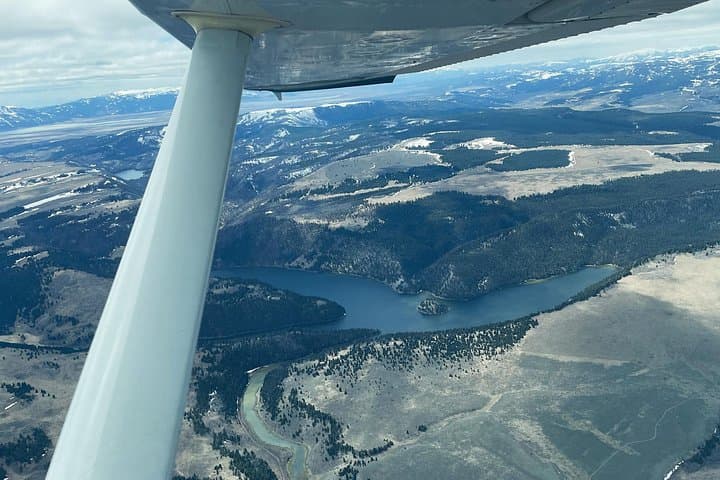
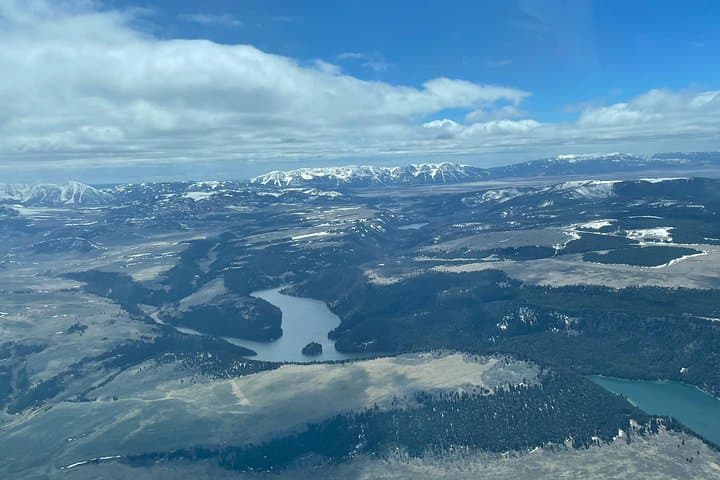
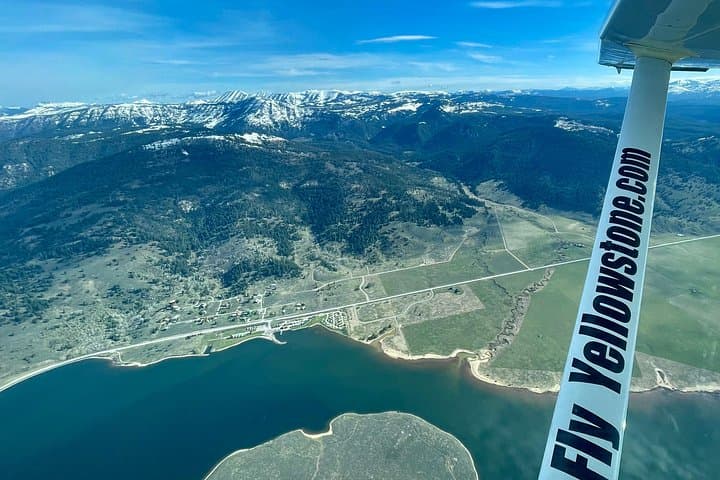
From this aerial vantage, pilots narrate the route — Hebgen Lake’s shoreline, the braided headwaters of the Madison and Gallatin, and the dense slopes of Gallatin National Forest — offering context that maps can’t convey.
Practical guide: flights are 45 minutes, small-group, with a window seat for every passenger and aviation headsets for narration. Weight limits and combined passenger-weight caps apply; infants must lap-sit. Morning flights give the cleanest light and calmer air, while afternoons can bring thermals and reduced visibility.
Bring layered clothing, secure your camera, and take motion-sickness precautions if you’re sensitive to small-craft motion. Expect FAA-certified pilots, cancellation in bad weather, and a concise, high-altitude perspective that turns river systems and mountain geology into legible patterns below.
The aerial tour is 45 minutes from takeoff to landing.
Yes — operators enforce per-passenger and combined weight caps; passengers must provide weights when booking.
Flights are canceled or rescheduled for unsafe weather; the operator offers full refunds if canceled at least 24 hours in advance or due to conditions.
Yes — each passenger gets a window seat and a noise-reducing headset for live pilot narration throughout the flight.
Fly Yellowstone operates guided outdoor trips and adventures with an emphasis on safety, stewardship, and memorable experiences.
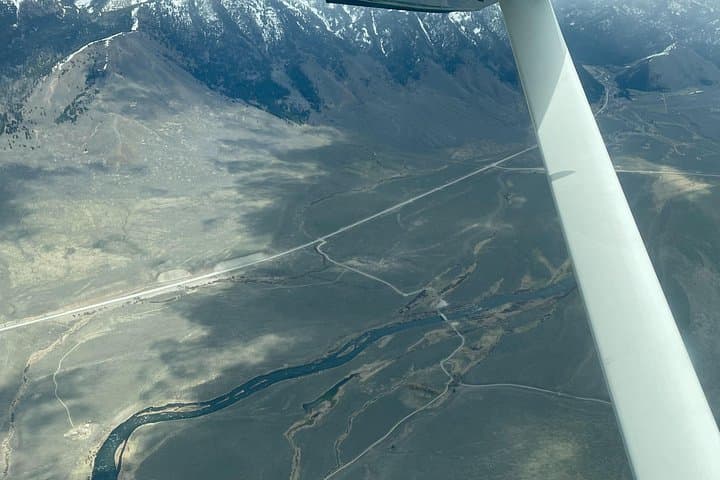
Engines rise and the landscape unfurls: the plane lifts from West Yellowstone and the valley drops away, rivers threading the high country like silver ribbons. From above the Continental Divide, water makes a choice — east to the Gulf, west to the Pacific — and the flight traces those beginnings, following riverheads, ridgelines, and glacier-scooped basins.
Engines rise and the landscape unfurls: the plane lifts from West Yellowstone and the valley drops away, rivers threading the high country like silver ribbons. From above the Continental Divide, water makes a choice — east to the Gulf, west to the Pacific — and the flight traces those beginnings, following riverheads, ridgelines, and glacier-scooped basins.
Yellowstone sits on a volcanic, hydrothermal plateau that has directed drainage and human travel for millennia. Indigenous peoples including Shoshone and Crow traversed these ranges long before the park’s 1872 designation, and the 20th-century designation of Yellowstone as protected land changed how the region is managed and seen. Geology is immediate here: the caldera, glacial valleys, and uplifted Madison Range show how fire, ice, and water carved the present-day skyline.
From this aerial vantage, pilots narrate the route — Hebgen Lake’s shoreline, the braided headwaters of the Madison and Gallatin, and the dense slopes of Gallatin National Forest — offering context that maps can’t convey.
Practical guide: flights are 45 minutes, small-group, with a window seat for every passenger and aviation headsets for narration. Weight limits and combined passenger-weight caps apply; infants must lap-sit. Morning flights give the cleanest light and calmer air, while afternoons can bring thermals and reduced visibility.
Bring layered clothing, secure your camera, and take motion-sickness precautions if you’re sensitive to small-craft motion. Expect FAA-certified pilots, cancellation in bad weather, and a concise, high-altitude perspective that turns river systems and mountain geology into legible patterns below.