THE ADVENTURE COLLECTIVE® · Independent discovery and booking for outdoor travel

A short, immersive visit to the Guacamaya Mountain Bird and Nature Reserve—just 2 km from Copán Ruinas—where rescued native birds, century-old trees and a coffee farm meet the shaded canyon of the Sesesmil Gorge. Practical tips for timing, gear and accessibility are included.
A short, immersive visit to the Guacamaya Mountain Bird and Nature Reserve—just 2 km from Copán Ruinas—where rescued native birds, century-old trees and a coffee farm meet the shaded canyon of the Sesesmil Gorge. Practical tips for timing, gear and accessibility are included.
You step off a moto-taxi into cool canyon air and the first call is not of people but of parrots—bright plumage flashing against a steep gorge. The Guacamaya Mountain Bird and Nature Reserve sits just 2 km from Copán Ruinas, tucked into the Sesesmil (Caka-Guatales) gorge that feeds the valley below. Water cuts the rock here; the gorge keeps temperatures gentler and the vegetation dense, so birds find both shelter and food.
Verified experiences and guided adventures in the surrounding area.
Operated by Honduras Traveling · Copán Ruinas, Copán
You step off a moto-taxi into cool canyon air and the first call is not of people but of parrots—bright plumage flashing against a steep gorge. The Guacamaya Mountain Bird and Nature Reserve sits just 2 km from Copán Ruinas, tucked into the Sesesmil (Caka-Guatales) gorge that feeds the valley below. Water cuts the rock here; the gorge keeps temperatures gentler and the vegetation dense, so birds find both shelter and food.
The reserve blends natural history and restoration. Centuries-old trees shade paths once worked by coffee farmers, and the park’s collection focuses on native Honduran and Central American species, with a few South American arrivals. Many birds are rescued from illegal trade or injury; biologists monitor recovery in large flight enclosures and, when possible, stage releases back into the wild.
Geologically the canyon is a shallow valley carved by streams draining the nearby mountains, creating microhabitats that support riparian plants and migratory stopovers. Culturally, the reserve complements visits to nearby Mayan ruins: it offers a quieter look at contemporary conservation efforts in a region defined by ancient civilization and current eco-tourism.
Practical guidance: the visit is short—roughly 2–3 hours—so arrive hydrated and wear sturdy walking shoes for uneven paths. Bring binoculars and a light rain jacket during the wet season. Respect fenced enclosures and follow guide instructions; photography is usually welcome but avoid flash around sensitive species. The park is wheelchair-accessible in main areas but some trails are steeper. If you have time, combine the visit with a tour of Copán Ruinas for a full day of nature and archaeology.
The park is about 2 km from Copán Ruinas; many visitors take a short moto-taxi or walk depending on time and weather.
The reserve cares for rescued birds housed in large flight cages where biologists monitor recovery; some birds are released when feasible.
Main visitor areas are wheelchair-accessible, but some informal trails and viewpoints include steps and uneven surfaces.
Photography is generally allowed; avoid flash near enclosures and follow staff guidance to minimize stress on animals.
Honduras Traveling operates guided outdoor trips and adventures with an emphasis on safety, stewardship, and memorable experiences.
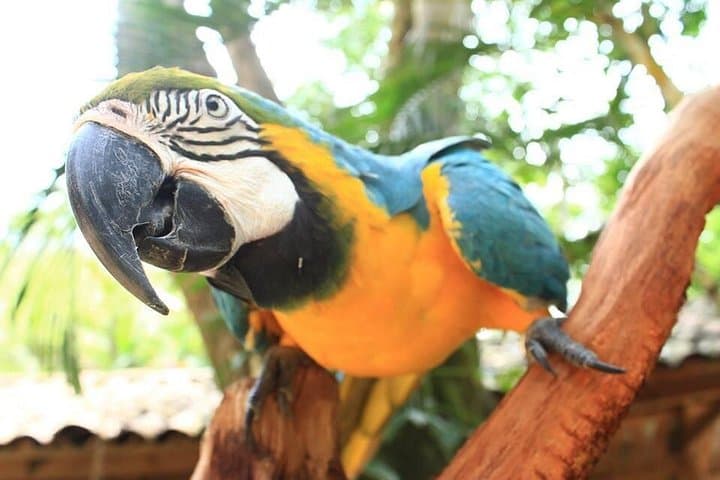


You step off a moto-taxi into cool canyon air and the first call is not of people but of parrots—bright plumage flashing against a steep gorge. The Guacamaya Mountain Bird and Nature Reserve sits just 2 km from Copán Ruinas, tucked into the Sesesmil (Caka-Guatales) gorge that feeds the valley below. Water cuts the rock here; the gorge keeps temperatures gentler and the vegetation dense, so birds find both shelter and food.
You step off a moto-taxi into cool canyon air and the first call is not of people but of parrots—bright plumage flashing against a steep gorge. The Guacamaya Mountain Bird and Nature Reserve sits just 2 km from Copán Ruinas, tucked into the Sesesmil (Caka-Guatales) gorge that feeds the valley below. Water cuts the rock here; the gorge keeps temperatures gentler and the vegetation dense, so birds find both shelter and food.
The reserve blends natural history and restoration. Centuries-old trees shade paths once worked by coffee farmers, and the park’s collection focuses on native Honduran and Central American species, with a few South American arrivals. Many birds are rescued from illegal trade or injury; biologists monitor recovery in large flight enclosures and, when possible, stage releases back into the wild.
Geologically the canyon is a shallow valley carved by streams draining the nearby mountains, creating microhabitats that support riparian plants and migratory stopovers. Culturally, the reserve complements visits to nearby Mayan ruins: it offers a quieter look at contemporary conservation efforts in a region defined by ancient civilization and current eco-tourism.
Practical guidance: the visit is short—roughly 2–3 hours—so arrive hydrated and wear sturdy walking shoes for uneven paths. Bring binoculars and a light rain jacket during the wet season. Respect fenced enclosures and follow guide instructions; photography is usually welcome but avoid flash around sensitive species. The park is wheelchair-accessible in main areas but some trails are steeper. If you have time, combine the visit with a tour of Copán Ruinas for a full day of nature and archaeology.