THE ADVENTURE COLLECTIVE® · Independent discovery and booking for outdoor travel

Spend a long, rewarding day traveling from San Salvador to the UNESCO-listed Copán Ruins—arrive early to walk carved plazas, climb the Hieroglyphic Stairway and visit the on-site museum. This full-day tour blends cultural history with a bit of light hiking and international border formalities.
Spend a long, rewarding day traveling from San Salvador to the UNESCO-listed Copán Ruins—arrive early to walk carved plazas, climb the Hieroglyphic Stairway and visit the on-site museum. This full-day tour blends cultural history with a bit of light hiking and international border formalities.
You arrive before the day has fully warmed, the bus easing through farmland while the hills of western Honduras grow taller on the horizon. Forested ridgelines press close to the road and the air smells of damp earth—Copán feels like a city that nature is still trying to keep pace with.
Verified experiences and guided adventures in the surrounding area.
Operated by Eco Tours Petate · Copán Ruinas, Copán
You arrive before the day has fully warmed, the bus easing through farmland while the hills of western Honduras grow taller on the horizon. Forested ridgelines press close to the road and the air smells of damp earth—Copán feels like a city that nature is still trying to keep pace with.
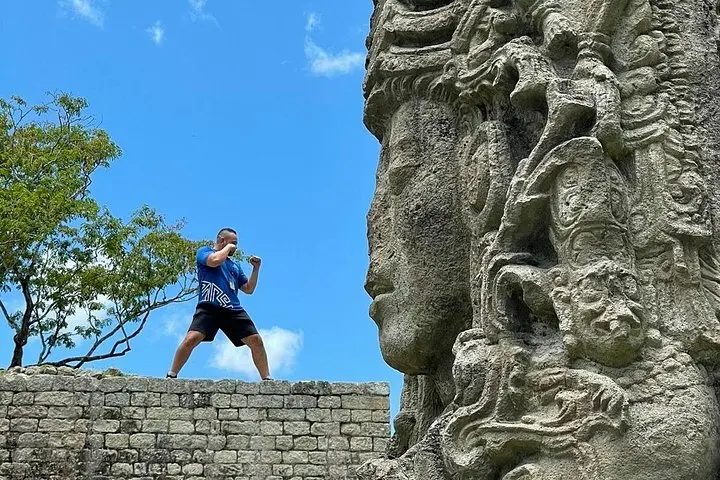
Copán was a major Classic-period Maya capital from roughly the 5th to 9th centuries. Its plazas, intricately carved stelae and the famous Hieroglyphic Stairway speak to a literate, artisan society whose monuments survived centuries of growth and neglect. Geologically the site sits on limestone highlands, with stone terraces and plazas that channel seasonal runoff; culturally the region blends indigenous Maya heritage with Spanish colonial-era town life in nearby Copán Ruinas.
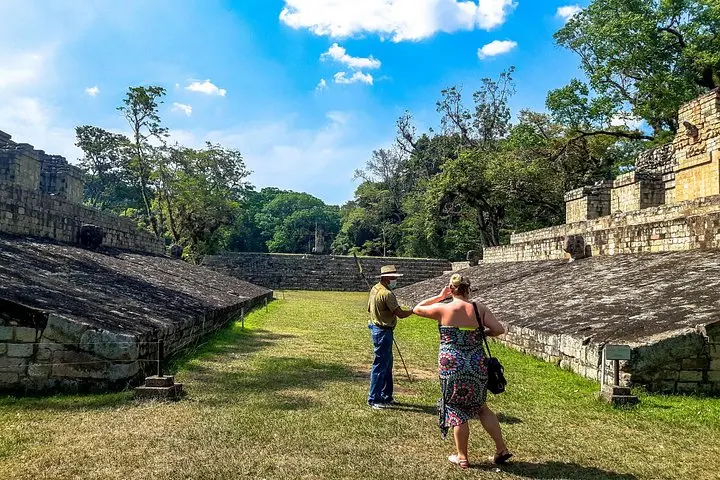
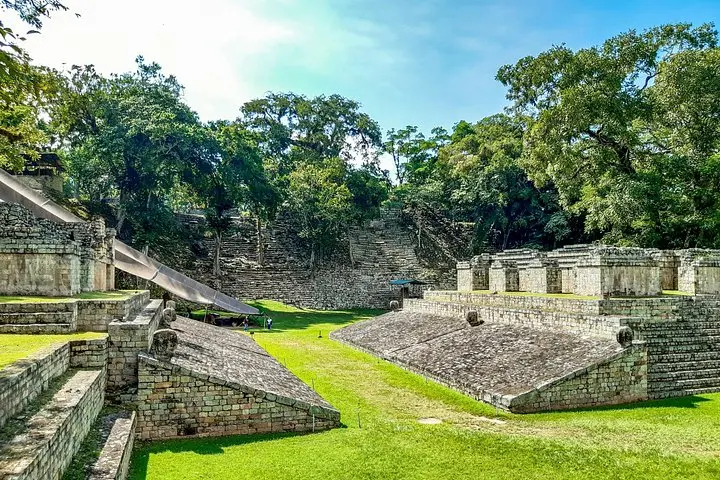
On the ground you’ll walk stone causeways and shaded alleys where ceiba and fig trees press roots into old masonry. Birds—macaws and trogons—announce themselves and the forest seems to nudge you toward viewpoints: the ball court, the sculpted altars, and the museum that explains the stelae’s glyphs.
Practical side: this is a long, full-day outing from San Salvador that crosses an international border; bring your passport, expect early pickup, and plan for 2–3 hours of on-site walking over uneven stone and occasional steps. Drink water frequently, wear sturdy closed-toe shoes, and carry sun and rain protection. Guides translate glyphs into context and manage entrance logistics; staying on marked paths protects fragile carvings. With daylight and a steady pace, a day trip gives a vivid window into Maya civic life and a hands-on lesson in archaeological conservation.
Yes. The itinerary crosses the El Salvador–Honduras border and all travelers must carry a valid passport.
Check the booking details—many operators include site admission, but confirm before travel so you can budget accordingly.
The tour is family-friendly but long; those with limited mobility should note uneven ground and multiple steps on site.
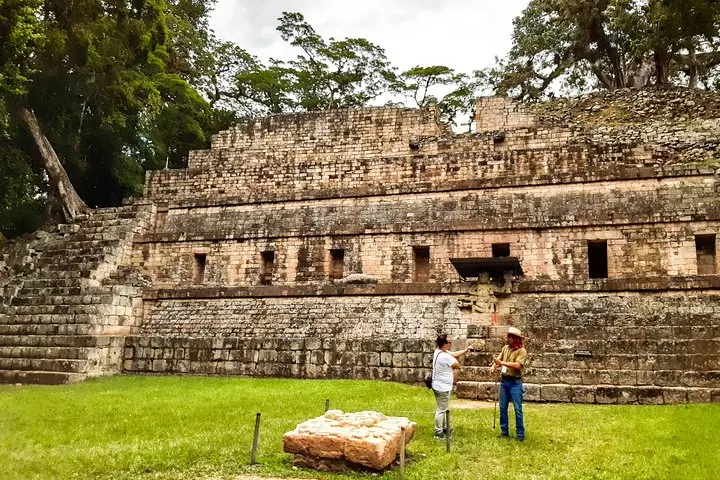
Yes. Typical itineraries include guided visits to the main plaza, the Hieroglyphic Stairway, and the onsite museum within the allocated on-site hours.
Eco Tours Petate operates guided outdoor trips and adventures with an emphasis on safety, stewardship, and memorable experiences.
You arrive before the day has fully warmed, the bus easing through farmland while the hills of western Honduras grow taller on the horizon. Forested ridgelines press close to the road and the air smells of damp earth—Copán feels like a city that nature is still trying to keep pace with.
You arrive before the day has fully warmed, the bus easing through farmland while the hills of western Honduras grow taller on the horizon. Forested ridgelines press close to the road and the air smells of damp earth—Copán feels like a city that nature is still trying to keep pace with.
Copán was a major Classic-period Maya capital from roughly the 5th to 9th centuries. Its plazas, intricately carved stelae and the famous Hieroglyphic Stairway speak to a literate, artisan society whose monuments survived centuries of growth and neglect. Geologically the site sits on limestone highlands, with stone terraces and plazas that channel seasonal runoff; culturally the region blends indigenous Maya heritage with Spanish colonial-era town life in nearby Copán Ruinas.
On the ground you’ll walk stone causeways and shaded alleys where ceiba and fig trees press roots into old masonry. Birds—macaws and trogons—announce themselves and the forest seems to nudge you toward viewpoints: the ball court, the sculpted altars, and the museum that explains the stelae’s glyphs.
Practical side: this is a long, full-day outing from San Salvador that crosses an international border; bring your passport, expect early pickup, and plan for 2–3 hours of on-site walking over uneven stone and occasional steps. Drink water frequently, wear sturdy closed-toe shoes, and carry sun and rain protection. Guides translate glyphs into context and manage entrance logistics; staying on marked paths protects fragile carvings. With daylight and a steady pace, a day trip gives a vivid window into Maya civic life and a hands-on lesson in archaeological conservation.