THE ADVENTURE COLLECTIVE® · Independent discovery and booking for outdoor travel

Trace miners’ footsteps through rainforest and relic machinery on a two-hour guided visit to the Mountain Maid gold mine at Copeland Tops. Expect creekside walking, hands-on gold panning and up-close views of historic mining equipment.
Trace miners’ footsteps through rainforest and relic machinery on a two-hour guided visit to the Mountain Maid gold mine at Copeland Tops. Expect creekside walking, hands-on gold panning and up-close views of historic mining equipment.
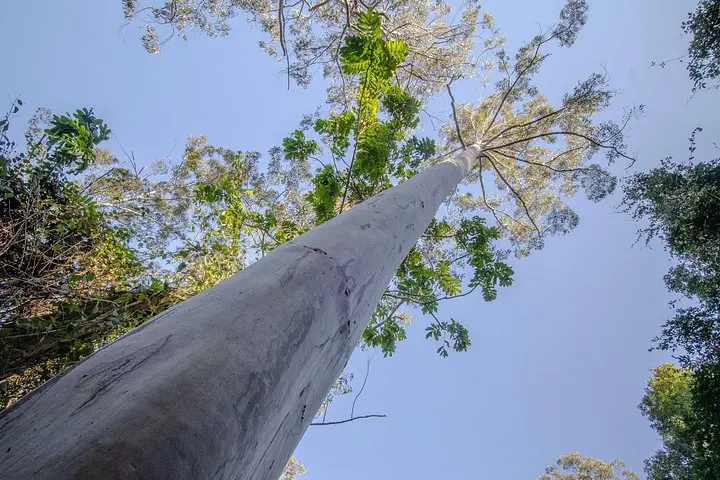
A damp canopy closes overhead as your guide leads the group onto the Hidden Treasure Track, copse and creek exchanging mossy breaths. Ferns brush pant legs, water threads over stones, and the air tastes of wet leaf and old metal; every step hints at an industrial past tucked inside rainforest calm.
Verified experiences and guided adventures in the surrounding area.
Operated by NSW National Parks and Wildlife Service · Copeland, New South Wales
A damp canopy closes overhead as your guide leads the group onto the Hidden Treasure Track, copse and creek exchanging mossy breaths. Ferns brush pant legs, water threads over stones, and the air tastes of wet leaf and old metal; every step hints at an industrial past tucked inside rainforest calm.
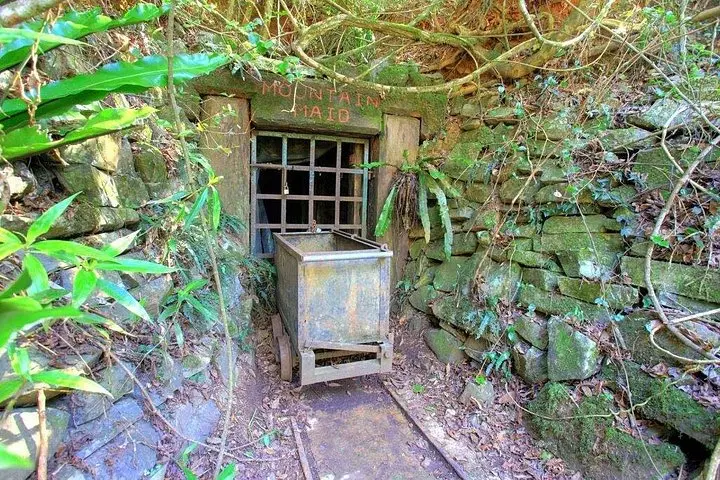
This two-hour guided visit moves between natural and human history. After gold was found at Copeland in 1876, miners carved tracks, erected equipment and ran operations like the Mountain Maid mine for decades. Remnants remain—battery stampers, gold carts and a whirly-gig separator—that tell of extraction techniques and remote life on the mid‑North Coast of New South Wales. Geologically, the area sits on weathered, mineral-bearing sediments and basalt flows that concentrated alluvial and reef gold, while the rainforest itself is a pocket of coastal subtropical species shaped by local rainfall and elevation.
Culturally the walk touches on the boom-era settlement patterns and the later conservation decisions that protected these pockets of forest. Local guides are often National Parks-accredited and layer storytelling with practical interpretation of flora, fauna and mining tech.
Practically, expect 2 hours of mostly easy walking with some uneven, rooty sections alongside Copeland Creek. Bring sturdy footwear, a waterproof layer and at least 1L of water; panning is included so leave valuables behind. Tours are small-group, family-friendly but require moderate fitness; weather can close the site, so check conditions before you travel. Arrive early to avoid mid-day heat and allow time afterward to explore nearby viewpoints or the small historic sites along the track.
The guided visit runs approximately 2 hours, combining a rainforest walk with time at the mine site and panning activity.
Yes — supervised gold panning is part of the experience and uses provided equipment and pans.
Yes for school-aged children with moderate fitness; toddlers may find sections uneven and muddy.
Tours may be cancelled in heavy rain or hazardous conditions; check confirmation details and local weather before travel.
NSW National Parks and Wildlife Service operates guided outdoor trips and adventures with an emphasis on safety, stewardship, and memorable experiences.
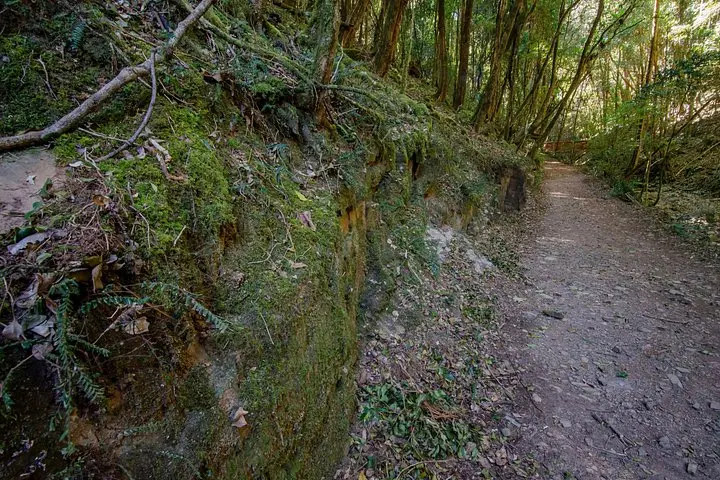
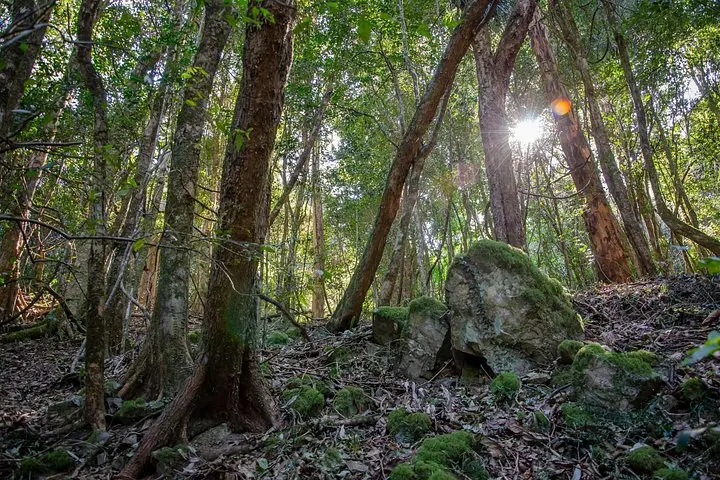
A damp canopy closes overhead as your guide leads the group onto the Hidden Treasure Track, copse and creek exchanging mossy breaths. Ferns brush pant legs, water threads over stones, and the air tastes of wet leaf and old metal; every step hints at an industrial past tucked inside rainforest calm.
A damp canopy closes overhead as your guide leads the group onto the Hidden Treasure Track, copse and creek exchanging mossy breaths. Ferns brush pant legs, water threads over stones, and the air tastes of wet leaf and old metal; every step hints at an industrial past tucked inside rainforest calm.
This two-hour guided visit moves between natural and human history. After gold was found at Copeland in 1876, miners carved tracks, erected equipment and ran operations like the Mountain Maid mine for decades. Remnants remain—battery stampers, gold carts and a whirly-gig separator—that tell of extraction techniques and remote life on the mid‑North Coast of New South Wales. Geologically, the area sits on weathered, mineral-bearing sediments and basalt flows that concentrated alluvial and reef gold, while the rainforest itself is a pocket of coastal subtropical species shaped by local rainfall and elevation.
Culturally the walk touches on the boom-era settlement patterns and the later conservation decisions that protected these pockets of forest. Local guides are often National Parks-accredited and layer storytelling with practical interpretation of flora, fauna and mining tech.
Practically, expect 2 hours of mostly easy walking with some uneven, rooty sections alongside Copeland Creek. Bring sturdy footwear, a waterproof layer and at least 1L of water; panning is included so leave valuables behind. Tours are small-group, family-friendly but require moderate fitness; weather can close the site, so check conditions before you travel. Arrive early to avoid mid-day heat and allow time afterward to explore nearby viewpoints or the small historic sites along the track.