THE ADVENTURE COLLECTIVE® · Independent discovery and booking for outdoor travel

Wander Copenhagen’s festive streets to sample Æbleskiver, sip warm gløgg and learn how Viking-era Yuletide morphed into modern Danish Christmas. A three-hour guided walk pairs history with tastes.
Wander Copenhagen’s festive streets to sample Æbleskiver, sip warm gløgg and learn how Viking-era Yuletide morphed into modern Danish Christmas. A three-hour guided walk pairs history with tastes.
The tour begins at Torvehallerne, where steam from hot gløgg coils above market stalls and strings of lights stitch the early night into a warm alley. Guides lead the group through narrow cobbled streets; the harbor wind dares you to quicken your step, and evergreens framed with ornaments stand like neighborhood ambassadors.
Verified experiences and guided adventures in the surrounding area.
Operated by Copenhagen By Mie · Copenhagen, Capital Region
The tour begins at Torvehallerne, where steam from hot gløgg coils above market stalls and strings of lights stitch the early night into a warm alley. Guides lead the group through narrow cobbled streets; the harbor wind dares you to quicken your step, and evergreens framed with ornaments stand like neighborhood ambassadors.
Copenhagen’s holiday rituals mix recent civic pageantry with older practices. From Viking-era Yule customs that emphasized feasting and household rituals to Lutheran carols that reshaped public celebrations, Danish Christmas blends folk traditions and civic ceremony. Geologically, the flatness of Zealand channels winter winds off the Øresund, keeping nights sharp and the air dryer than inland winters; it’s why open-air markets stay lively even in cold weather. Culturally, food is the language here—Æbleskiver, peppery gingerbread hearts and julebryg communicate community in local dialect.
Practically, expect three hours of urban walking with frequent stops to sample snacks and drinks at street-food stalls and a Christmas market near Christiansborg. The guide explains religious and secular customs at landmarks like Copenhagen Cathedral and points out how public spaces are staged for holidays. The tour finishes with a traditional Danish gift game—bring a small wrapped present to participate.
Plan for layered clothing, comfortable shoes for cobbles and short staircases, and a payment card for additional purchases. The pace is social, not strenuous, but standing and walking across uneven surfaces means sensible footwear and a light pack will make the evening more enjoyable.
Meeting point is near Torvehallerne food market by Nørreport; exact meeting instructions are provided on your booking confirmation.
Several Danish Christmas treats and a serving of gløgg and julebryg are included; additional purchases at the market are extra.
Yes—infants can ride in strollers and the route is family-friendly, though cobblestones may be bumpy in places.
Yes—non-alcoholic gløgg and alternative beverages are available upon request.
Copenhagen By Mie operates guided outdoor trips and adventures with an emphasis on safety, stewardship, and memorable experiences.
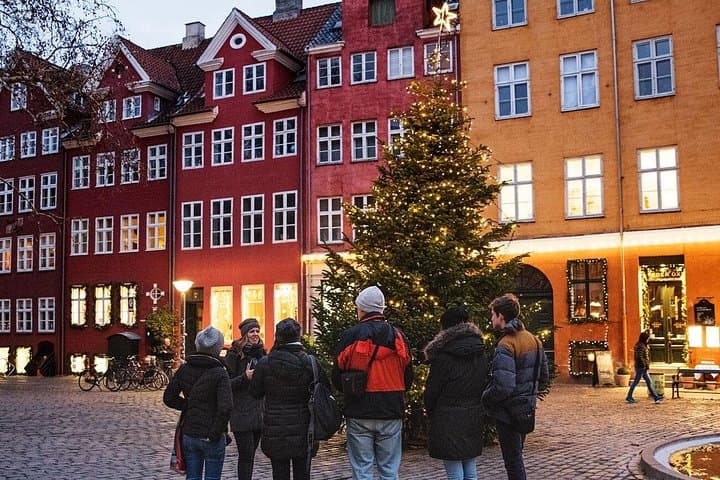


The tour begins at Torvehallerne, where steam from hot gløgg coils above market stalls and strings of lights stitch the early night into a warm alley. Guides lead the group through narrow cobbled streets; the harbor wind dares you to quicken your step, and evergreens framed with ornaments stand like neighborhood ambassadors.
The tour begins at Torvehallerne, where steam from hot gløgg coils above market stalls and strings of lights stitch the early night into a warm alley. Guides lead the group through narrow cobbled streets; the harbor wind dares you to quicken your step, and evergreens framed with ornaments stand like neighborhood ambassadors.
Copenhagen’s holiday rituals mix recent civic pageantry with older practices. From Viking-era Yule customs that emphasized feasting and household rituals to Lutheran carols that reshaped public celebrations, Danish Christmas blends folk traditions and civic ceremony. Geologically, the flatness of Zealand channels winter winds off the Øresund, keeping nights sharp and the air dryer than inland winters; it’s why open-air markets stay lively even in cold weather. Culturally, food is the language here—Æbleskiver, peppery gingerbread hearts and julebryg communicate community in local dialect.
Practically, expect three hours of urban walking with frequent stops to sample snacks and drinks at street-food stalls and a Christmas market near Christiansborg. The guide explains religious and secular customs at landmarks like Copenhagen Cathedral and points out how public spaces are staged for holidays. The tour finishes with a traditional Danish gift game—bring a small wrapped present to participate.
Plan for layered clothing, comfortable shoes for cobbles and short staircases, and a payment card for additional purchases. The pace is social, not strenuous, but standing and walking across uneven surfaces means sensible footwear and a light pack will make the evening more enjoyable.