THE ADVENTURE COLLECTIVE® · Independent discovery and booking for outdoor travel

A full-day private circuit from Creel that stitches together the Copper Canyon’s best viewpoints—Divisadero, Piedra Volada and San Luis—plus an adventure park with cable car and zipline. Expect dramatic overlooks, geological context, and Rarámuri cultural insights.
A full-day private circuit from Creel that stitches together the Copper Canyon’s best viewpoints—Divisadero, Piedra Volada and San Luis—plus an adventure park with cable car and zipline. Expect dramatic overlooks, geological context, and Rarámuri cultural insights.
The van curves away from Creel before dawn, headlights carving through a breath of mist that clings to the pines. By the time the canyon opens, the world has rearranged itself: ridgelines fall away in shale and volcanic terraces, and the horizon is a ragged line of cliffs and gullies that seem to move with the light. Travelers lean into the windows as Mirador Divisadero comes into view—a raw cut in the earth where wind and water have been the chief sculptors—and for a moment the canyon feels like a living place that watches back.
Verified experiences and guided adventures in the surrounding area.
Operated by De Viaje por Chihuahua · Creel, Chihuahua
The van curves away from Creel before dawn, headlights carving through a breath of mist that clings to the pines. By the time the canyon opens, the world has rearranged itself: ridgelines fall away in shale and volcanic terraces, and the horizon is a ragged line of cliffs and gullies that seem to move with the light. Travelers lean into the windows as Mirador Divisadero comes into view—a raw cut in the earth where wind and water have been the chief sculptors—and for a moment the canyon feels like a living place that watches back.
Barrancas del Cobre (Copper Canyon) is not one canyon but a system of six deep gorges in the Sierra Madre Occidental, carved over millennia by rivers that still dare to run where roads now thread. The region is home to the Rarámuri (Tarahumara) people, whose cliffside trails and footwork traditions reflect a culture adapted to vertical landscapes. Geologically, the canyons are younger and steeper than the Grand Canyon; volcanic rock and faulting have produced abrupt drops, talus slopes, and the sheer walls that make every viewpoint dramatic.
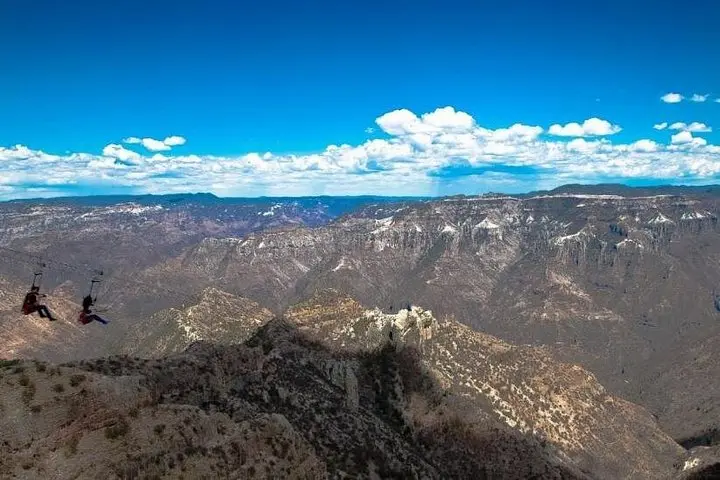
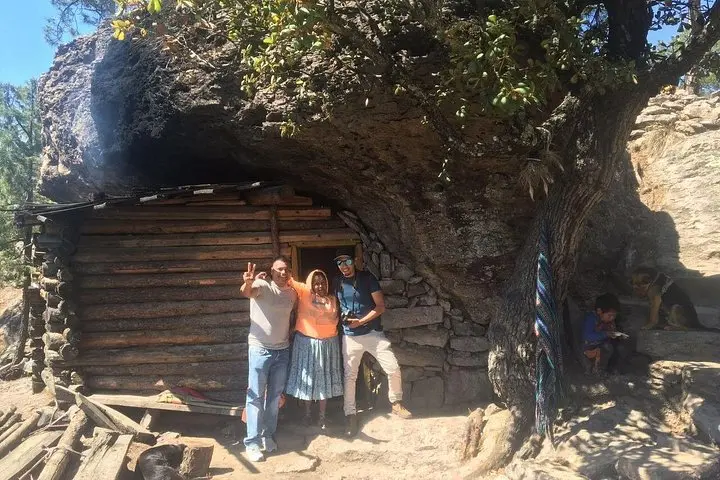
This private, roughly 5–7 hour circuit out of Creel stitches together the best quick-visit highlights: the Chepe train tunnel viewpoints, Piedra Volada and Mirador San Luis de Majimachi, a fertility stone and cave with local lore, plus the adrenaline of the adventure park—zip lines, the world’s longest cable car crossing, and via ferrata elements for those who want a fixed-rope scramble. Guides from Creel are typically Rarámuri-aware and certified, offering context on the area's history and advising minimal-impact behavior.
Practical realities matter here. The day moves between short viewpoints and active stations—expect uneven ground, stairs, and exposure at overlooks. Admission to attractions and the adventure-park elements is often extra; the tour provides private transport, bottled water, and air-conditioned comfort between stops. Pickup is available across Creel; confirm hotel pickup when you book.
Timing is everything: mornings give crisper air and better visibility; midday can be hazy and hot. Pack layers for temperature swings, solid shoes for short hikes and lookout scrambling, and sunscreen—UV is strong at elevation. If you plan on ziplining or the cable car, check age and weight limits in advance and leave valuables zipped away.
For a single-day immersion into one of Mexico’s most elemental landscapes, this Creel-to-Divisadero route balances spectacle and accessibility. It’s a condensed education in geology, Rarámuri life, and pure vertical drama—plus a few high-adrenaline seconds to remind you that the canyon still calls for a little humility.
No—the tour stops at viewpoints related to the Chepe route but train tickets are not included; you can plan a separate ride if you want the full rail experience.
Admission to ziplines, cable car, and via ferrata is typically extra; confirm when booking if you want them bundled.
Yes, the tour is family-friendly but certain attractions have age or weight limits; inform the operator of ages when booking.
The route includes viewpoints with stairs and uneven ground; it is not fully wheelchair accessible—contact the supplier for specific accommodations.
Pickup within Creel is available and usually occurs about 10 minutes before departure; confirm your hotel location when you book.
The tour supplies bottled water; bring snacks if you have dietary preferences—there is a restaurant stop but menus may be limited.
De Viaje por Chihuahua operates guided outdoor trips and adventures with an emphasis on safety, stewardship, and memorable experiences.
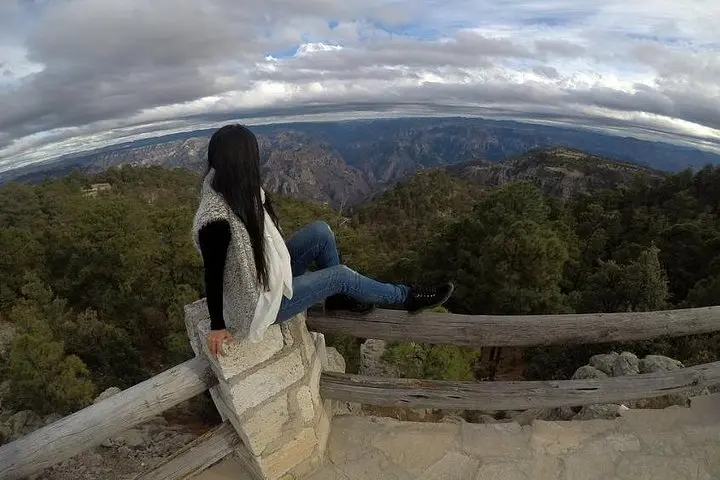
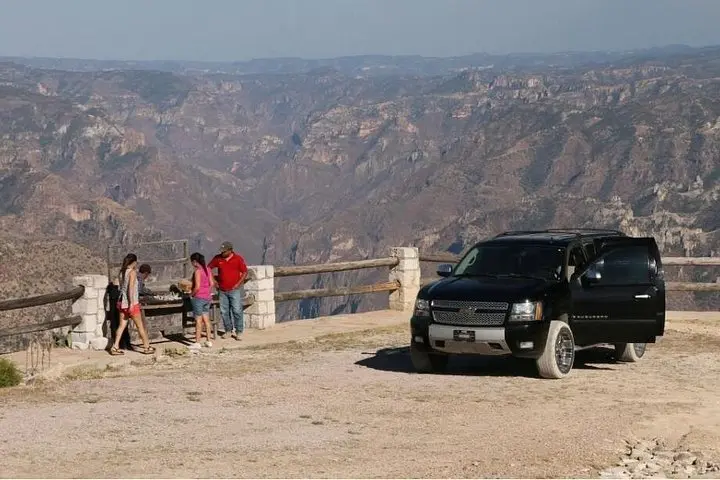
The van curves away from Creel before dawn, headlights carving through a breath of mist that clings to the pines. By the time the canyon opens, the world has rearranged itself: ridgelines fall away in shale and volcanic terraces, and the horizon is a ragged line of cliffs and gullies that seem to move with the light. Travelers lean into the windows as Mirador Divisadero comes into view—a raw cut in the earth where wind and water have been the chief sculptors—and for a moment the canyon feels like a living place that watches back.
The van curves away from Creel before dawn, headlights carving through a breath of mist that clings to the pines. By the time the canyon opens, the world has rearranged itself: ridgelines fall away in shale and volcanic terraces, and the horizon is a ragged line of cliffs and gullies that seem to move with the light. Travelers lean into the windows as Mirador Divisadero comes into view—a raw cut in the earth where wind and water have been the chief sculptors—and for a moment the canyon feels like a living place that watches back.
Barrancas del Cobre (Copper Canyon) is not one canyon but a system of six deep gorges in the Sierra Madre Occidental, carved over millennia by rivers that still dare to run where roads now thread. The region is home to the Rarámuri (Tarahumara) people, whose cliffside trails and footwork traditions reflect a culture adapted to vertical landscapes. Geologically, the canyons are younger and steeper than the Grand Canyon; volcanic rock and faulting have produced abrupt drops, talus slopes, and the sheer walls that make every viewpoint dramatic.
This private, roughly 5–7 hour circuit out of Creel stitches together the best quick-visit highlights: the Chepe train tunnel viewpoints, Piedra Volada and Mirador San Luis de Majimachi, a fertility stone and cave with local lore, plus the adrenaline of the adventure park—zip lines, the world’s longest cable car crossing, and via ferrata elements for those who want a fixed-rope scramble. Guides from Creel are typically Rarámuri-aware and certified, offering context on the area's history and advising minimal-impact behavior.
Practical realities matter here. The day moves between short viewpoints and active stations—expect uneven ground, stairs, and exposure at overlooks. Admission to attractions and the adventure-park elements is often extra; the tour provides private transport, bottled water, and air-conditioned comfort between stops. Pickup is available across Creel; confirm hotel pickup when you book.
Timing is everything: mornings give crisper air and better visibility; midday can be hazy and hot. Pack layers for temperature swings, solid shoes for short hikes and lookout scrambling, and sunscreen—UV is strong at elevation. If you plan on ziplining or the cable car, check age and weight limits in advance and leave valuables zipped away.
For a single-day immersion into one of Mexico’s most elemental landscapes, this Creel-to-Divisadero route balances spectacle and accessibility. It’s a condensed education in geology, Rarámuri life, and pure vertical drama—plus a few high-adrenaline seconds to remind you that the canyon still calls for a little humility.