THE ADVENTURE COLLECTIVE® · Independent discovery and booking for outdoor travel

Join a guided Coral Bay safari to watch—and sometimes swim with—migrating humpback whales along Ningaloo Reef. Mornings are best for calm seas; encounters are on the whales' terms but are often spectacular.
Join a guided Coral Bay safari to watch—and sometimes swim with—migrating humpback whales along Ningaloo Reef. Mornings are best for calm seas; encounters are on the whales' terms but are often spectacular.
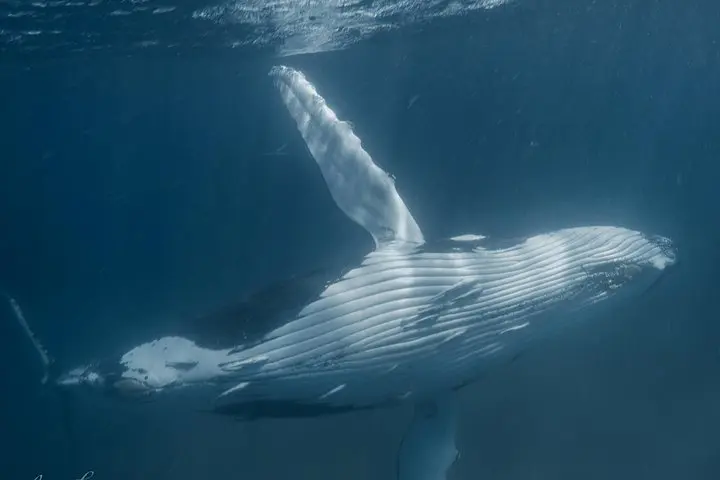
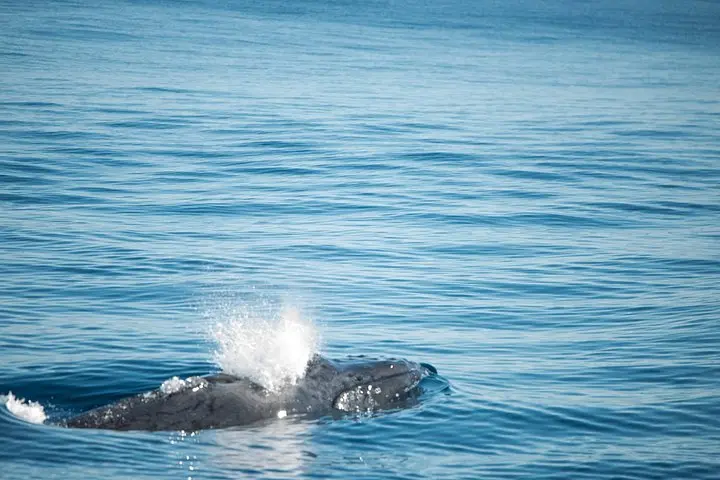
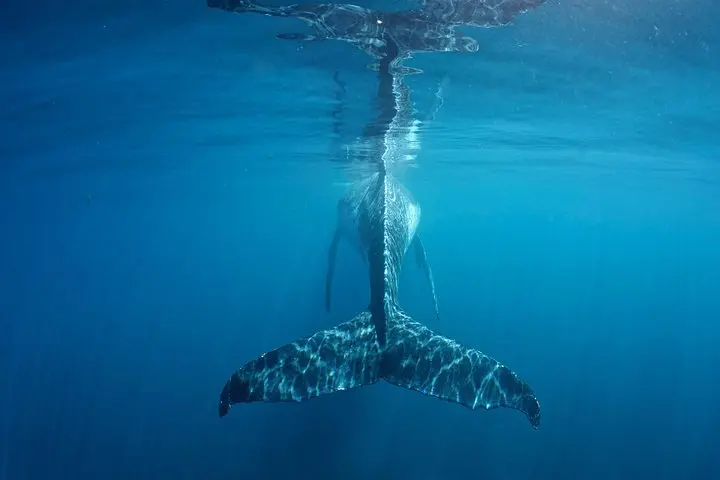
You push off from the low jetty into glassy water and the world narrows to blue and the slow, deliberate exhalations of humpback whales. In Coral Bay the sea can feel like a stage: calves cavort, mothers glide protectively, and pectoral fins punctuate the surface like slow, ceremonial waves.
Verified experiences and guided adventures in the surrounding area.
Operated by Coral Bay Ecotours · Coral Bay, Western Australia
You push off from the low jetty into glassy water and the world narrows to blue and the slow, deliberate exhalations of humpback whales. In Coral Bay the sea can feel like a stage: calves cavort, mothers glide protectively, and pectoral fins punctuate the surface like slow, ceremonial waves.
Humpback season on Ningaloo runs from late June through mid‑October as roughly 30,000 animals funnel along the continental shelf. Geologically, Ningaloo is a fringing reef built on a narrow continental shelf; the sudden drop-off creates calm lagoons that whales use to rest and play. The area has long been used and cared for by Aboriginal groups, and contemporary coastal communities around Coral Bay and Exmouth balance tourism with traditional ties to the sea.
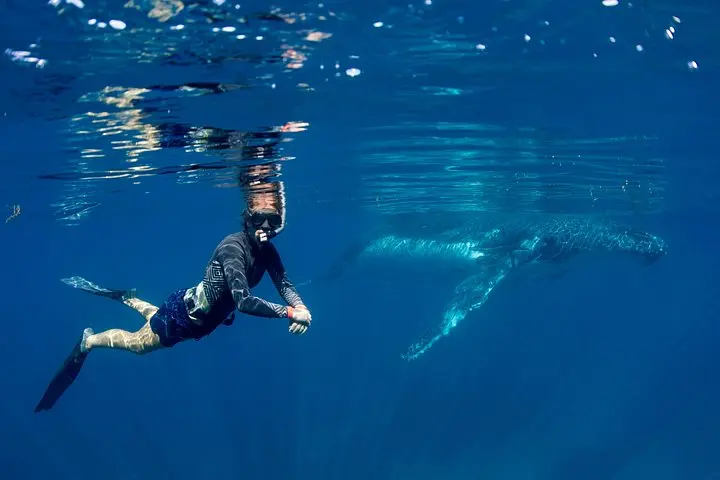
On a guided safari you’ll watch from an open boat and, when conditions and animal behavior permit, enter the water under strict protocols: swimmers remain in the exclusive contact zone and guides position the group to minimize stress to the animals. Expect encounters to vary—whales approach on their terms; sometimes they investigate, sometimes they pass.
Practical guidance: book mornings for calmer seas, bring reef‑safe sunscreen and a lightweight wetsuit in winter, and follow guide briefings on distance and body positioning. The tour includes lunch, snacks, and a photography package; carry a waterproof camera and secure any loose gear. Respect the animals, leave no trace on the reef, and be ready for a long, rewarding day on the water.
Humpback season in Coral Bay runs late June to mid‑October, with peak sightings typically in July–September during the migration.
In‑water interactions are allowed only when guides deem it safe and the whales' behavior permits; every interaction is on the animals' terms and limited by strict guidelines.
Tours accept families and have limited spots for swimmers; non‑swimmers can still observe from the boat—check operator age and fitness requirements before booking.
Tours may be cancelled for safety; operators generally offer full refunds if cancelled at least 24 hours in advance or due to unsafe conditions.
Coral Bay Ecotours operates guided outdoor trips and adventures with an emphasis on safety, stewardship, and memorable experiences.
You push off from the low jetty into glassy water and the world narrows to blue and the slow, deliberate exhalations of humpback whales. In Coral Bay the sea can feel like a stage: calves cavort, mothers glide protectively, and pectoral fins punctuate the surface like slow, ceremonial waves.
You push off from the low jetty into glassy water and the world narrows to blue and the slow, deliberate exhalations of humpback whales. In Coral Bay the sea can feel like a stage: calves cavort, mothers glide protectively, and pectoral fins punctuate the surface like slow, ceremonial waves.
Humpback season on Ningaloo runs from late June through mid‑October as roughly 30,000 animals funnel along the continental shelf. Geologically, Ningaloo is a fringing reef built on a narrow continental shelf; the sudden drop-off creates calm lagoons that whales use to rest and play. The area has long been used and cared for by Aboriginal groups, and contemporary coastal communities around Coral Bay and Exmouth balance tourism with traditional ties to the sea.
On a guided safari you’ll watch from an open boat and, when conditions and animal behavior permit, enter the water under strict protocols: swimmers remain in the exclusive contact zone and guides position the group to minimize stress to the animals. Expect encounters to vary—whales approach on their terms; sometimes they investigate, sometimes they pass.
Practical guidance: book mornings for calmer seas, bring reef‑safe sunscreen and a lightweight wetsuit in winter, and follow guide briefings on distance and body positioning. The tour includes lunch, snacks, and a photography package; carry a waterproof camera and secure any loose gear. Respect the animals, leave no trace on the reef, and be ready for a long, rewarding day on the water.