THE ADVENTURE COLLECTIVE® · Independent discovery and booking for outdoor travel

A brisk 30-minute flight delivers an unparalleled bird’s-eye view of Corcovado National Park, the Sirena Ranger Station and Osa Peninsula coastlines—ideal for travelers short on time but hungry for big jungle impressions.
A brisk 30-minute flight delivers an unparalleled bird’s-eye view of Corcovado National Park, the Sirena Ranger Station and Osa Peninsula coastlines—ideal for travelers short on time but hungry for big jungle impressions.
The propeller hum drops beneath the canopy as you lift off from Puerto Jimenez and the rainforest rearranges itself into patchwork — deep green ridges, dark river snakes and the pale slash of La Llorona waterfall cutting through cliff.
Verified experiences and guided adventures in the surrounding area.
Operated by Adventure Air · Puerto Jimenez, Puntarenas
The propeller hum drops beneath the canopy as you lift off from Puerto Jimenez and the rainforest rearranges itself into patchwork — deep green ridges, dark river snakes and the pale slash of La Llorona waterfall cutting through cliff.
This half-hour flight traces the spine of the Osa Peninsula, passing over remote beaches at Carate and the well-worn trails that lead to Sirena Ranger Station, the operational heart of Corcovado National Park. Corcovado covers roughly half of the Osa Peninsula and was carved by tectonic uplift and heavy tropical rainfall; its steep drainages and coastal plains support one of the highest concentrations of biodiversity on earth, a fact National Geographic once flagged as “the most biologically intensive location on Earth.”
Local culture here is small-town Pacific — fishermen in Puerto Jimenez, guides who grew up tracking tapir and jaguar sign, and ranger stations that are both scientific outpost and lifeline for conservation.
Practical guidance: seats are limited and visibility is best in morning light when cloud build-up is minimal; bring a camera with a fast shutter, polarized sunglasses and a small stabilizing strap. Expect a low-altitude, small-aircraft experience—brief, vivid, and subject to weather. Keep motion-sickness meds handy if you’re sensitive, and check weight and baggage rules before booking. Flights offer a rare perspective on marine life and river systems that hiking can’t reach — a quick, high-impact way to understand Corcovado’s scale and complexity before you step onto the trails.
Most aerial tours depart from Puerto Jimenez airstrip, the primary gateway on the Osa Peninsula.
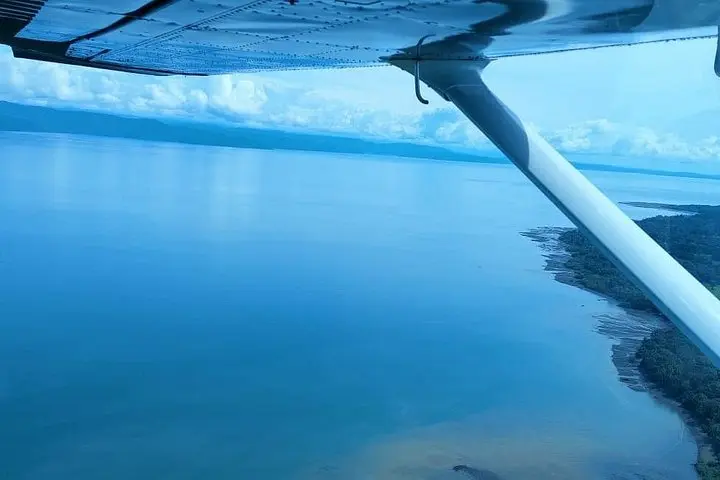
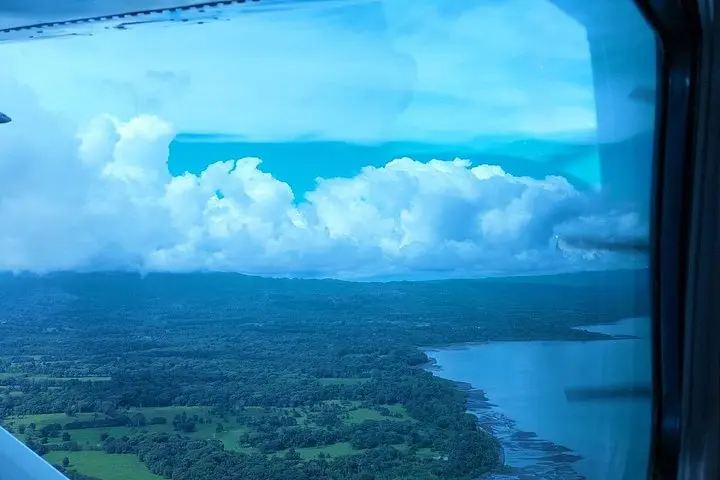
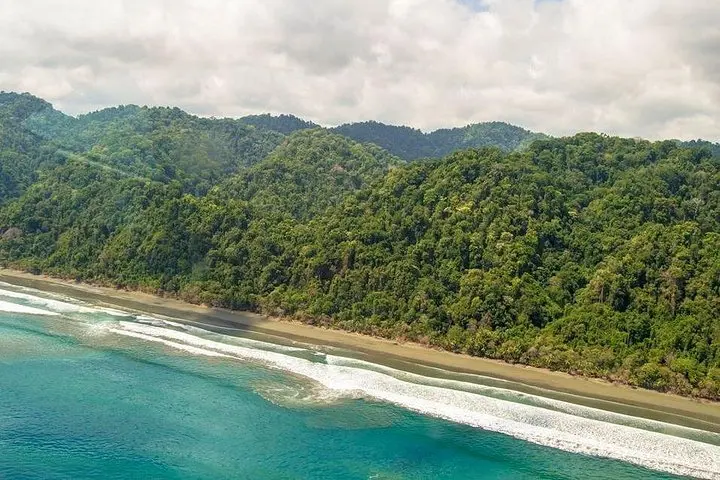
Expect coastline panoramas, La Llorona waterfall, Sirena Ranger Station and large tracts of Corcovado’s jungle; occasional sightings of whales, dolphins or river mouths are possible.
Infants may be required to sit on laps and operators often have weight or baggage limits—check booking details in advance.
Flights are weather-dependent; operators typically cancel or reschedule in poor conditions for safety and visibility reasons.
Adventure Air operates guided outdoor trips and adventures with an emphasis on safety, stewardship, and memorable experiences.
The propeller hum drops beneath the canopy as you lift off from Puerto Jimenez and the rainforest rearranges itself into patchwork — deep green ridges, dark river snakes and the pale slash of La Llorona waterfall cutting through cliff.
The propeller hum drops beneath the canopy as you lift off from Puerto Jimenez and the rainforest rearranges itself into patchwork — deep green ridges, dark river snakes and the pale slash of La Llorona waterfall cutting through cliff.
This half-hour flight traces the spine of the Osa Peninsula, passing over remote beaches at Carate and the well-worn trails that lead to Sirena Ranger Station, the operational heart of Corcovado National Park. Corcovado covers roughly half of the Osa Peninsula and was carved by tectonic uplift and heavy tropical rainfall; its steep drainages and coastal plains support one of the highest concentrations of biodiversity on earth, a fact National Geographic once flagged as “the most biologically intensive location on Earth.”
Local culture here is small-town Pacific — fishermen in Puerto Jimenez, guides who grew up tracking tapir and jaguar sign, and ranger stations that are both scientific outpost and lifeline for conservation.
Practical guidance: seats are limited and visibility is best in morning light when cloud build-up is minimal; bring a camera with a fast shutter, polarized sunglasses and a small stabilizing strap. Expect a low-altitude, small-aircraft experience—brief, vivid, and subject to weather. Keep motion-sickness meds handy if you’re sensitive, and check weight and baggage rules before booking. Flights offer a rare perspective on marine life and river systems that hiking can’t reach — a quick, high-impact way to understand Corcovado’s scale and complexity before you step onto the trails.