THE ADVENTURE COLLECTIVE® · Independent discovery and booking for outdoor travel

Climb Corcovado through Tijuca Forest to stand below the iconic Christ the Redeemer statue. This guided hike blends natural history, granite ridgelines and panoramic city views with practical trail knowledge to make the most of a half-day adventure.
Climb Corcovado through Tijuca Forest to stand below the iconic Christ the Redeemer statue. This guided hike blends natural history, granite ridgelines and panoramic city views with practical trail knowledge to make the most of a half-day adventure.
You step out of the city’s heat into a cathedral of green: the Atlantic Forest of Tijuca closes overhead, leaves filtering the skyline so the towering statue appears to float between branches.
Verified experiences and guided adventures in the surrounding area.
Operated by AVenturismo · Rio de Janeiro, Rio de Janeiro
You step out of the city’s heat into a cathedral of green: the Atlantic Forest of Tijuca closes overhead, leaves filtering the skyline so the towering statue appears to float between branches.
The trail rises steadily, roots and stone steps underfoot, occasional clearings teasing a view of Guanabara Bay and the sugar loaf across the water. Corcovado itself is a granite dome that thrusts up to 710 meters above sea level; the statue of Christ the Redeemer, completed in 1931, crowns that summit and rewards the walk with a 360-degree panorama of Rio.
Tijuca Forest is not wilderness in the traditional sense but a worked landscape — a mid-19th-century reforestation project that restored water sources and prevented erosion. Parque Lage, a historic estate near the trailhead, offers a cultural pause: a courtyard, art school, and coffee kiosk popular with locals. Geology here is blunt and visible — rounded granite outcrops carved by weathering, with streams daring you to step closer and small caves tucked into shaded gullies.
Practically, expect mixed terrain: packed dirt, exposed roots, carved stone steps and slick rock after rain. The hike on guided itineraries typically takes 3–4 hours total with moderate climbing (several hundred meters of ascent depending on route). Bring layered clothing for coastal breezes, a waterproof shell in summer storms, and plenty of water — cell service can be spotty in forested sections.
Guides combine natural history, safety, and city lore: how the statue shaped Brazil’s global image, where to watch sunrise over Copacabana, and which shallow pools hold freshwater crabs after a storm. Plan for an early start to miss crowds and midday heat; the payoff at the top is an uncompromised view and a clear sense of why Corcovado keeps calling travelers back.
Moderate: the trail includes sustained uphill sections, roots and stone steps; expect several hundred meters of ascent over a few kilometers and 3–4 hours round trip on guided tours.
Yes — there are shuttle/tram and road options to the Paineiras visitor area and the monument base; guided hikes are an option for those wanting the forest experience.
Guided tours often handle park access and entry logistics; independent hikers should check park hours and any local access rules at Parque Lage or Tijuca National Park offices.
Yes if you follow basic rules: do not feed animals, keep distance from monkeys and birds, and store food securely; guides will brief you on safe behavior.
AVenturismo operates guided outdoor trips and adventures with an emphasis on safety, stewardship, and memorable experiences.


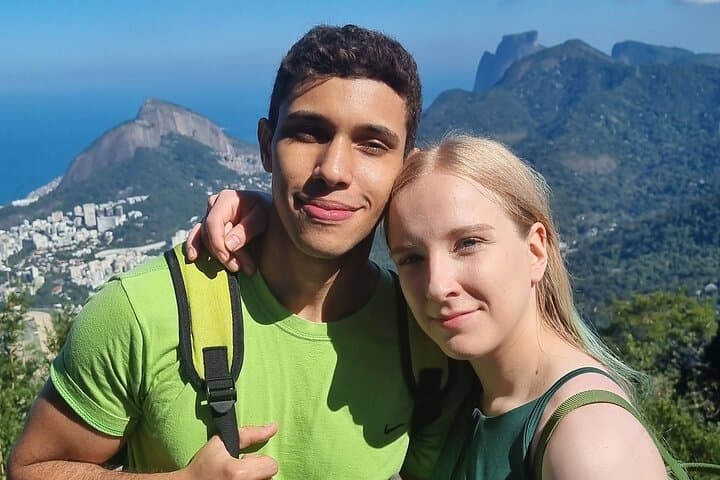

You step out of the city’s heat into a cathedral of green: the Atlantic Forest of Tijuca closes overhead, leaves filtering the skyline so the towering statue appears to float between branches.
You step out of the city’s heat into a cathedral of green: the Atlantic Forest of Tijuca closes overhead, leaves filtering the skyline so the towering statue appears to float between branches.
The trail rises steadily, roots and stone steps underfoot, occasional clearings teasing a view of Guanabara Bay and the sugar loaf across the water. Corcovado itself is a granite dome that thrusts up to 710 meters above sea level; the statue of Christ the Redeemer, completed in 1931, crowns that summit and rewards the walk with a 360-degree panorama of Rio.
Tijuca Forest is not wilderness in the traditional sense but a worked landscape — a mid-19th-century reforestation project that restored water sources and prevented erosion. Parque Lage, a historic estate near the trailhead, offers a cultural pause: a courtyard, art school, and coffee kiosk popular with locals. Geology here is blunt and visible — rounded granite outcrops carved by weathering, with streams daring you to step closer and small caves tucked into shaded gullies.
Practically, expect mixed terrain: packed dirt, exposed roots, carved stone steps and slick rock after rain. The hike on guided itineraries typically takes 3–4 hours total with moderate climbing (several hundred meters of ascent depending on route). Bring layered clothing for coastal breezes, a waterproof shell in summer storms, and plenty of water — cell service can be spotty in forested sections.
Guides combine natural history, safety, and city lore: how the statue shaped Brazil’s global image, where to watch sunrise over Copacabana, and which shallow pools hold freshwater crabs after a storm. Plan for an early start to miss crowds and midday heat; the payoff at the top is an uncompromised view and a clear sense of why Corcovado keeps calling travelers back.