THE ADVENTURE COLLECTIVE® · Independent discovery and booking for outdoor travel

An extreme, multi‑day mountain bike circuit that circles Peru’s Cordillera Huayhuash, summiting multiple 4,500–5,000 m passes and camping beside crystalline alpine lakes. Expect hike‑a‑bike, donkeys carrying gear, and some of the most dramatic high‑Andean scenery in the world.
An extreme, multi‑day mountain bike circuit that circles Peru’s Cordillera Huayhuash, summiting multiple 4,500–5,000 m passes and camping beside crystalline alpine lakes. Expect hike‑a‑bike, donkeys carrying gear, and some of the most dramatic high‑Andean scenery in the world.
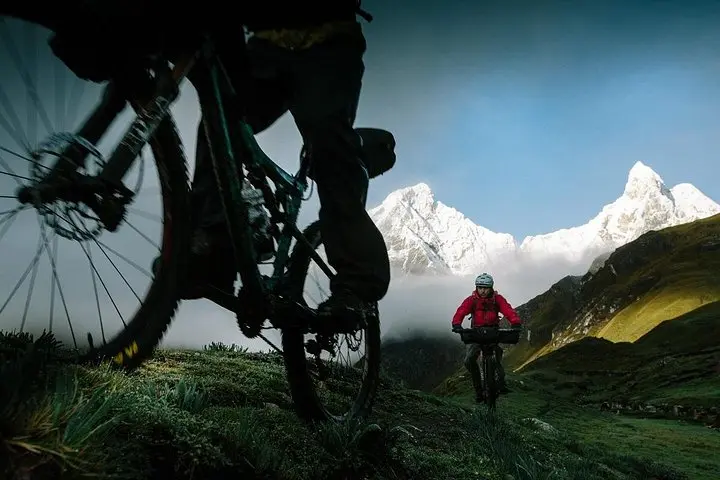
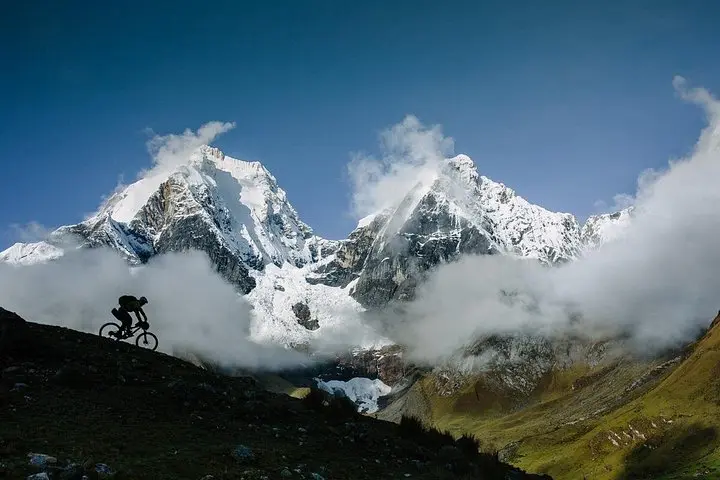
At first light the mountains of Huayhuash peel back like a theater curtain: raw rock, ribs of glacier, and the distant triangular shadow of Yerupajá Grande towering above a ring of blue lakes. Riders on the Mountainbike Extreme Cordillera Huayhuash tour wake to this stage every morning—camp-stove whistles, donkeys shifting under canvas, and the thin, bright air that demands attention.
Verified experiences and guided adventures in the surrounding area.
Operated by Peru Expeditions Tours · Huaraz, Ancash
At first light the mountains of Huayhuash peel back like a theater curtain: raw rock, ribs of glacier, and the distant triangular shadow of Yerupajá Grande towering above a ring of blue lakes. Riders on the Mountainbike Extreme Cordillera Huayhuash tour wake to this stage every morning—camp-stove whistles, donkeys shifting under canvas, and the thin, bright air that demands attention.
This is not a bike holiday so much as a high‑altitude expedition: fourteen days that circle one of the most compact, dramatic ranges in the Andes. Geologically, Huayhuash is young and jagged—steep granite spires and glacial cirques carved during the Pleistocene—and the route threads old mule tracks, moraine shoulders and high alpine passes. Culturally the valley remains stitched to Andean life: shepherds move llamas between camps, local communities maintain grazing rights, and pre‑Incan ruins and remote markets still speak to centuries of mountain travel.
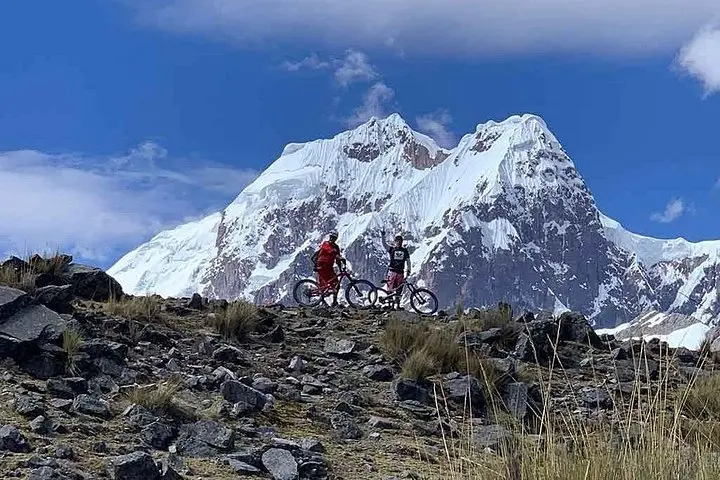
The circuit hits eight major passes—many above 4,500 meters—with a peak day over Cuyoc Point at roughly 5,020 meters. Expect long sections where the gradient and rock force riders off the bike to hike-a-bike; some descents offer runnable singletrack, others are loose scree and shoulder-steep switchbacks. Donkeys and local drivers shoulder most heavy gear, but the physical demand on riders is uncompromising: fitness and altitude resilience matter as much as technical bike skill.
Weather is relentless in its variety. The dry season (June–August) provides the most stable windows—clear mornings and wind that can pick up at noon—while the wet season brings afternoon storms and saturated trails that turn glacial runoff into temporary rivers. Wildflowers cluster on lower slopes in the sheltered valleys; condors circle thermals over the higher passes.
Practicalities follow the poetry: the trip runs out of Huaraz (3,100 m), includes in‑trip support (tents, cooks, donkeys, two escort vehicles for larger groups), and requires moderate to expert bike handling plus the willingness to shoulder a bike for many hours. Riders should budget time to acclimatize in Huaraz and plan for conservative daily mileage—many sections are measured more in elevation and exposure than kilometers.
For those who answer the call, the Huayhuash circuit delivers pure mountain intensity: crystalline lakes that hold mirror reflections, close-up glacier faces, and nights under a sky where the Milky Way seems low enough to touch. It’s an extreme loop—measured in passes, not distance—best approached with respect, preparation, and a good cold‑weather sleeping bag.
Advanced technical riding is helpful but many sections require hike‑a‑bike; strong fitness and comfort carrying a bike on steep, rocky terrain are essential.
The dry season (June–August) offers the most stable weather and clearer trails; avoid the wet season (December–March) when routes can be slippery and river crossings more dangerous.
Yes—participants should have experience above 3,000 m and follow an acclimatization plan; the tour includes acclimatization days but altitude affects everyone differently.
Tents and shared camping equipment are provided; bring your own sleeping bag and a lightweight sleeping pad unless otherwise arranged.
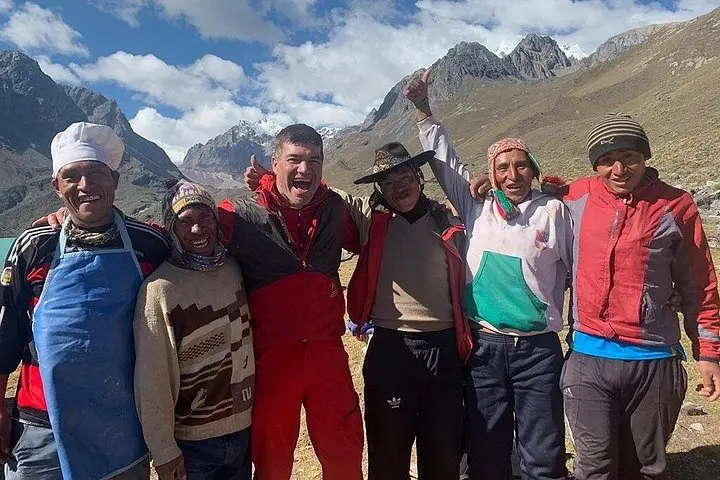
Yes—cooks, helpers, most meals, donkeys for gear, and local guides are included as described in the itinerary.
Yes—there’s an option to fly from Anta (50 minutes) or return by bus to Lima (about 8 hours) depending on schedule and preference.
Peru Expeditions Tours operates guided outdoor trips and adventures with an emphasis on safety, stewardship, and memorable experiences.
At first light the mountains of Huayhuash peel back like a theater curtain: raw rock, ribs of glacier, and the distant triangular shadow of Yerupajá Grande towering above a ring of blue lakes. Riders on the Mountainbike Extreme Cordillera Huayhuash tour wake to this stage every morning—camp-stove whistles, donkeys shifting under canvas, and the thin, bright air that demands attention.
At first light the mountains of Huayhuash peel back like a theater curtain: raw rock, ribs of glacier, and the distant triangular shadow of Yerupajá Grande towering above a ring of blue lakes. Riders on the Mountainbike Extreme Cordillera Huayhuash tour wake to this stage every morning—camp-stove whistles, donkeys shifting under canvas, and the thin, bright air that demands attention.
This is not a bike holiday so much as a high‑altitude expedition: fourteen days that circle one of the most compact, dramatic ranges in the Andes. Geologically, Huayhuash is young and jagged—steep granite spires and glacial cirques carved during the Pleistocene—and the route threads old mule tracks, moraine shoulders and high alpine passes. Culturally the valley remains stitched to Andean life: shepherds move llamas between camps, local communities maintain grazing rights, and pre‑Incan ruins and remote markets still speak to centuries of mountain travel.
The circuit hits eight major passes—many above 4,500 meters—with a peak day over Cuyoc Point at roughly 5,020 meters. Expect long sections where the gradient and rock force riders off the bike to hike-a-bike; some descents offer runnable singletrack, others are loose scree and shoulder-steep switchbacks. Donkeys and local drivers shoulder most heavy gear, but the physical demand on riders is uncompromising: fitness and altitude resilience matter as much as technical bike skill.
Weather is relentless in its variety. The dry season (June–August) provides the most stable windows—clear mornings and wind that can pick up at noon—while the wet season brings afternoon storms and saturated trails that turn glacial runoff into temporary rivers. Wildflowers cluster on lower slopes in the sheltered valleys; condors circle thermals over the higher passes.
Practicalities follow the poetry: the trip runs out of Huaraz (3,100 m), includes in‑trip support (tents, cooks, donkeys, two escort vehicles for larger groups), and requires moderate to expert bike handling plus the willingness to shoulder a bike for many hours. Riders should budget time to acclimatize in Huaraz and plan for conservative daily mileage—many sections are measured more in elevation and exposure than kilometers.
For those who answer the call, the Huayhuash circuit delivers pure mountain intensity: crystalline lakes that hold mirror reflections, close-up glacier faces, and nights under a sky where the Milky Way seems low enough to touch. It’s an extreme loop—measured in passes, not distance—best approached with respect, preparation, and a good cold‑weather sleeping bag.