THE ADVENTURE COLLECTIVE® · Independent discovery and booking for outdoor travel

Paddle from S'Agaró through narrow sea caves and into crystalline coves on this 2-hour guided kayak and snorkel tour of the Costa Brava. Ideal for beginners, the trip mixes easy paddling with guided snorkeling over Posidonia meadows and rocky reefs.
Paddle from S'Agaró through narrow sea caves and into crystalline coves on this 2-hour guided kayak and snorkel tour of the Costa Brava. Ideal for beginners, the trip mixes easy paddling with guided snorkeling over Posidonia meadows and rocky reefs.
The morning light cuts across S'Agaró Bay and the sea looks like glass—blue and thin enough to read the shapes of rock below. You push off a sit-on-top kayak and the coastline immediately changes: cliffs lean out, small caves gape like doorways, and pine-scented headlands dare you to round them. Guides set the pace, keeping the group tight as currents nudge boats toward narrow entrances where the water shivers with cold and life.
Verified experiences and guided adventures in the surrounding area.
Operated by Escola de Vela & Kayak Sant Pol - Costa Brava · S'Agaró, Catalonia
The morning light cuts across S'Agaró Bay and the sea looks like glass—blue and thin enough to read the shapes of rock below. You push off a sit-on-top kayak and the coastline immediately changes: cliffs lean out, small caves gape like doorways, and pine-scented headlands dare you to round them. Guides set the pace, keeping the group tight as currents nudge boats toward narrow entrances where the water shivers with cold and life.
This stretch of the Costa Brava earned its name in the early 20th century when writers labeled the coast for its rugged character; older layers tell of Roman fisheries and medieval fishing hamlets that still dot the shore. Geologically, the coast is folded limestone—caves and arches formed by waves exploiting faults—while Posidonia meadows offshore host a rich underwater community.
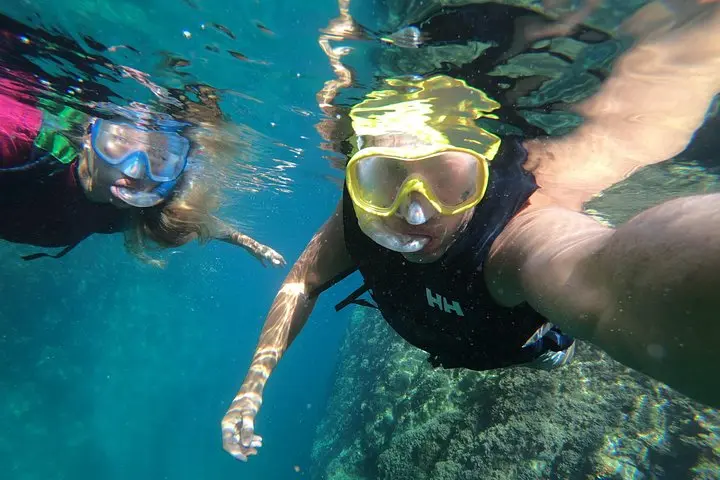
Expect a mixed sensory day: the scrape of paddle on water, salt on your lips, bright fish flashing under buoyant sunlight. Snorkel stops usually happen in protected coves where visibility is high and guides point out sea urchins, schools of damselfish and the occasional curious octopus.
Practical side: the tour is two hours, designed for all levels, but you must know how to swim. Wear water shoes, bring reef‑safe sunscreen and a dry bag for phone and valuables. Mornings tend to be calmer; afternoons can pick up wind. Guides provide life jackets, basic instruction, and snorkel gear—reserve in advance during high season. If the sea is rough the operator will cancel for safety; check cancellation windows and arrive hydrated and ready to move at a relaxed, steady pace.
No—this tour is suitable for beginners; guides provide a brief instruction on paddling and safety before departure.
Children from 7 years can participate but must be accompanied by an adult; life jackets are provided and sized accordingly.
Operators cancel in unsafe sea conditions and offer full refunds if canceled at least 24 hours before departure or when the operator determines conditions are unsafe.
Yes—mask, snorkel and, on colder days, wetsuits are available; you can bring your own equipment if preferred.
Escola de Vela & Kayak Sant Pol - Costa Brava operates guided outdoor trips and adventures with an emphasis on safety, stewardship, and memorable experiences.
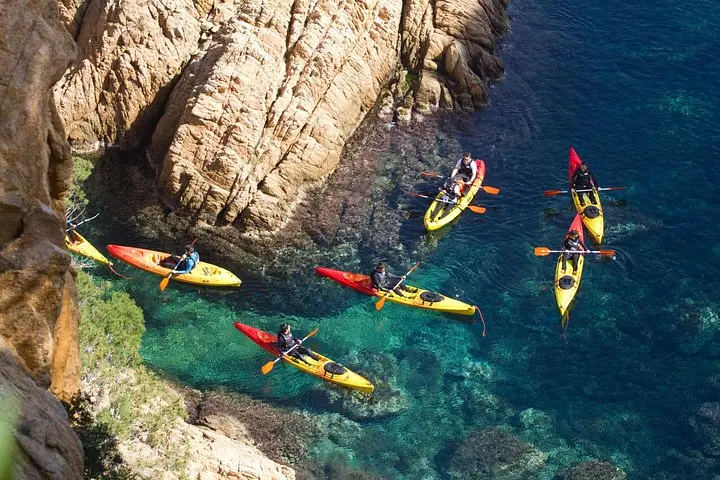
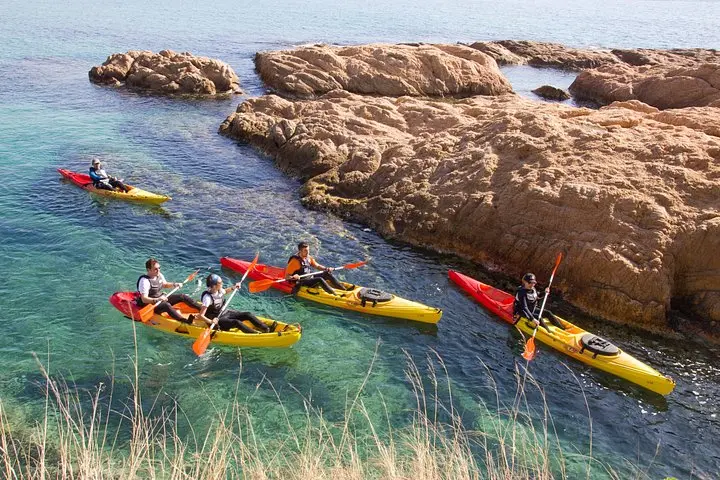
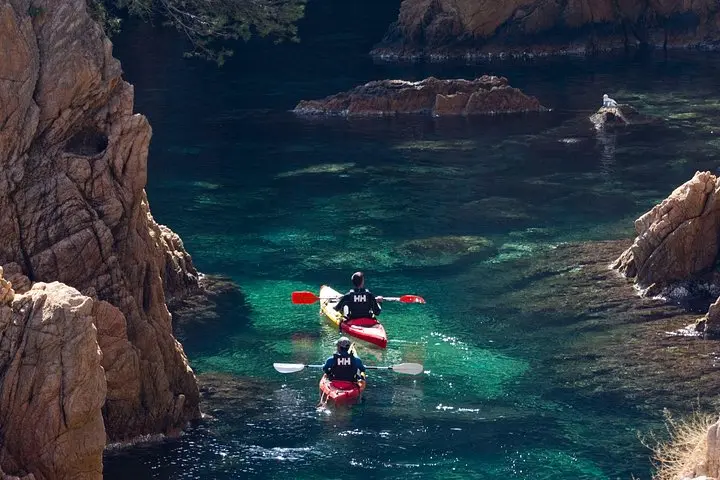
The morning light cuts across S'Agaró Bay and the sea looks like glass—blue and thin enough to read the shapes of rock below. You push off a sit-on-top kayak and the coastline immediately changes: cliffs lean out, small caves gape like doorways, and pine-scented headlands dare you to round them. Guides set the pace, keeping the group tight as currents nudge boats toward narrow entrances where the water shivers with cold and life.
The morning light cuts across S'Agaró Bay and the sea looks like glass—blue and thin enough to read the shapes of rock below. You push off a sit-on-top kayak and the coastline immediately changes: cliffs lean out, small caves gape like doorways, and pine-scented headlands dare you to round them. Guides set the pace, keeping the group tight as currents nudge boats toward narrow entrances where the water shivers with cold and life.
This stretch of the Costa Brava earned its name in the early 20th century when writers labeled the coast for its rugged character; older layers tell of Roman fisheries and medieval fishing hamlets that still dot the shore. Geologically, the coast is folded limestone—caves and arches formed by waves exploiting faults—while Posidonia meadows offshore host a rich underwater community.
Expect a mixed sensory day: the scrape of paddle on water, salt on your lips, bright fish flashing under buoyant sunlight. Snorkel stops usually happen in protected coves where visibility is high and guides point out sea urchins, schools of damselfish and the occasional curious octopus.
Practical side: the tour is two hours, designed for all levels, but you must know how to swim. Wear water shoes, bring reef‑safe sunscreen and a dry bag for phone and valuables. Mornings tend to be calmer; afternoons can pick up wind. Guides provide life jackets, basic instruction, and snorkel gear—reserve in advance during high season. If the sea is rough the operator will cancel for safety; check cancellation windows and arrive hydrated and ready to move at a relaxed, steady pace.