THE ADVENTURE COLLECTIVE® · Independent discovery and booking for outdoor travel

A compact, high-altitude day trip from Quito to Cotopaxi that combines a calm walk around Limpiopungo Lagoon with the dramatic ascent toward José Rivas Refuge at nearly 4,900 m. Prepare for thin air, sweeping volcanic slopes, and close encounters with Andean wildlife.
A compact, high-altitude day trip from Quito to Cotopaxi that combines a calm walk around Limpiopungo Lagoon with the dramatic ascent toward José Rivas Refuge at nearly 4,900 m. Prepare for thin air, sweeping volcanic slopes, and close encounters with Andean wildlife.
The morning air on the páramo is thin and cold, and Cotopaxi rises like a silver cone pushing through the clouds. You step out of the vehicle onto gravel and tussock grass; the crater’s snowfield glares against a sky that can change from bright to brooding in an hour. Condors circle overhead, daring you to look up.
Verified experiences and guided adventures in the surrounding area.
Operated by ANDEAN ESCAPE · Quito, Pichincha
The morning air on the páramo is thin and cold, and Cotopaxi rises like a silver cone pushing through the clouds. You step out of the vehicle onto gravel and tussock grass; the crater’s snowfield glares against a sky that can change from bright to brooding in an hour. Condors circle overhead, daring you to look up.
Cotopaxi is one of the world’s highest active stratovolcanoes — its eruptions shaped local agriculture and colonial travel routes — and the national park protecting it was established in the 1970s to conserve fragile high-Andean ecosystems. Geologically it’s young and steep: volcanic rock, loose scree and glacial deposits create raw, open slopes. Culturally the mountain has long been part of Andean cosmology and remains a landmark for communities around Quito.
A typical day-trip visits Limpiopungo Lagoon for a flat, bird-rich loop, then moves higher toward the José Rivas Refuge at about 4,864 m. Expect paramo grasslands, occasional mud, and short steep pitches of volcanic scree; overall walking distance depends on routes chosen but plan for several short hikes totaling 3–6 km and up to 1,500 m of ascent from valley towns if you’re trekking without vehicle support.
Practical guidance: acclimatize in Quito (2,850 m) for 24–48 hours, carry layers for wind and sun, hydrate steadily, and allow extra time for slow pace at altitude. Footwear with firm ankle support and trekking poles help on loose slopes. Respect the park: stay on trails, pack out waste, and keep distance from wildlife. With preparation, Cotopaxi delivers raw alpine views and a compact, high-altitude adventure in a single day.
The refuge sits near 4,864 m; symptoms like headache and breathlessness are common—acclimatize in Quito, move slowly, and inform guides of any issues.
Guided trips are standard and recommended for safety, navigation, and local knowledge of weather and wildlife patterns.
Sturdy hiking boots with good tread and ankle support are recommended for scree and uneven ground; trail runners can work for shorter walks.
Cotopaxi National Park has entrance fees collected at park gates; your tour operator usually handles these as part of the booking.
ANDEAN ESCAPE operates guided outdoor trips and adventures with an emphasis on safety, stewardship, and memorable experiences.
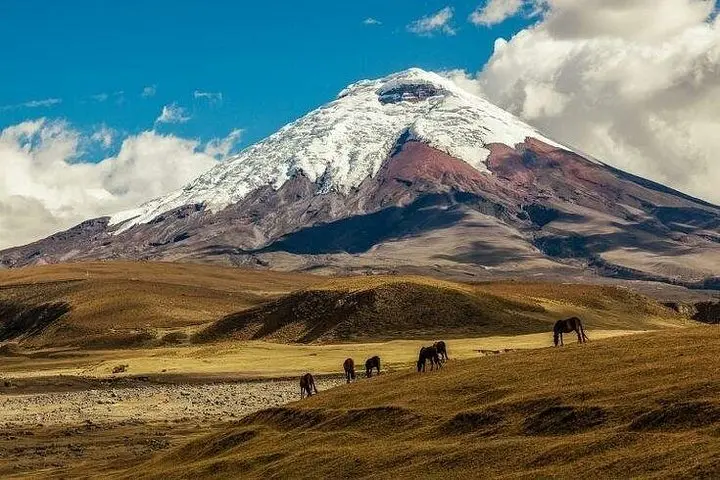
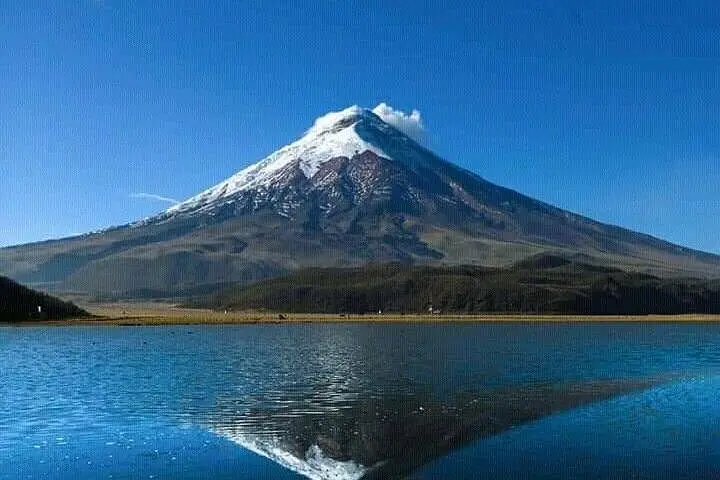
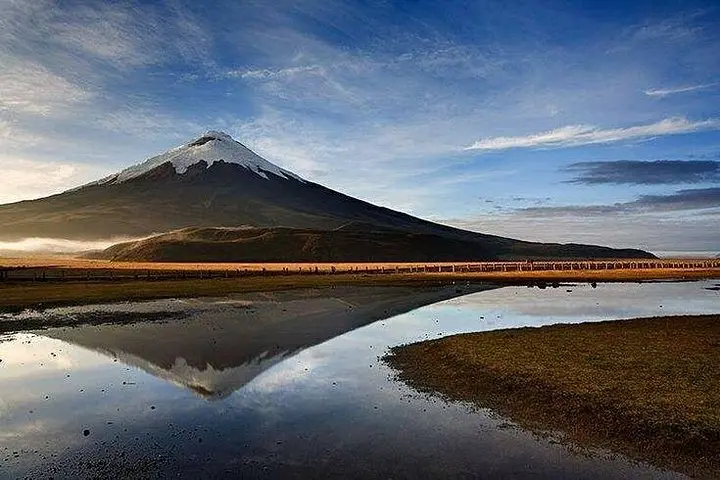
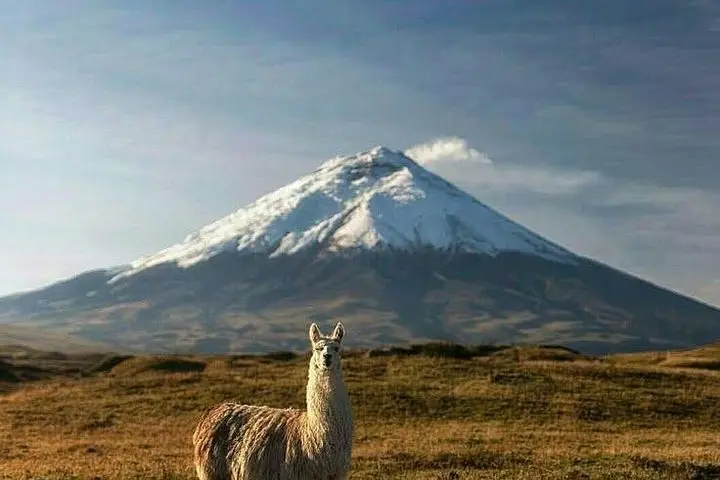
The morning air on the páramo is thin and cold, and Cotopaxi rises like a silver cone pushing through the clouds. You step out of the vehicle onto gravel and tussock grass; the crater’s snowfield glares against a sky that can change from bright to brooding in an hour. Condors circle overhead, daring you to look up.
The morning air on the páramo is thin and cold, and Cotopaxi rises like a silver cone pushing through the clouds. You step out of the vehicle onto gravel and tussock grass; the crater’s snowfield glares against a sky that can change from bright to brooding in an hour. Condors circle overhead, daring you to look up.
Cotopaxi is one of the world’s highest active stratovolcanoes — its eruptions shaped local agriculture and colonial travel routes — and the national park protecting it was established in the 1970s to conserve fragile high-Andean ecosystems. Geologically it’s young and steep: volcanic rock, loose scree and glacial deposits create raw, open slopes. Culturally the mountain has long been part of Andean cosmology and remains a landmark for communities around Quito.
A typical day-trip visits Limpiopungo Lagoon for a flat, bird-rich loop, then moves higher toward the José Rivas Refuge at about 4,864 m. Expect paramo grasslands, occasional mud, and short steep pitches of volcanic scree; overall walking distance depends on routes chosen but plan for several short hikes totaling 3–6 km and up to 1,500 m of ascent from valley towns if you’re trekking without vehicle support.
Practical guidance: acclimatize in Quito (2,850 m) for 24–48 hours, carry layers for wind and sun, hydrate steadily, and allow extra time for slow pace at altitude. Footwear with firm ankle support and trekking poles help on loose slopes. Respect the park: stay on trails, pack out waste, and keep distance from wildlife. With preparation, Cotopaxi delivers raw alpine views and a compact, high-altitude adventure in a single day.