THE ADVENTURE COLLECTIVE® · Independent discovery and booking for outdoor travel

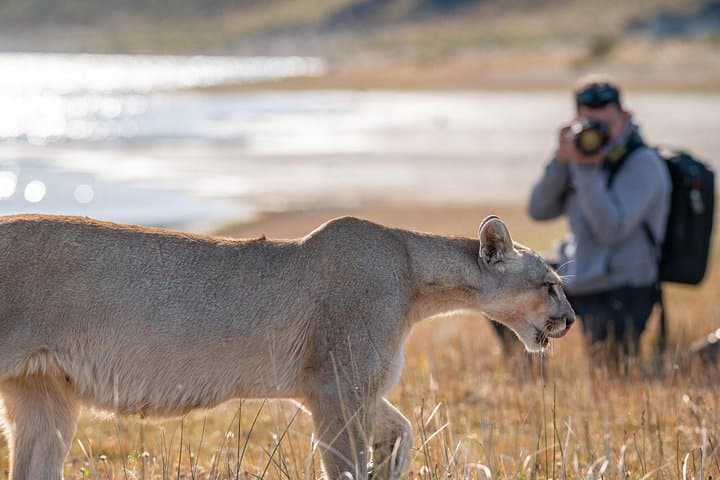
Leave Puerto Natales before sunrise for a focused photo safari in Torres del Paine. This guided, full-day excursion emphasizes ethical wildlife viewing—your best chances for puma sightings come with early starts, patient observing, and telephoto optics.
Leave Puerto Natales before sunrise for a focused photo safari in Torres del Paine. This guided, full-day excursion emphasizes ethical wildlife viewing—your best chances for puma sightings come with early starts, patient observing, and telephoto optics.
Dawn arrives cold and sharp on the Patagonian steppe, the sky shredding from ink to pale blue as your vehicle threads the gravel toward Laguna Amarga. Breakfast is a practical pause under a wide horizon; beyond it, lenga forests and wind-bent grasses watch patiently as guides scan for movement. This is a day built around observation—slow, deliberate, and tuned to the small signs pumas leave on the land.
Verified experiences and guided adventures in the surrounding area.
Operated by PhotoexpeditionPatagonia · Puerto Natales, Magallanes y la Antártica Chilena
Dawn arrives cold and sharp on the Patagonian steppe, the sky shredding from ink to pale blue as your vehicle threads the gravel toward Laguna Amarga. Breakfast is a practical pause under a wide horizon; beyond it, lenga forests and wind-bent grasses watch patiently as guides scan for movement. This is a day built around observation—slow, deliberate, and tuned to the small signs pumas leave on the land.
Torres del Paine sits at the southern tip of the Andes where glacial forces carved towers of granite and carved valleys filled with peat and lakes. The park’s mix of steppe, forest, and fjord-influenced weather has long supported guanacos, foxes, Andean condors and the elusive puma. Human history here includes Tehuelche peoples and nineteenth-century estancias; modern conservation balances tourism with protecting predator habitat.
Expect long daylight, variable weather and wide, open views that can change in an hour—sunlight one moment, sleet the next. The tour emphasizes ethical viewing: keeping distance, minimizing disturbance, and following guide instructions.
Practical guidance: bring a telephoto lens or good binoculars, weatherproof layers, and sturdy footwear; keep camera batteries warm and spare cards handy. Dawn departures, gravel roads and focused patience are part of the rhythm. Encounters with cougars are never guaranteed but the habitat is prime—your best odds come from early starts, knowledgeable guides, and quiet observation. Whether photographing a distant figure moving through grass or recording a condor circling a ridge, this day is about patient presence in a wild, wind-shaped place.
Puma sightings are possible but not guaranteed; early starts, experienced guides, and time spent quietly scanning prime habitat improve your odds.
Guides maintain respectful distances to avoid disturbing wildlife—expect to observe and photograph from several hundred meters when possible.
The tour is described as suitable for all fitness levels, but it involves long vehicle hours and some short uneven walks; discuss specific mobility needs with the operator before booking.
This excursion is listed as all sales final and may be canceled by the operator for bad weather; confirm terms at booking and consider travel insurance.
PhotoexpeditionPatagonia operates guided outdoor trips and adventures with an emphasis on safety, stewardship, and memorable experiences.


Dawn arrives cold and sharp on the Patagonian steppe, the sky shredding from ink to pale blue as your vehicle threads the gravel toward Laguna Amarga. Breakfast is a practical pause under a wide horizon; beyond it, lenga forests and wind-bent grasses watch patiently as guides scan for movement. This is a day built around observation—slow, deliberate, and tuned to the small signs pumas leave on the land.
Dawn arrives cold and sharp on the Patagonian steppe, the sky shredding from ink to pale blue as your vehicle threads the gravel toward Laguna Amarga. Breakfast is a practical pause under a wide horizon; beyond it, lenga forests and wind-bent grasses watch patiently as guides scan for movement. This is a day built around observation—slow, deliberate, and tuned to the small signs pumas leave on the land.
Torres del Paine sits at the southern tip of the Andes where glacial forces carved towers of granite and carved valleys filled with peat and lakes. The park’s mix of steppe, forest, and fjord-influenced weather has long supported guanacos, foxes, Andean condors and the elusive puma. Human history here includes Tehuelche peoples and nineteenth-century estancias; modern conservation balances tourism with protecting predator habitat.
Expect long daylight, variable weather and wide, open views that can change in an hour—sunlight one moment, sleet the next. The tour emphasizes ethical viewing: keeping distance, minimizing disturbance, and following guide instructions.
Practical guidance: bring a telephoto lens or good binoculars, weatherproof layers, and sturdy footwear; keep camera batteries warm and spare cards handy. Dawn departures, gravel roads and focused patience are part of the rhythm. Encounters with cougars are never guaranteed but the habitat is prime—your best odds come from early starts, knowledgeable guides, and quiet observation. Whether photographing a distant figure moving through grass or recording a condor circling a ridge, this day is about patient presence in a wild, wind-shaped place.