THE ADVENTURE COLLECTIVE® · Independent discovery and booking for outdoor travel

A concise, 1.5-hour class in Cincinnati that walks through NASA’s DART impact on Dimorphos and Europe’s Hera follow-up. Expect mission imagery, models, and a lively Q&A that turns a historic space experiment into practical planetary-defense insight.
A concise, 1.5-hour class in Cincinnati that walks through NASA’s DART impact on Dimorphos and Europe’s Hera follow-up. Expect mission imagery, models, and a lively Q&A that turns a historic space experiment into practical planetary-defense insight.
Book with Cincinnati Observatory
Verified experiences and guided adventures in the surrounding area.
Operated by Cincinnati Observatory · Cincinnati, Ohio
Crash Test Asteroid is a focused, 1.5-hour classroom experience in Cincinnati, Ohio that traces the real-world experiment NASA ran in 2022 and the European follow-up mission that's now measuring the results. You’ll learn how the DART spacecraft slammed into the asteroid moonlet Dimorphos, nudging its orbital period by more than half an hour, and why scientists sent Hera to map the crater and measure mass so that one engineered impact becomes a reproducible technique for planetary defense. The program is designed for anyone: Introductory level, compact, and capped at 35 guests. Presenters use mission imagery, diagrams, scale models, and clear analogies to translate orbital mechanics, crater morphology, and ejecta behavior into visuals you can hold in your mind. Key features discussed include Dimorphos’ impact crater, the measurable change in orbit, and the instruments Hera will use to weigh and map the target. Those are the real objects at the center of the lesson—the scar on a distant rock and the math that tells us how to change a trajectory. What makes this offering special is its immediacy. This isn’t hypothetical threat modeling; it’s an after-action class about a deliberately staged planetary experiment. In a city setting where most outdoor pursuits center on rivers and parks, this lecture brings a piece of the solar system indoors and connects it to local classrooms, amateur astronomers, and families who want to see how science protects Earth. The session’s paced format encourages questions, so expect lively back-and-forth about mission design, how scientists measure mass from afar, and the limits of impact mitigation. Practically, the meeting fits into a short visit to Cincinnati: you can pair it with an evening skyline walk or stop at neighborhood eateries before or after. The class is hands-on enough to satisfy curious teens and adults yet concise for travelers with a tight schedule. Because materials rely on real mission data, you’ll leave with clear takeaways: what was changed in Dimorphos’ orbit, what Hera aims to discover, and why reproducible planetary defense matters. If you’re interested in space science, civic safety, or simply seeing how one precise collision rewrote a tiny clock in the heavens, this is the best short field course in the city to catch that story. Sessions run about 1.5 hours and the format — multimedia briefing followed by open Q&A — keeps the pace brisk while allowing deep-dive questions. Groups are limited (up to 35), booking ahead is advised for weekend evenings. No technical background is required; educators, parents, and science-curious travelers all report getting more than they expected. Bring a notebook for sketches, and follow up online with mission data links instructors provide and project resources. This class translates mission science into practical knowledge you can share.
The presentation runs approximately 1.5 hours, usually a multimedia briefing followed by an open Q&A.
Yes—it's introductory and family-friendly; curious teens often get a lot out of the visuals and demonstrations.
No technical background is required; instructors explain orbital mechanics and crater science in accessible terms.
Photography of slides and models is generally permitted for personal use, but follow any in-room guidelines announced by the instructor.
Sessions are capped at up to 35 people to keep interaction lively—book ahead for popular dates.
Local parking and transit options vary; allow extra time for downtown traffic and check the booking confirmation for meeting-point details.
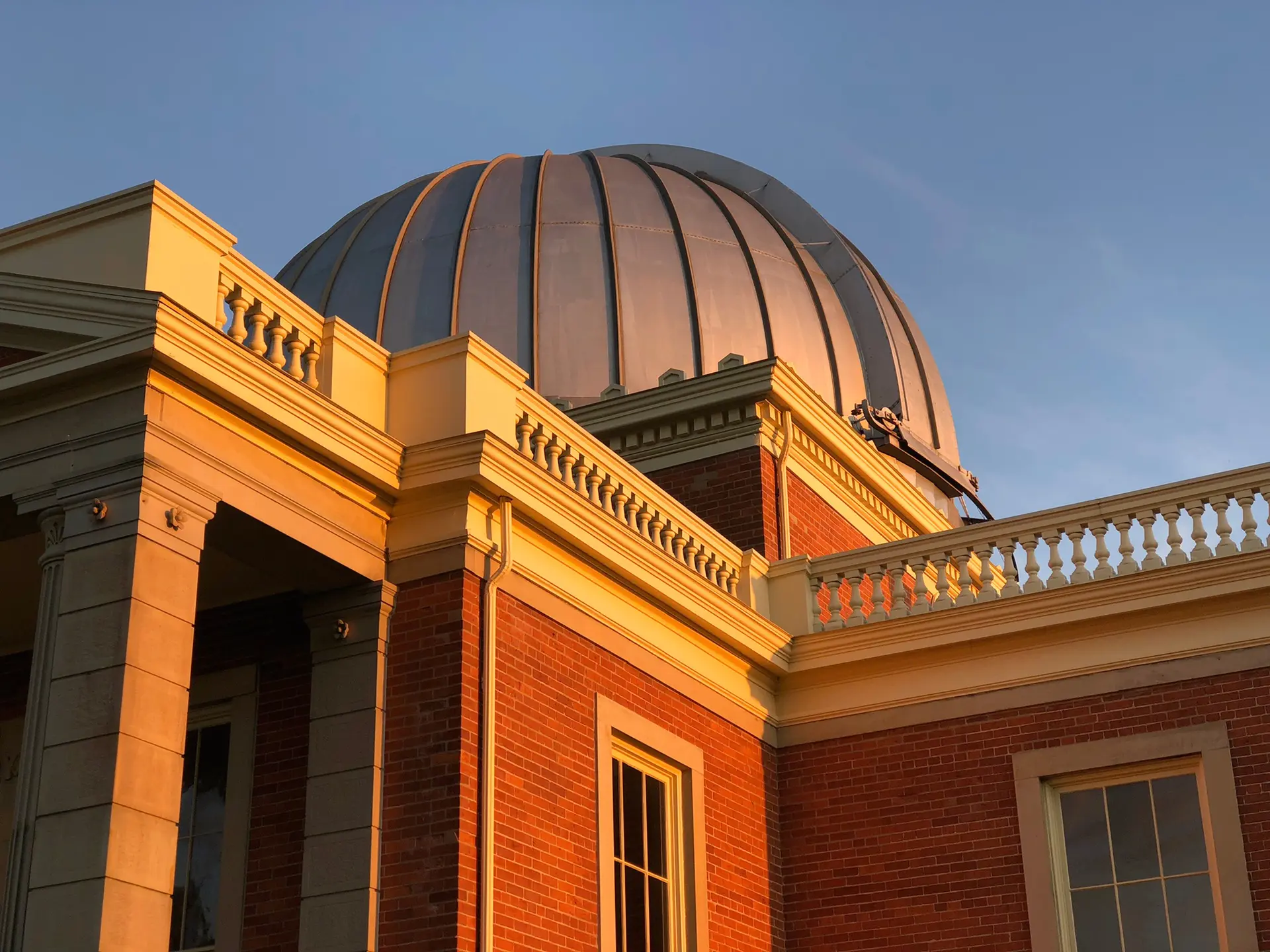
Cincinnati Observatory in Cincinnati, Ohio is a historic public observatory and education center offering guided tours, family programs, classes, and telescope viewing. Established with an original 1845 telescope still in use, the Observatory preserves 19th-century astronomical instruments and continues community outreach through diverse events. Programs include daytime history tours on Tuesdays and Thursdays that highlight the buildings, main telescopes, safe solar viewing, and a gift shop. Sunday History Tours delve into the Observatory’s role in weather forecasting and timekeeping, showcase the original 1843 cornerstone, and feature the interactive Sundial. Evening offerings combine presentations, telescope viewing, and guided tours; Astronomy Evenings emphasize the Observatory’s historic 1845 telescope. Hands-on and family-focused experiences span Meet a Meteorite, Interstellar Adventures for families with children ages 5–12, Family Astronomy Night, and Planet Walk Tours that scale the solar system with a 450-foot trek to Pluto. Adult-focused programming includes the Adult Astronaut Academy training camp, Space Exploration class series that explores Voyager, Galileo, and Cassini missions, and special-topic nights such as Pluto Night and astronomy archives events. The Observatory partners with regional collectors and expert speakers for meteorite showcases, lectures, and hands-on experiments. Visitors can expect educational, science-driven experiences suitable for families, students, and adults interested in astronomy, history, and space exploration. Programming schedules and ticketing information are available through the Observatory’s official channels. Special events include Late Night Date Night and more. Interstellar Adventures runs Saturdays with telescope viewing and pizza; attend five adventures in 2025 to enter a drawing to win a Family Membership.

Book with Cincinnati Observatory