THE ADVENTURE COLLECTIVE® · Independent discovery and booking for outdoor travel
Spend an evening crafting a Turkish-style mosaic lamp in Brighton’s Azerbaijan Cultural Center. This hands-on workshop pairs step-by-step instruction with Turkish tea and a take-home grouting kit so you leave with a finished, light-ready piece.
Spend an evening crafting a Turkish-style mosaic lamp in Brighton’s Azerbaijan Cultural Center. This hands-on workshop pairs step-by-step instruction with Turkish tea and a take-home grouting kit so you leave with a finished, light-ready piece.
You step up the second-floor stairs of the Azerbaijan Cultural Center and the room opens into a low-lit studio where colored glass waits like a folded map of light.
Verified experiences and guided adventures in the surrounding area.
Operated by Mosaic Art Studio · Brighton, MA
You step up the second-floor stairs of the Azerbaijan Cultural Center and the room opens into a low-lit studio where colored glass waits like a folded map of light.
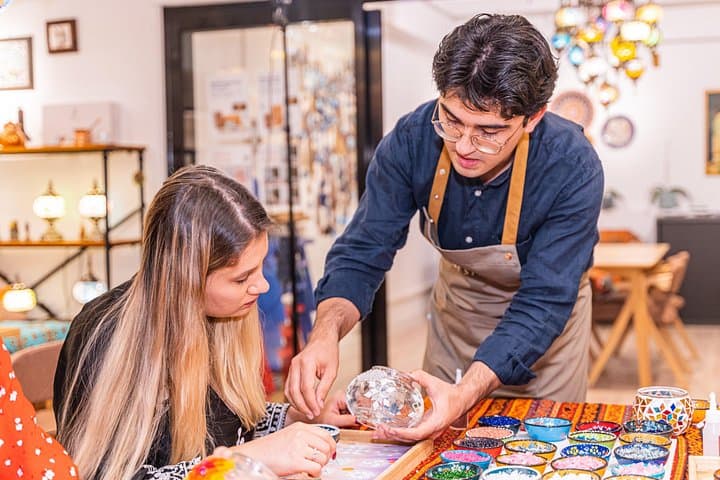
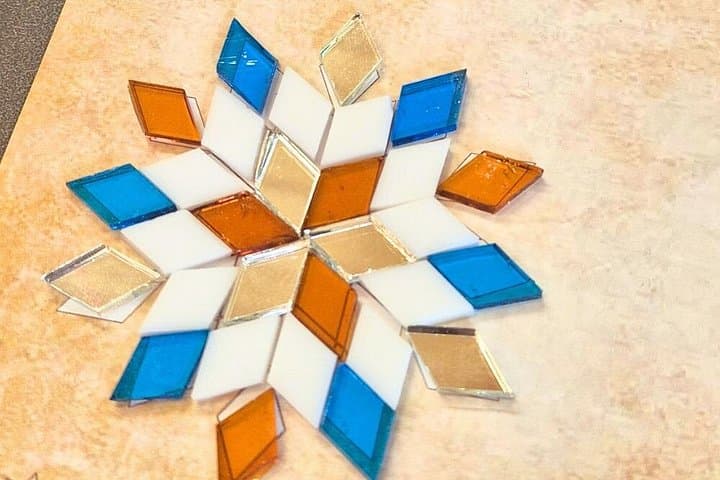
Guided artisans arrange tiles on the table and the first shard you touch feels cool and deliberate. The workshop puts you at the center of a craft that migrated across the Mediterranean and Anatolia — Ottoman and Byzantine mosaic techniques translated into modern lamp-making.
Boston’s patchwork of brick streets and glacially scoured bedrock is a practical backdrop: local sand once powered New England’s early glassworks, and today imported vitreous tesserae arrive ready for small, domestic fields of color under your hands.
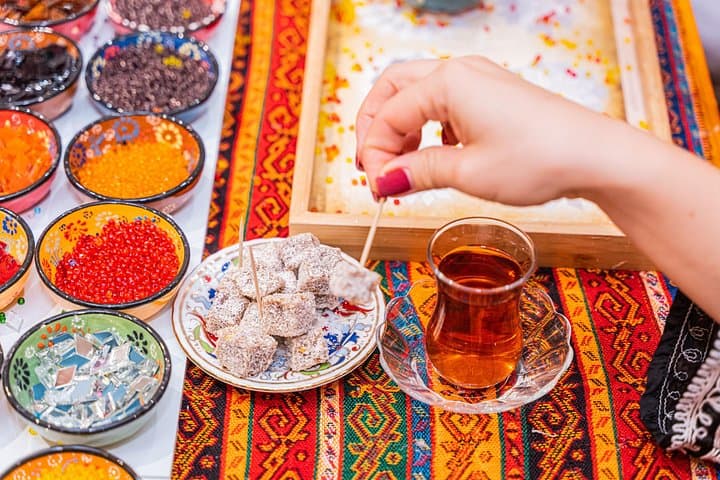
The session folds culture into craft — instructors explain pattern language drawn from Turkish and Azerbaijani motifs while you practice cutting, laying, and securing glass beads into a lamp base. Turkish tea and sweets pace the class; conversation drifts from design choices to local Brighton cafés and the Chestnut Hill Reservoir loop a short walk away.
Practically: classes run about 2.5 hours, all materials provided, and the final grouting step is completed at home with a kit you’ll be shown how to use. Bring close-up eyewear if you need it, and expect to stand or sit in focused bursts; the studio is wheelchair accessible but space can be tight during peak sessions.
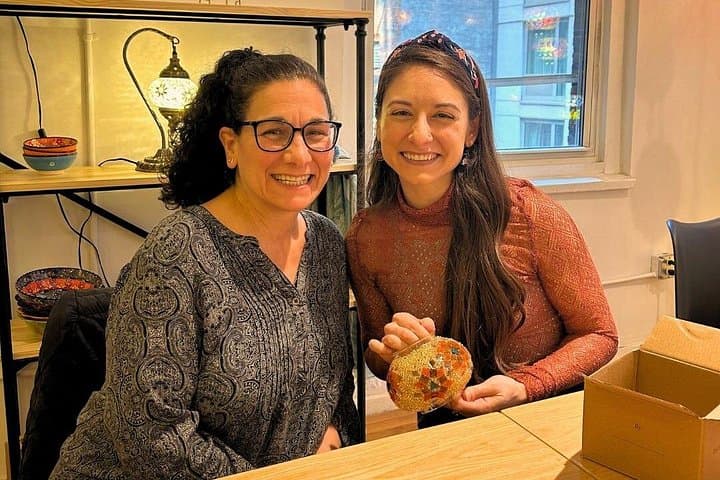
Whether you’re after a decorative keepsake or a new skill, the workshop is a compact cultural exchange — tactile, instructive, and hand-held enough for beginners to leave with a finished, light-ready piece.
No — the class is designed for beginners and instructors guide every step from cutting to placement and finishing.
Yes — the studio reports wheelchair accessible surfaces and accommodations, but notify the host in advance so they can prepare space and assistance if needed.
You assemble the lamp and receive a grouting kit with instructions; final grouting is typically completed at home to allow proper curing.
Full refunds are available if you cancel at least 24 hours before the scheduled session; check your booking confirmation for details.
Mosaic Art Studio operates guided outdoor trips and adventures with an emphasis on safety, stewardship, and memorable experiences.
You step up the second-floor stairs of the Azerbaijan Cultural Center and the room opens into a low-lit studio where colored glass waits like a folded map of light.
You step up the second-floor stairs of the Azerbaijan Cultural Center and the room opens into a low-lit studio where colored glass waits like a folded map of light.
Guided artisans arrange tiles on the table and the first shard you touch feels cool and deliberate. The workshop puts you at the center of a craft that migrated across the Mediterranean and Anatolia — Ottoman and Byzantine mosaic techniques translated into modern lamp-making.
Boston’s patchwork of brick streets and glacially scoured bedrock is a practical backdrop: local sand once powered New England’s early glassworks, and today imported vitreous tesserae arrive ready for small, domestic fields of color under your hands.
The session folds culture into craft — instructors explain pattern language drawn from Turkish and Azerbaijani motifs while you practice cutting, laying, and securing glass beads into a lamp base. Turkish tea and sweets pace the class; conversation drifts from design choices to local Brighton cafés and the Chestnut Hill Reservoir loop a short walk away.
Practically: classes run about 2.5 hours, all materials provided, and the final grouting step is completed at home with a kit you’ll be shown how to use. Bring close-up eyewear if you need it, and expect to stand or sit in focused bursts; the studio is wheelchair accessible but space can be tight during peak sessions.
Whether you’re after a decorative keepsake or a new skill, the workshop is a compact cultural exchange — tactile, instructive, and hand-held enough for beginners to leave with a finished, light-ready piece.
