THE ADVENTURE COLLECTIVE® · Independent discovery and booking for outdoor travel

Walk under a crocodile’s carved maw into a lush botanical park where Nile crocodiles, giant tortoises and anacondas share planted terraces and cascades. This half-day tour combines private transport with self-paced exploration of horticultural displays and reptile enclosures—ideal for families and wildlife enthusiasts.
Walk under a crocodile’s carved maw into a lush botanical park where Nile crocodiles, giant tortoises and anacondas share planted terraces and cascades. This half-day tour combines private transport with self-paced exploration of horticultural displays and reptile enclosures—ideal for families and wildlife enthusiasts.
The path opens with a giant carved crocodile mouth framing the walk; heat rises off sun-warmed stones while waterfalls murmur through planted terraces. At Crocoparc you move from shaded boulevards of succulents into bright glass-roofed enclosures where Nile crocodiles lie like ancient logs, mouths half-open and alert. Giant tortoises pick their slow way across lawns; anacondas hide in humid, planted exhibits. The park’s design blends horticulture and reptile husbandry, guiding visitors along winding routes that feel part garden, part natural-history exhibit.
Verified experiences and guided adventures in the surrounding area.
Operated by Cross Morocco Tours · Agadir, Souss-Massa
The path opens with a giant carved crocodile mouth framing the walk; heat rises off sun-warmed stones while waterfalls murmur through planted terraces. At Crocoparc you move from shaded boulevards of succulents into bright glass-roofed enclosures where Nile crocodiles lie like ancient logs, mouths half-open and alert. Giant tortoises pick their slow way across lawns; anacondas hide in humid, planted exhibits. The park’s design blends horticulture and reptile husbandry, guiding visitors along winding routes that feel part garden, part natural-history exhibit.
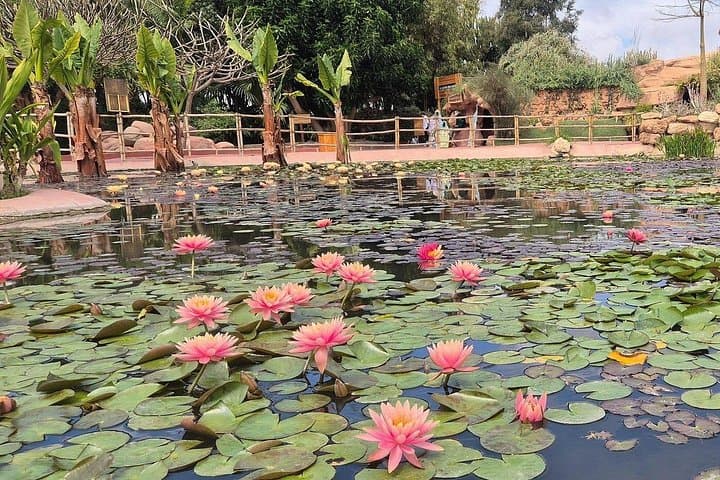
The site is a modern addition to Agadir’s tourism fabric, developed to showcase exotic plants and reptiles and to provide education on species that rarely appear in local landscapes. Geologically, the park sits on the coastal plain south of the Atlas foothills—dry, sunny and shaped by Atlantic breezes that keep palms and water lilies thriving. Culturally, a visit pairs easily with Agadir’s markets and seaside promenades, offering a compact, family-friendly look at species normally associated with river basins.
Practical guidance: tours last roughly 3–4 hours including hotel pick-up; admission may be separate from transport, so confirm when booking. Wear sturdy walking shoes for gravel paths, bring sun protection and at least one liter of water per person, and carry small change for on-site purchases. Morning visits bring softer light and cooler temperatures; late afternoon highlights the pools and basking reptiles. The park is suitable for most fitness levels and provides accessible routes in core areas—perfect for families and anyone wanting a close, safe encounter with large reptiles and curated tropical plantings.
Not always—this tour includes private transport but the itinerary notes admission may be separate; confirm at booking.
Yes; the park is family-friendly but infants must sit on an adult’s lap during transport and children should be supervised near enclosures.
Core paths and main exhibits offer accessible routes, but some terraces and viewpoints use steps—check with the operator for specifics.
Morning visits are cooler and offer softer light for photos; late afternoon can also be pleasant and brings active, basking reptiles.
Cross Morocco Tours operates guided outdoor trips and adventures with an emphasis on safety, stewardship, and memorable experiences.
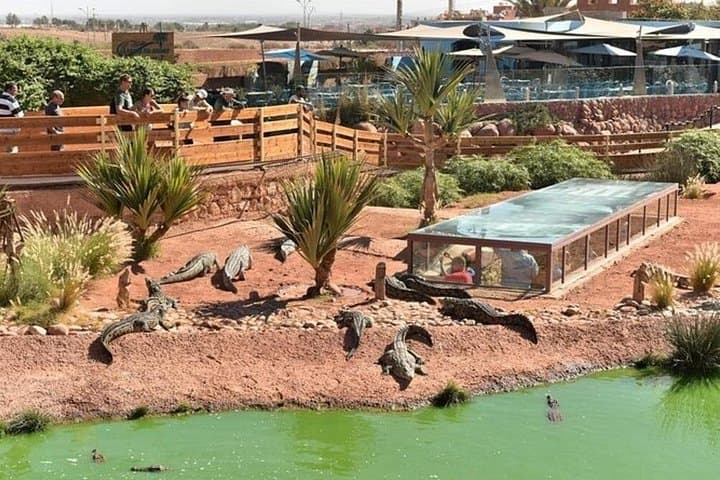
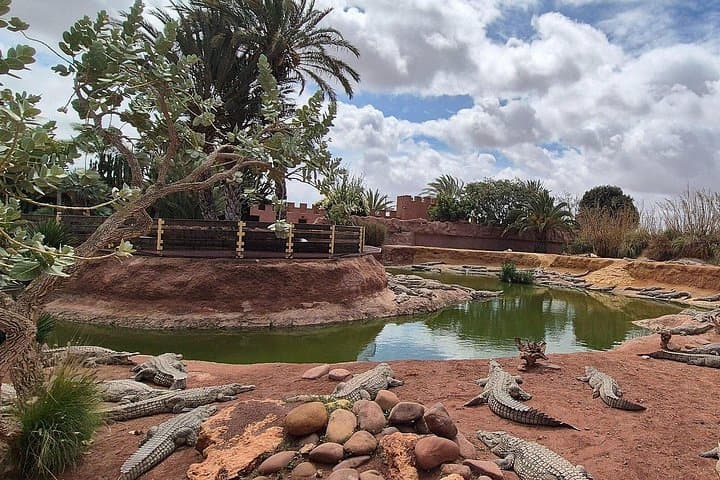
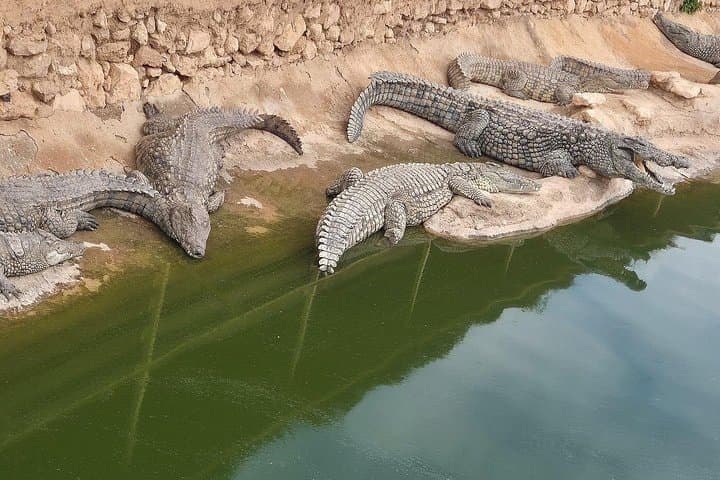
The path opens with a giant carved crocodile mouth framing the walk; heat rises off sun-warmed stones while waterfalls murmur through planted terraces. At Crocoparc you move from shaded boulevards of succulents into bright glass-roofed enclosures where Nile crocodiles lie like ancient logs, mouths half-open and alert. Giant tortoises pick their slow way across lawns; anacondas hide in humid, planted exhibits. The park’s design blends horticulture and reptile husbandry, guiding visitors along winding routes that feel part garden, part natural-history exhibit.
The path opens with a giant carved crocodile mouth framing the walk; heat rises off sun-warmed stones while waterfalls murmur through planted terraces. At Crocoparc you move from shaded boulevards of succulents into bright glass-roofed enclosures where Nile crocodiles lie like ancient logs, mouths half-open and alert. Giant tortoises pick their slow way across lawns; anacondas hide in humid, planted exhibits. The park’s design blends horticulture and reptile husbandry, guiding visitors along winding routes that feel part garden, part natural-history exhibit.
The site is a modern addition to Agadir’s tourism fabric, developed to showcase exotic plants and reptiles and to provide education on species that rarely appear in local landscapes. Geologically, the park sits on the coastal plain south of the Atlas foothills—dry, sunny and shaped by Atlantic breezes that keep palms and water lilies thriving. Culturally, a visit pairs easily with Agadir’s markets and seaside promenades, offering a compact, family-friendly look at species normally associated with river basins.
Practical guidance: tours last roughly 3–4 hours including hotel pick-up; admission may be separate from transport, so confirm when booking. Wear sturdy walking shoes for gravel paths, bring sun protection and at least one liter of water per person, and carry small change for on-site purchases. Morning visits bring softer light and cooler temperatures; late afternoon highlights the pools and basking reptiles. The park is suitable for most fitness levels and provides accessible routes in core areas—perfect for families and anyone wanting a close, safe encounter with large reptiles and curated tropical plantings.