THE ADVENTURE COLLECTIVE® · Independent discovery and booking for outdoor travel

A compact half‑day that pairs Crocoparc’s crocodiles and tropical gardens with the unforgettable sight of goats scaling argan trees. Expect easy walking, a cooperative visit showing traditional argan oil production, and hotel pickup for a seamless morning of wildlife and culture.
A compact half‑day that pairs Crocoparc’s crocodiles and tropical gardens with the unforgettable sight of goats scaling argan trees. Expect easy walking, a cooperative visit showing traditional argan oil production, and hotel pickup for a seamless morning of wildlife and culture.
You step off the air‑conditioned van into a scrubby Atlantic light; palms lean with a breeze that carries a salt memory from the bay and a dry, warm scent from the argan scrub. Minutes later, a line of glass viewing platforms brings you eye‑level with ancient‑jawed Nile crocodiles, their skin like fossilized river rock, while botanical paths thread past parrots, iguanas and shy monkeys.
Verified experiences and guided adventures in the surrounding area.
Operated by The best guide '' king mohamed 7" · Agadir, Souss-Massa
You step off the air‑conditioned van into a scrubby Atlantic light; palms lean with a breeze that carries a salt memory from the bay and a dry, warm scent from the argan scrub. Minutes later, a line of glass viewing platforms brings you eye‑level with ancient‑jawed Nile crocodiles, their skin like fossilized river rock, while botanical paths thread past parrots, iguanas and shy monkeys.
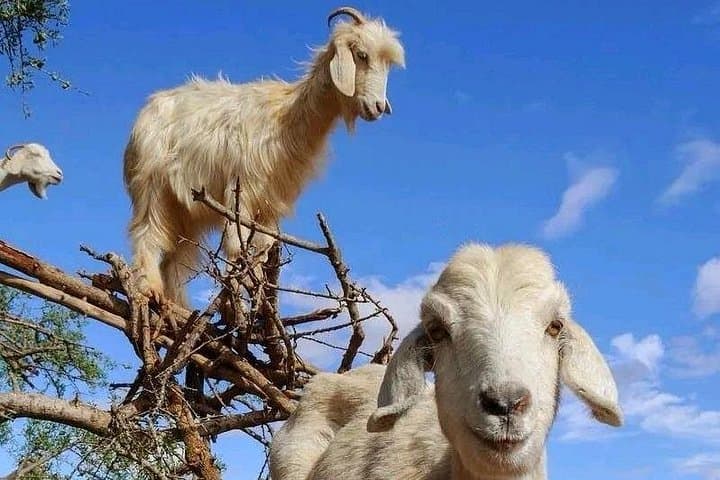
This half‑day loop pairs Crocoparc — a private crocodile park and botanical garden on Agadir’s southern outskirts — with the region’s singular spectacle: goats that climb argan trees to eat the fruit. The argan tree (Argania spinosa) is endemic to southwest Morocco; Berber communities have pressed its kernels into prized argan oil for generations. The cooperative visit that often follows the goat stop demonstrates traditional hand‑pressing methods and offers locally made cosmetic and culinary products.
Geologically the area sits between the coastal plain and the lower slopes of the Anti‑Atlas foothills, giving a semi‑arid landscape punctuated by wind‑sculpted trees. Culturally, the itinerary touches both wildlife display and rural economy — animals, plants and people shaped by limited water and long summers.
Practical side: the tour runs about four hours with hotel pickup and drop‑off, gentle walking on paved and garden paths, and accessible transport. Bring sun protection, a camera with a good zoom, and a small amount of cash for cooperative purchases. For families and curious travelers, this is an easy, visual half‑day that mixes wildlife, hands‑on culture, and unmistakable Moroccan roadside scenes.
Yes — the tour includes pickup and drop‑off from Agadir accommodations with an air‑conditioned vehicle.
CrocoPark admission is listed separately on some itineraries; confirm with the provider — the argan cooperative visit is usually included.
Yes — the tour is family‑friendly and notes wheelchair accessibility for transport and main paths, though some viewing areas may have steps.
Morning and late afternoon are best: goats tend to feed and climb while temperatures are cooler, improving visibility.
The best guide '' king mohamed 7" operates guided outdoor trips and adventures with an emphasis on safety, stewardship, and memorable experiences.
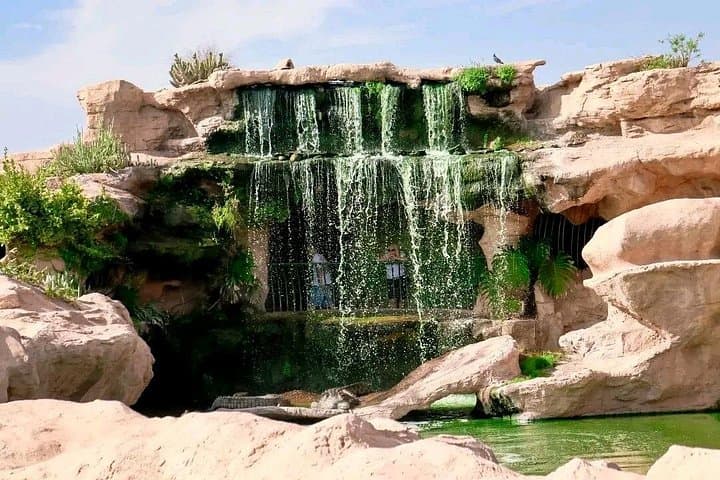
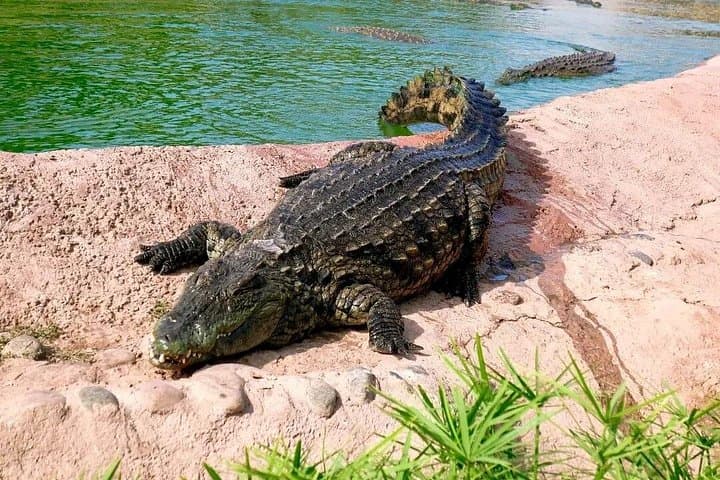
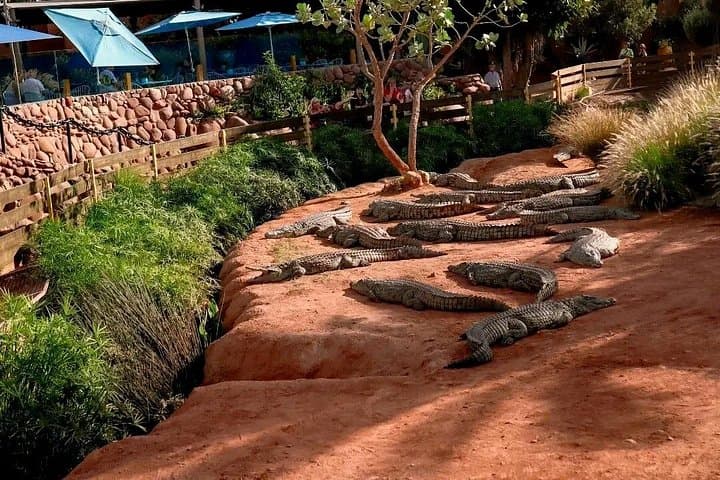
You step off the air‑conditioned van into a scrubby Atlantic light; palms lean with a breeze that carries a salt memory from the bay and a dry, warm scent from the argan scrub. Minutes later, a line of glass viewing platforms brings you eye‑level with ancient‑jawed Nile crocodiles, their skin like fossilized river rock, while botanical paths thread past parrots, iguanas and shy monkeys.
You step off the air‑conditioned van into a scrubby Atlantic light; palms lean with a breeze that carries a salt memory from the bay and a dry, warm scent from the argan scrub. Minutes later, a line of glass viewing platforms brings you eye‑level with ancient‑jawed Nile crocodiles, their skin like fossilized river rock, while botanical paths thread past parrots, iguanas and shy monkeys.
This half‑day loop pairs Crocoparc — a private crocodile park and botanical garden on Agadir’s southern outskirts — with the region’s singular spectacle: goats that climb argan trees to eat the fruit. The argan tree (Argania spinosa) is endemic to southwest Morocco; Berber communities have pressed its kernels into prized argan oil for generations. The cooperative visit that often follows the goat stop demonstrates traditional hand‑pressing methods and offers locally made cosmetic and culinary products.
Geologically the area sits between the coastal plain and the lower slopes of the Anti‑Atlas foothills, giving a semi‑arid landscape punctuated by wind‑sculpted trees. Culturally, the itinerary touches both wildlife display and rural economy — animals, plants and people shaped by limited water and long summers.
Practical side: the tour runs about four hours with hotel pickup and drop‑off, gentle walking on paved and garden paths, and accessible transport. Bring sun protection, a camera with a good zoom, and a small amount of cash for cooperative purchases. For families and curious travelers, this is an easy, visual half‑day that mixes wildlife, hands‑on culture, and unmistakable Moroccan roadside scenes.