THE ADVENTURE COLLECTIVE® · Independent discovery and booking for outdoor travel

Paddle the Cahuil estuary on a rowing surfboard, following a low-impact salt route past artisan salt pans and rich birdlife. This guided, family-friendly crossing mixes gentle currents, local history, and close-up wildlife viewing.
Paddle the Cahuil estuary on a rowing surfboard, following a low-impact salt route past artisan salt pans and rich birdlife. This guided, family-friendly crossing mixes gentle currents, local history, and close-up wildlife viewing.
The estuary opens like a low, moving plain; water slips around the board and the tide nudges you upriver as birds wheel above. On a rowing surfboard you sit lower than a kayak but ride the current’s pulse, eyes scanning abandoned salt pans and reed-lined channels while the Pacific wind grades from cool to salty.
Verified experiences and guided adventures in the surrounding area.
Operated by Yagan ecoturismo chile · Pichilemu, O'Higgins Region
The estuary opens like a low, moving plain; water slips around the board and the tide nudges you upriver as birds wheel above. On a rowing surfboard you sit lower than a kayak but ride the current’s pulse, eyes scanning abandoned salt pans and reed-lined channels while the Pacific wind grades from cool to salty.
This stretch of coast near Cahuil and Pichilemu has long been shaped by human saltworks and migrating shorebirds. The salt route traces shallow pans cut into beach flats; artisan salt workers still harvest by hand, a practice passed through families since colonial times. Geologically the coast is a fringe of sedimentary shelves and estuarine mud—soft ground that feeds salt pans and draws wading birds.
Culturally the trip pairs nature observation with local storytelling: guides often stop at a repaired snack beside the flats while a salt worker explains traditional extraction and local livelihoods. The estuary’s rhythms—tide, wind, and incoming swell from nearby Punta de Lobos—dictate the pace.
Practically expect a contemplative, low-impact paddle of roughly 3–4 hours. Balance matters more than brute strength; the guide times launches with favorable currents and handles transfers from Pichilemu or Cahuil. Wear quick-dry layers, sun protection, and shoes that handle mud. Hydrate and keep distance from nesting or feeding birds; their presence is the trip’s main attraction, and minimal disturbance keeps the estuary healthy. For first-timers this is an accessible way to learn coastal ecology while supporting local salt traditions.
No—this is designed for beginners; guides provide instruction on balance and paddling before launch.
The activity is family-friendly and suitable for children under supervision; confirm age ranges when booking.
Tours may be canceled or rescheduled due to wind or unsafe conditions; full refunds are typically available with 24+ hours notice.
Transfers from Pichilemu or Cahuil are usually included—confirm pickup point and timing at booking.
Yagan ecoturismo chile operates guided outdoor trips and adventures with an emphasis on safety, stewardship, and memorable experiences.
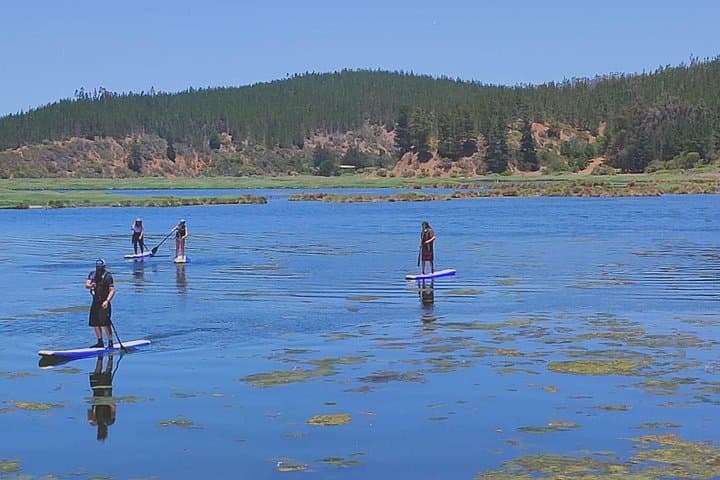
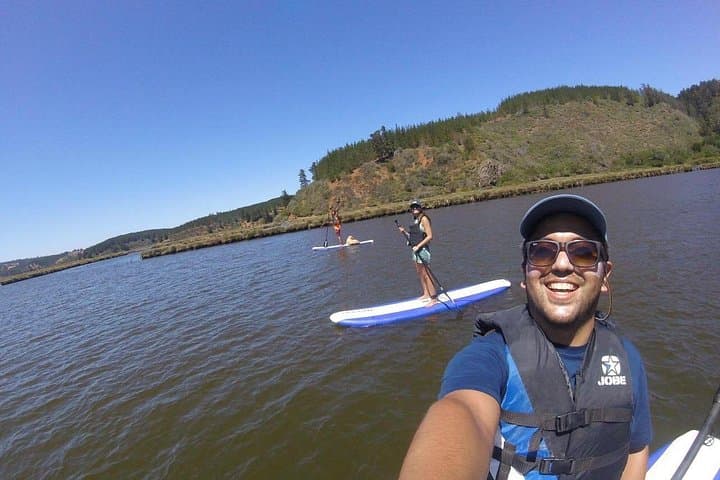
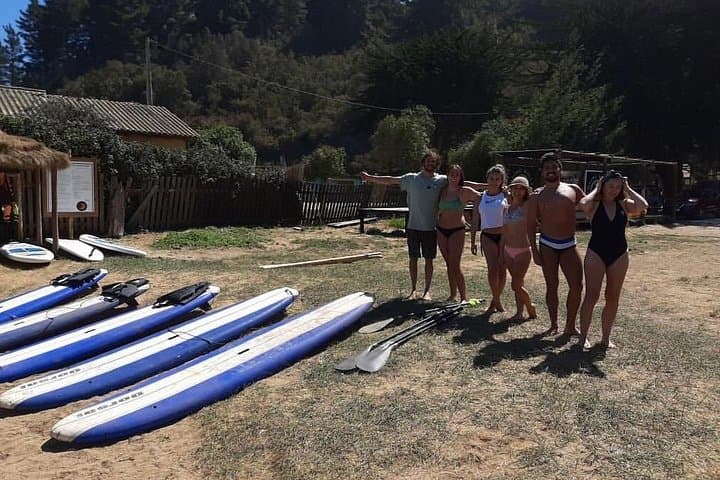
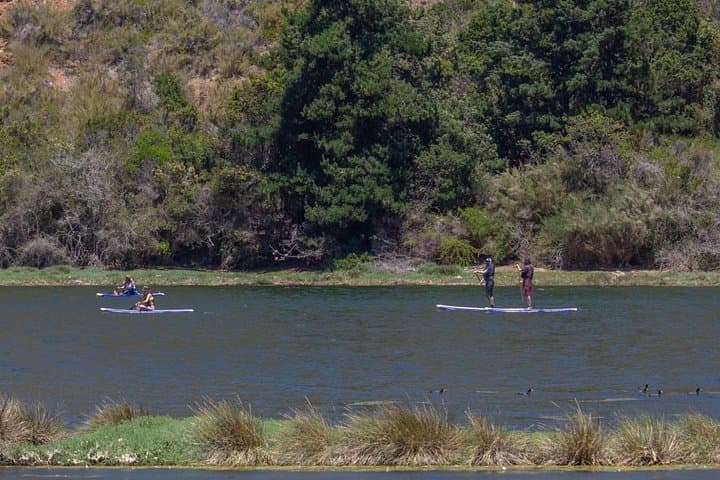
The estuary opens like a low, moving plain; water slips around the board and the tide nudges you upriver as birds wheel above. On a rowing surfboard you sit lower than a kayak but ride the current’s pulse, eyes scanning abandoned salt pans and reed-lined channels while the Pacific wind grades from cool to salty.
The estuary opens like a low, moving plain; water slips around the board and the tide nudges you upriver as birds wheel above. On a rowing surfboard you sit lower than a kayak but ride the current’s pulse, eyes scanning abandoned salt pans and reed-lined channels while the Pacific wind grades from cool to salty.
This stretch of coast near Cahuil and Pichilemu has long been shaped by human saltworks and migrating shorebirds. The salt route traces shallow pans cut into beach flats; artisan salt workers still harvest by hand, a practice passed through families since colonial times. Geologically the coast is a fringe of sedimentary shelves and estuarine mud—soft ground that feeds salt pans and draws wading birds.
Culturally the trip pairs nature observation with local storytelling: guides often stop at a repaired snack beside the flats while a salt worker explains traditional extraction and local livelihoods. The estuary’s rhythms—tide, wind, and incoming swell from nearby Punta de Lobos—dictate the pace.
Practically expect a contemplative, low-impact paddle of roughly 3–4 hours. Balance matters more than brute strength; the guide times launches with favorable currents and handles transfers from Pichilemu or Cahuil. Wear quick-dry layers, sun protection, and shoes that handle mud. Hydrate and keep distance from nesting or feeding birds; their presence is the trip’s main attraction, and minimal disturbance keeps the estuary healthy. For first-timers this is an accessible way to learn coastal ecology while supporting local salt traditions.