THE ADVENTURE COLLECTIVE® · Independent discovery and booking for outdoor travel

Walk across exposed tidal sands to Holy Island with a guide, hearing stories of Saxon monks and keeping watch for grey seals. This tide-dependent, roughly four-hour outing blends natural spectacle with layered history—timing and footwear matter.
Walk across exposed tidal sands to Holy Island with a guide, hearing stories of Saxon monks and keeping watch for grey seals. This tide-dependent, roughly four-hour outing blends natural spectacle with layered history—timing and footwear matter.
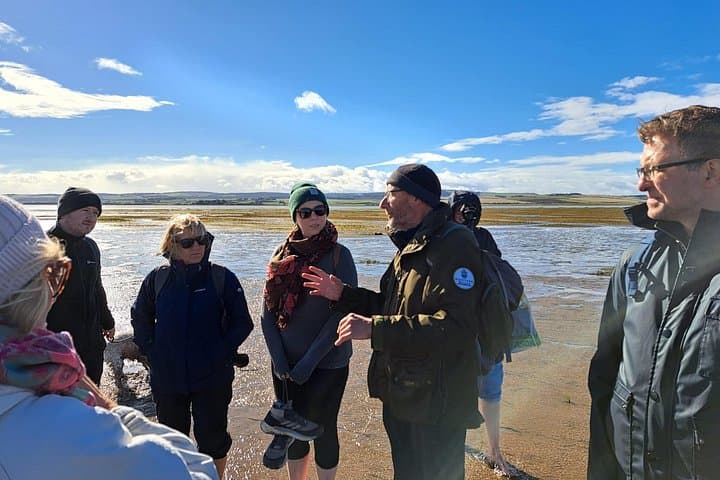
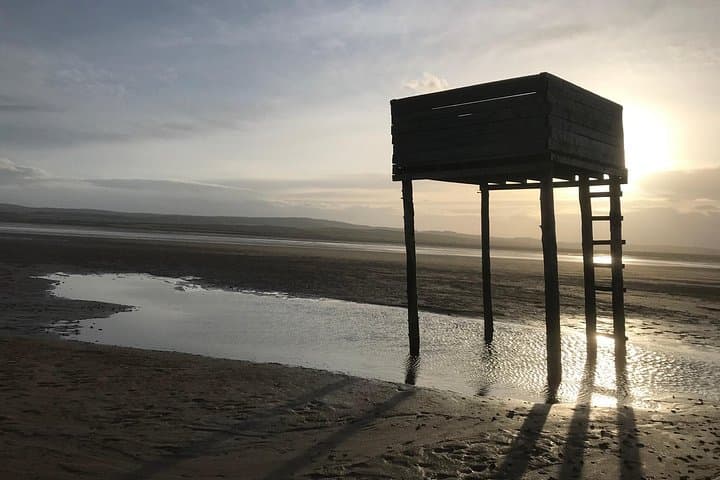
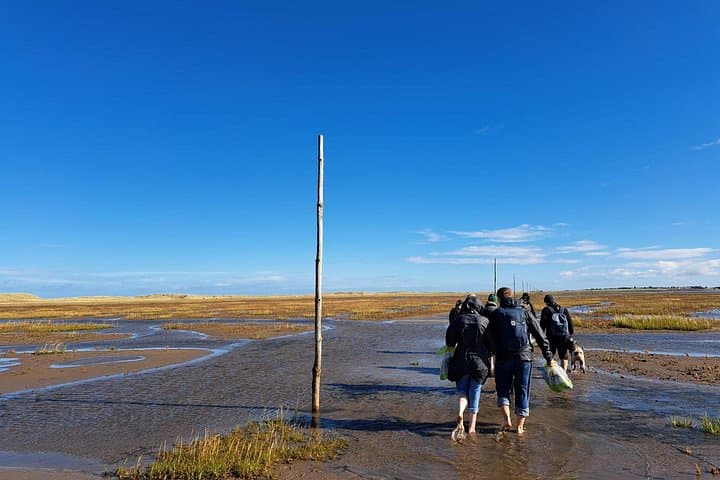
You step off firm ground and the world opens into wide sand and wind; gulls wheel and tidal channels cut the pale flats as the sea’s edge keeps time. Underfoot the sand gives and grinds, and the island’s silhouette—Priory ruins and the small village—grows like a story told from the shore. The crossing itself compels quiet: the wind seems to push you toward the island and the past.
Verified experiences and guided adventures in the surrounding area.
Operated by Heritage Walks Northumberland · Lindisfarne, Northumberland
You step off firm ground and the world opens into wide sand and wind; gulls wheel and tidal channels cut the pale flats as the sea’s edge keeps time. Underfoot the sand gives and grinds, and the island’s silhouette—Priory ruins and the small village—grows like a story told from the shore. The crossing itself compels quiet: the wind seems to push you toward the island and the past.
This route has been used since Roman and Saxon times by pilgrims and monks heading to St Aidan and St Cuthbert’s monastic site. Geologically the area is classic North Northumberland tidal flats—shallow, shifting sand and mud with shallow channels that open and close on the tide. Culturally, Holy Island retains a fishing-village pace and a strong medieval heritage visible in the priory and village layout.
Practical guidance: the walk is guide-led and strictly tide-dependent—start times change daily. Expect roughly 1.5–2 miles (2.5–3.5 km) across soft sand and occasional muddy channels; total tour time is about four hours including free time on the island. Terrain is flat with little elevation but can be physically testing due to sand. Wildlife: grey seals haul out on the sands and waders crowd the pools—keep distance and observe quietly. Footwear can be waterproof boots or barefoot if you prefer sand contact; bring windproof layers, water, and sensible shoes for village paths. Follow the guide’s route and tide advice; crossings are safe when led but dangerous alone. After exploration you will return to the mainland by vehicle from the island, leaving the tide to reclaim the path behind you.
The crossing itself is roughly 1.5–2 miles (2.5–3.5 km); the full guided tour takes about four hours including time on the island.
No—this area is governed by tides and shifting channels; the operator runs guided crossings and start times are set to the tide for safety.
Families are welcome but children should be supervised; only service animals are permitted due to safety and wildlife sensitivity.
Wear layers and a windproof jacket, bring waterproof footwear or be prepared to go barefoot, plus water, snacks, and a charged phone in a drybag.
Heritage Walks Northumberland operates guided outdoor trips and adventures with an emphasis on safety, stewardship, and memorable experiences.
You step off firm ground and the world opens into wide sand and wind; gulls wheel and tidal channels cut the pale flats as the sea’s edge keeps time. Underfoot the sand gives and grinds, and the island’s silhouette—Priory ruins and the small village—grows like a story told from the shore. The crossing itself compels quiet: the wind seems to push you toward the island and the past.
You step off firm ground and the world opens into wide sand and wind; gulls wheel and tidal channels cut the pale flats as the sea’s edge keeps time. Underfoot the sand gives and grinds, and the island’s silhouette—Priory ruins and the small village—grows like a story told from the shore. The crossing itself compels quiet: the wind seems to push you toward the island and the past.
This route has been used since Roman and Saxon times by pilgrims and monks heading to St Aidan and St Cuthbert’s monastic site. Geologically the area is classic North Northumberland tidal flats—shallow, shifting sand and mud with shallow channels that open and close on the tide. Culturally, Holy Island retains a fishing-village pace and a strong medieval heritage visible in the priory and village layout.
Practical guidance: the walk is guide-led and strictly tide-dependent—start times change daily. Expect roughly 1.5–2 miles (2.5–3.5 km) across soft sand and occasional muddy channels; total tour time is about four hours including free time on the island. Terrain is flat with little elevation but can be physically testing due to sand. Wildlife: grey seals haul out on the sands and waders crowd the pools—keep distance and observe quietly. Footwear can be waterproof boots or barefoot if you prefer sand contact; bring windproof layers, water, and sensible shoes for village paths. Follow the guide’s route and tide advice; crossings are safe when led but dangerous alone. After exploration you will return to the mainland by vehicle from the island, leaving the tide to reclaim the path behind you.