THE ADVENTURE COLLECTIVE® · Independent discovery and booking for outdoor travel

An eight-day horseback expedition across the high Argentine Andes that follows routes used by General San Martín. Expect high passes near 4,500 m, mule-supported camps, and multi-day riding through raw mountain terrain.
An eight-day horseback expedition across the high Argentine Andes that follows routes used by General San Martín. Expect high passes near 4,500 m, mule-supported camps, and multi-day riding through raw mountain terrain.
You ride out before dawn, the Andes cutting a hard horizon as thin air sharpens each breath. Mules stir, guides check bridles, and the first light paints the scree and snowfields in a cold, clear silver. Over eight days you move between high puna and river valleys, following tracks that echo José de San Martín’s 1817 crossing.
Verified experiences and guided adventures in the surrounding area.
Operated by Posta Inca Adventures Expeditions · Barreal, San Juan
You ride out before dawn, the Andes cutting a hard horizon as thin air sharpens each breath. Mules stir, guides check bridles, and the first light paints the scree and snowfields in a cold, clear silver. Over eight days you move between high puna and river valleys, following tracks that echo José de San Martín’s 1817 crossing.
The route threads through Barreal and Valle de Los Patos, climbing to Paso del Espinacito and Paso La Honda at about 4,350 m. Geology here is raw: uplifted granite and metamorphic ridges, glacial cirques, and terraces carved by seasonal melt. Cultural markers appear at camps—rustic corrals, baqueano lore, and stories tied to the independence campaign. Local communities in San Juan maintain mule-train traditions that shape the trip’s pace and logistics.
Expect long riding days (some at altitude), basic camps on open ground, and guided navigation across mixed terrain: sandy valley tracks, rocky ascents, and narrow alpine passes. Weather shifts fast—sun, wind and late-summer storms are all possible—so timing and layers matter. Guides provide mules, tents, many meals, and transfers between villages and trailheads.
Practical guidance: arrive a day early in Barreal to acclimatize, bring quality riding boots and a warm sleeping bag rated for near-freezing nights, and travel light to protect the animals and keep your saddle balanced. Respect high-altitude pacing: hydrate, eat consistently, and communicate any discomfort to your guide. For riders who want an expedition with historical heft and serious mountain scenery, this crossing delivers both challenge and clarity.
Basic riding skills are strongly recommended; guides can assist beginners but long days in the saddle are easier with prior experience.
The highest points reach ~4,500 m; arrive early to acclimatize, hydrate, avoid alcohol, and inform guides of any altitude symptoms immediately.
The itinerary provides mules and saddles, tents, many meals (breakfasts, lunches, dinners noted), transfers by vehicle, and local guides—check the supplier’s inclusions for specifics.
Not recommended for children under 12 or travelers with serious heart, spine, or pregnancy-related conditions; a moderate to high fitness level is required.
Posta Inca Adventures Expeditions operates guided outdoor trips and adventures with an emphasis on safety, stewardship, and memorable experiences.
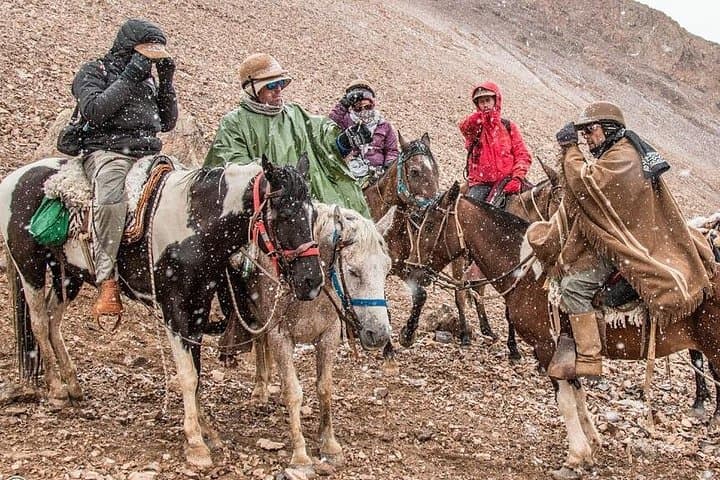


You ride out before dawn, the Andes cutting a hard horizon as thin air sharpens each breath. Mules stir, guides check bridles, and the first light paints the scree and snowfields in a cold, clear silver. Over eight days you move between high puna and river valleys, following tracks that echo José de San Martín’s 1817 crossing.
You ride out before dawn, the Andes cutting a hard horizon as thin air sharpens each breath. Mules stir, guides check bridles, and the first light paints the scree and snowfields in a cold, clear silver. Over eight days you move between high puna and river valleys, following tracks that echo José de San Martín’s 1817 crossing.
The route threads through Barreal and Valle de Los Patos, climbing to Paso del Espinacito and Paso La Honda at about 4,350 m. Geology here is raw: uplifted granite and metamorphic ridges, glacial cirques, and terraces carved by seasonal melt. Cultural markers appear at camps—rustic corrals, baqueano lore, and stories tied to the independence campaign. Local communities in San Juan maintain mule-train traditions that shape the trip’s pace and logistics.
Expect long riding days (some at altitude), basic camps on open ground, and guided navigation across mixed terrain: sandy valley tracks, rocky ascents, and narrow alpine passes. Weather shifts fast—sun, wind and late-summer storms are all possible—so timing and layers matter. Guides provide mules, tents, many meals, and transfers between villages and trailheads.
Practical guidance: arrive a day early in Barreal to acclimatize, bring quality riding boots and a warm sleeping bag rated for near-freezing nights, and travel light to protect the animals and keep your saddle balanced. Respect high-altitude pacing: hydrate, eat consistently, and communicate any discomfort to your guide. For riders who want an expedition with historical heft and serious mountain scenery, this crossing delivers both challenge and clarity.