THE ADVENTURE COLLECTIVE® · Independent discovery and booking for outdoor travel

Ride a SuperTruck from Jökulsárlón into a short, high-impact exploration of a living blue-ice cave on Vatnajökull. Expect glassy cobalt walls, expert guides, and a three-hour outing that pairs raw geology with practical safety.
Ride a SuperTruck from Jökulsárlón into a short, high-impact exploration of a living blue-ice cave on Vatnajökull. Expect glassy cobalt walls, expert guides, and a three-hour outing that pairs raw geology with practical safety.
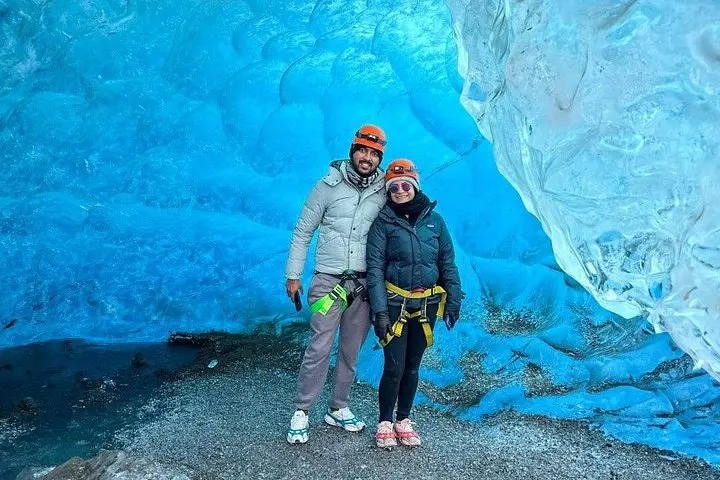
The SuperTruck brakes, the engine grumbles down, and the air smells like mineral and old snow. You clamber down into a landscape that feels both alien and utterly alive: walls of glassy blue press close, light refracts through layers of compressed ice, and a guide’s headlamp slices a corridor that the glacier carved only months ago. This is a blue-ice cave on an outlet of Vatnajökull — Europe’s largest ice cap — and the day’s three-hour loop from Jökulsárlón delivers a concentrated encounter with a living, moving glacier.
Verified experiences and guided adventures in the surrounding area.
Operated by Troll Expeditions · Jökulsárlón, Southern Region
The SuperTruck brakes, the engine grumbles down, and the air smells like mineral and old snow. You clamber down into a landscape that feels both alien and utterly alive: walls of glassy blue press close, light refracts through layers of compressed ice, and a guide’s headlamp slices a corridor that the glacier carved only months ago. This is a blue-ice cave on an outlet of Vatnajökull — Europe’s largest ice cap — and the day’s three-hour loop from Jökulsárlón delivers a concentrated encounter with a living, moving glacier.
Vatnajökull’s ice is not static sculpture but a working surface. Soot-dark ash layers, trapped air bubbles and seasonal melt create the deep cobalt the guides call “dragon glass” — a name familiar to fans of Game of Thrones, who’ll recognize the filming sites around the lagoon. The caves themselves are transient: meltwater tunnels and collapses open new chambers each winter and close again with thaw. Geologically, you’re watching compacted snowfall decades old compressed into blue ice, then reshaped by gravity and melt.
The cultural landscape around Jökulsárlón is quiet but storied. Highland farmers and coastal fishers have shared this shoreline for generations, and the lagoon — where icebergs calve off the glacier and drift out to sea — has become one of Iceland’s most photographed places. Guides who lead SuperTruck trips are trained in glacier safety and local ecology, and they treat the cave as a fragile, temporary spectacle.
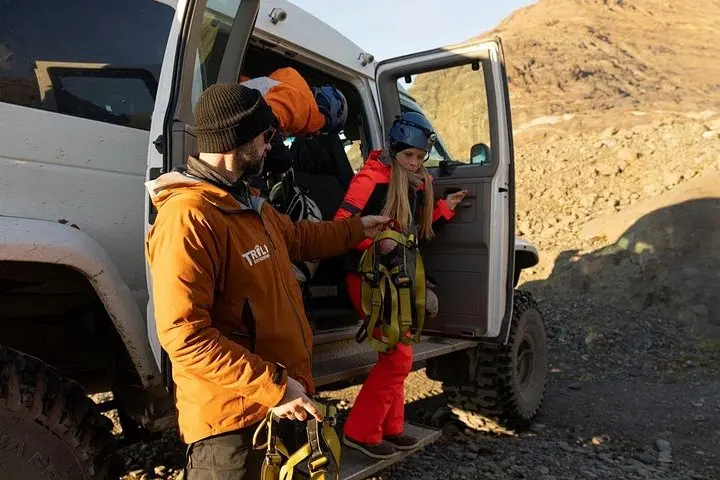
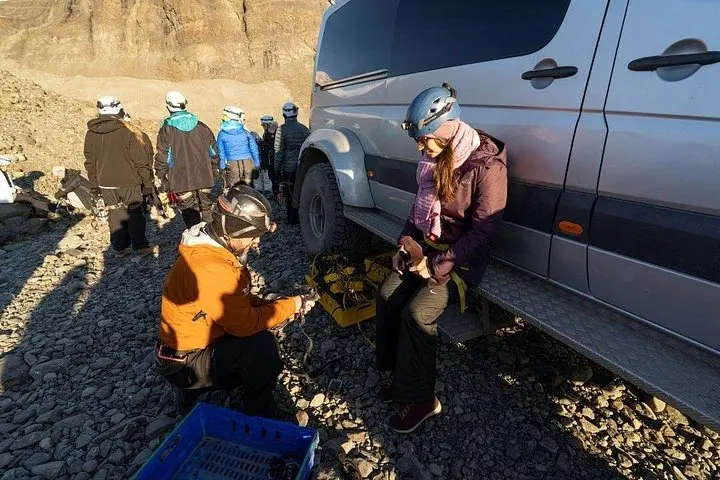
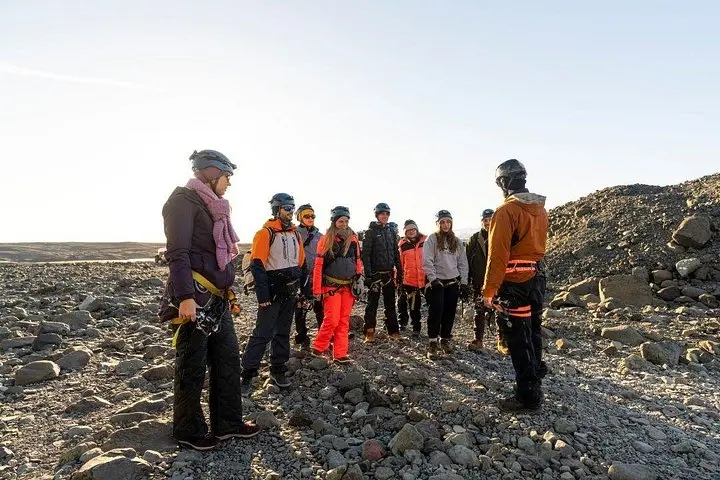
Plan practically: meet in the Jökulsárlón parking area (guides wait by the public toilets behind the Fish & Chips truck) at least 20 minutes early. The SuperTruck does the heavy lifting: it’s the only way to reach stable cave entrances and traverse sastrugi and soft snowfields without long approaches. Helmets, crampons and instruction are included, but you’ll want waterproof outer layers, insulated boots and warm gloves. Expect uneven footing and cold, damp air inside the cave; your phone battery will drain faster than usual in single-digit temperatures, so carry a backup power cell if photography matters.
Timing matters. The most dramatic blue caves are typically accessible in colder months when melt is limited, but operators run in variable conditions and will cancel for safety. Drive time from Reykjavík is roughly 5–5½ hours in good conditions, so many travelers base themselves in Höfn or the Skaftafell area. Respect boundaries: guides will point out fragile features and ask you not to touch thin ice or climb formed arches.
When the tour ends you’ll return to the lagoon where icebergs bob and seals slip between blocks of glass-blue ice — a reminder that this landscape keeps moving long after you leave it.
Most approaches are short—typically a few minutes to about 10–15 minutes over uneven snow or ice; the heavy lifting is done by the SuperTruck.
Yes—guides provide helmets and crampons, and they will fit them and instruct you on safe use before entering the cave.
This tour is suitable for most fitness levels, but participants must be able to walk on uneven, slippery terrain; operators may restrict access for very young children or guests with mobility issues.
No—the blue ice caves are seasonal and shift year to year; access depends on safety and glacier conditions, so operators adjust locations accordingly.
Tours can be canceled for safety and refund rules typically allow cancellation up to 24 hours before departure; operators will notify guests if conditions force a change.
Driving time is roughly 5–5½ hours in good road conditions along the Ring Road (Route 1); plan extra time in winter for slower traffic and weather.
Troll Expeditions operates guided outdoor trips and adventures with an emphasis on safety, stewardship, and memorable experiences.
The SuperTruck brakes, the engine grumbles down, and the air smells like mineral and old snow. You clamber down into a landscape that feels both alien and utterly alive: walls of glassy blue press close, light refracts through layers of compressed ice, and a guide’s headlamp slices a corridor that the glacier carved only months ago. This is a blue-ice cave on an outlet of Vatnajökull — Europe’s largest ice cap — and the day’s three-hour loop from Jökulsárlón delivers a concentrated encounter with a living, moving glacier.
The SuperTruck brakes, the engine grumbles down, and the air smells like mineral and old snow. You clamber down into a landscape that feels both alien and utterly alive: walls of glassy blue press close, light refracts through layers of compressed ice, and a guide’s headlamp slices a corridor that the glacier carved only months ago. This is a blue-ice cave on an outlet of Vatnajökull — Europe’s largest ice cap — and the day’s three-hour loop from Jökulsárlón delivers a concentrated encounter with a living, moving glacier.
Vatnajökull’s ice is not static sculpture but a working surface. Soot-dark ash layers, trapped air bubbles and seasonal melt create the deep cobalt the guides call “dragon glass” — a name familiar to fans of Game of Thrones, who’ll recognize the filming sites around the lagoon. The caves themselves are transient: meltwater tunnels and collapses open new chambers each winter and close again with thaw. Geologically, you’re watching compacted snowfall decades old compressed into blue ice, then reshaped by gravity and melt.
The cultural landscape around Jökulsárlón is quiet but storied. Highland farmers and coastal fishers have shared this shoreline for generations, and the lagoon — where icebergs calve off the glacier and drift out to sea — has become one of Iceland’s most photographed places. Guides who lead SuperTruck trips are trained in glacier safety and local ecology, and they treat the cave as a fragile, temporary spectacle.
Plan practically: meet in the Jökulsárlón parking area (guides wait by the public toilets behind the Fish & Chips truck) at least 20 minutes early. The SuperTruck does the heavy lifting: it’s the only way to reach stable cave entrances and traverse sastrugi and soft snowfields without long approaches. Helmets, crampons and instruction are included, but you’ll want waterproof outer layers, insulated boots and warm gloves. Expect uneven footing and cold, damp air inside the cave; your phone battery will drain faster than usual in single-digit temperatures, so carry a backup power cell if photography matters.
Timing matters. The most dramatic blue caves are typically accessible in colder months when melt is limited, but operators run in variable conditions and will cancel for safety. Drive time from Reykjavík is roughly 5–5½ hours in good conditions, so many travelers base themselves in Höfn or the Skaftafell area. Respect boundaries: guides will point out fragile features and ask you not to touch thin ice or climb formed arches.
When the tour ends you’ll return to the lagoon where icebergs bob and seals slip between blocks of glass-blue ice — a reminder that this landscape keeps moving long after you leave it.