THE ADVENTURE COLLECTIVE® · Independent discovery and booking for outdoor travel

Step off the black sand and climb toward a throat of blue—Vatnajökull’s seasonal ice caves reward patient travelers with surreal light and sculpted ice. This half-day tour from Hali combines a super-jeep ride, a guided walk across moraine, and the chance to enter a cave chosen for safety and photographic potential.
Step off the black sand and climb toward a throat of blue—Vatnajökull’s seasonal ice caves reward patient travelers with surreal light and sculpted ice. This half-day tour from Hali combines a super-jeep ride, a guided walk across moraine, and the chance to enter a cave chosen for safety and photographic potential.
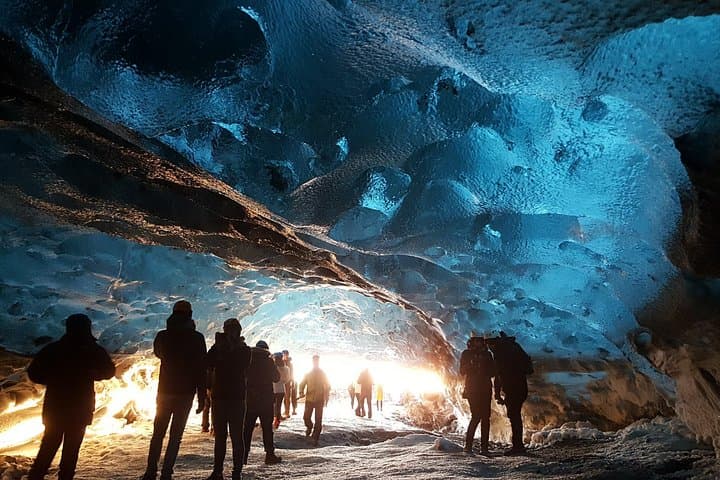
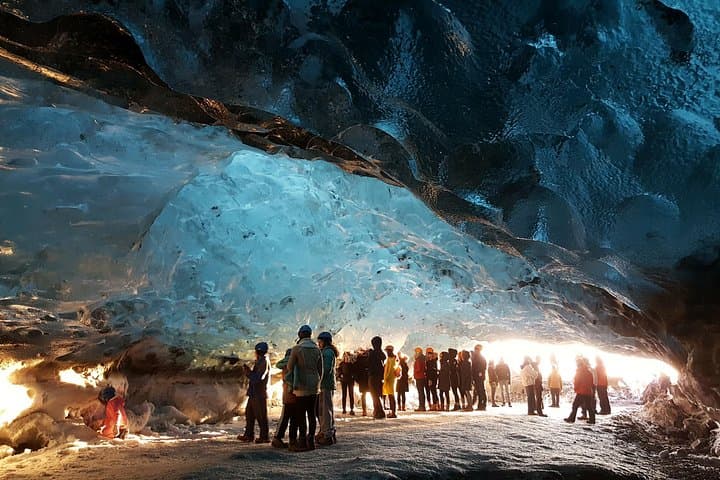
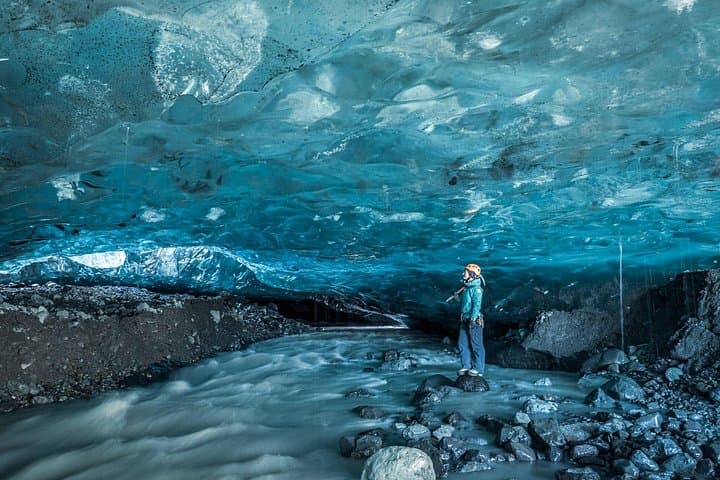
A cold wind sweeps across the low black moraine as the super jeep pulls to a stop and the guide points toward a cut in the ice—a throat of blue that brightens the grey coast. You pick your way over gravel and bergy bits, crampons clinking like distant wind chimes, and the glacier seems to breathe: slow, patient, full of hidden hollows. For the next few hours Vatnajökull will keep its secrets close and only let you into the ones it judges safe.
Verified experiences and guided adventures in the surrounding area.
Operated by Glacier Adventure · Hali (near Höfn), Austurland
A cold wind sweeps across the low black moraine as the super jeep pulls to a stop and the guide points toward a cut in the ice—a throat of blue that brightens the grey coast. You pick your way over gravel and bergy bits, crampons clinking like distant wind chimes, and the glacier seems to breathe: slow, patient, full of hidden hollows. For the next few hours Vatnajökull will keep its secrets close and only let you into the ones it judges safe.
The ice caves that form at Vatnajökull’s margins are ephemeral—created and destroyed by winter freezes, summer melts and the routing of meltwater. Iceland’s largest ice cap has been both a sculptor and a storybook for local communities; early settlers learned to read its advance and retreat, and modern guides still tell tales of the glacier’s role in shaping the coastline and local livelihoods. Geologically, these caves are blue because dense glacial ice absorbs red light and scatters blue; layers of snow compressed into ice over centuries create the sculptural bands you’ll see.
Culturally, the southeast—Hali and the wider Hornafjörður district—has long balanced fishing, farming and glacial tourism. Small museums and farm-stays nearby keep the region’s history visible: fishermen’s nets, turf houses, and old maps that mark the glacier’s former edges. Responsible guiding has become part of that story; local operators limit group size, use safety gear, and choose caves based on stability and weather.
Practically, the tour meets at Glacier Adventure’s base in Hali (roughly a 25–45 minute jeep drive from the main route near Jökulsárlón). Expect a total outing of 3–4 hours: drive time, a guided walk across rough gravel, and 5–60 minutes of hiking to reach the cave entrance depending on which cave is accessible that day. Walking is on uneven ground and moraine; the elevation change is generally modest but can include short steeper sections.
Guides provide helmets and, when needed, crampons and an ice axe; guests should bring warm, waterproof layers, sturdy boots (rental available), and a camera with spare batteries—cold drains power fast. Weather controls the show: some caves require days without rain and sub-zero temperatures to stabilize. Operators cancel if conditions aren’t safe, and the chosen cave is always the safest available on the day.
For photographers, blue ice in diffuse light is the prize—ask your guide about safe framing and expect to crouch and move slowly. Keep respect for the glacier’s fragility in mind: avoid touching delicate features and follow the guide’s route. In a few hours you’ll return to gravel, mud on your boots and images burned in your mind: bright blue arches, frozen scallops, and the distinct, living hush of an ice cave that has agreed to let you inside for a little while.
Minimum age is 10; children must be accompanied by an adult and be able to walk on uneven terrain.
Yes—guides supply helmets and crampons when required; confirm if you need a specific boot size for rentals.
This tour is not recommended for pregnant participants or those with serious back or heart conditions—check with your doctor and the operator first.
Tours are weather-dependent; operators will cancel for safety and offer a full refund if canceled at least 24 hours prior or due to unsafe conditions.
Walking time varies from 5 to 60 minutes on gravel and moraine; the terrain is uneven but elevation changes are generally modest.
Personal photography is encouraged; drones are typically prohibited around ice caves and the operator can clarify any commercial-use rules.
Glacier Adventure operates guided outdoor trips and adventures with an emphasis on safety, stewardship, and memorable experiences.
A cold wind sweeps across the low black moraine as the super jeep pulls to a stop and the guide points toward a cut in the ice—a throat of blue that brightens the grey coast. You pick your way over gravel and bergy bits, crampons clinking like distant wind chimes, and the glacier seems to breathe: slow, patient, full of hidden hollows. For the next few hours Vatnajökull will keep its secrets close and only let you into the ones it judges safe.
A cold wind sweeps across the low black moraine as the super jeep pulls to a stop and the guide points toward a cut in the ice—a throat of blue that brightens the grey coast. You pick your way over gravel and bergy bits, crampons clinking like distant wind chimes, and the glacier seems to breathe: slow, patient, full of hidden hollows. For the next few hours Vatnajökull will keep its secrets close and only let you into the ones it judges safe.
The ice caves that form at Vatnajökull’s margins are ephemeral—created and destroyed by winter freezes, summer melts and the routing of meltwater. Iceland’s largest ice cap has been both a sculptor and a storybook for local communities; early settlers learned to read its advance and retreat, and modern guides still tell tales of the glacier’s role in shaping the coastline and local livelihoods. Geologically, these caves are blue because dense glacial ice absorbs red light and scatters blue; layers of snow compressed into ice over centuries create the sculptural bands you’ll see.
Culturally, the southeast—Hali and the wider Hornafjörður district—has long balanced fishing, farming and glacial tourism. Small museums and farm-stays nearby keep the region’s history visible: fishermen’s nets, turf houses, and old maps that mark the glacier’s former edges. Responsible guiding has become part of that story; local operators limit group size, use safety gear, and choose caves based on stability and weather.
Practically, the tour meets at Glacier Adventure’s base in Hali (roughly a 25–45 minute jeep drive from the main route near Jökulsárlón). Expect a total outing of 3–4 hours: drive time, a guided walk across rough gravel, and 5–60 minutes of hiking to reach the cave entrance depending on which cave is accessible that day. Walking is on uneven ground and moraine; the elevation change is generally modest but can include short steeper sections.
Guides provide helmets and, when needed, crampons and an ice axe; guests should bring warm, waterproof layers, sturdy boots (rental available), and a camera with spare batteries—cold drains power fast. Weather controls the show: some caves require days without rain and sub-zero temperatures to stabilize. Operators cancel if conditions aren’t safe, and the chosen cave is always the safest available on the day.
For photographers, blue ice in diffuse light is the prize—ask your guide about safe framing and expect to crouch and move slowly. Keep respect for the glacier’s fragility in mind: avoid touching delicate features and follow the guide’s route. In a few hours you’ll return to gravel, mud on your boots and images burned in your mind: bright blue arches, frozen scallops, and the distinct, living hush of an ice cave that has agreed to let you inside for a little while.