THE ADVENTURE COLLECTIVE® · Independent discovery and booking for outdoor travel

Explore the Cu Chi Tunnels on a focused half‑day tour from Ho Chi Minh City. Crawl through widened passageways, walk former battlefields and learn wartime ingenuity from local guides and exhibits.
Explore the Cu Chi Tunnels on a focused half‑day tour from Ho Chi Minh City. Crawl through widened passageways, walk former battlefields and learn wartime ingenuity from local guides and exhibits.
You step off the air‑conditioned van into a humidity that seems to press the green closer to the trailhead. Rice paddies flatten into lines of water and the jungle breathes around a narrow dirt path; the countryside here feels patient, as if keeping its wartime secrets close.
Verified experiences and guided adventures in the surrounding area.
Operated by Vietnam Tours VIP · Ho Chi Minh City, Ho Chi Minh
You step off the air‑conditioned van into a humidity that seems to press the green closer to the trailhead. Rice paddies flatten into lines of water and the jungle breathes around a narrow dirt path; the countryside here feels patient, as if keeping its wartime secrets close.
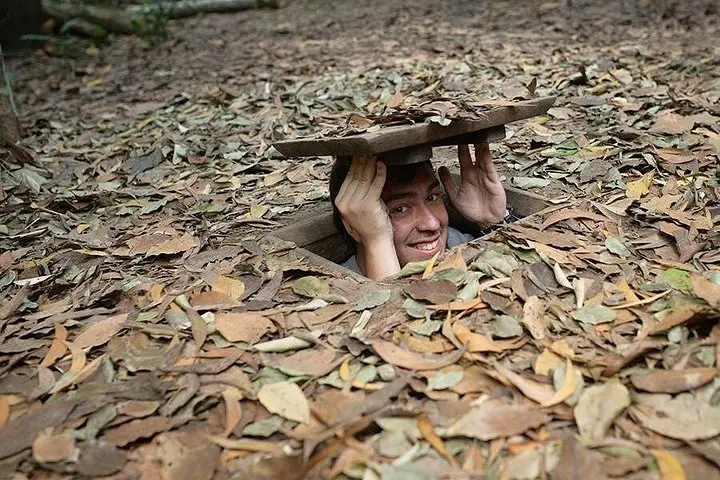
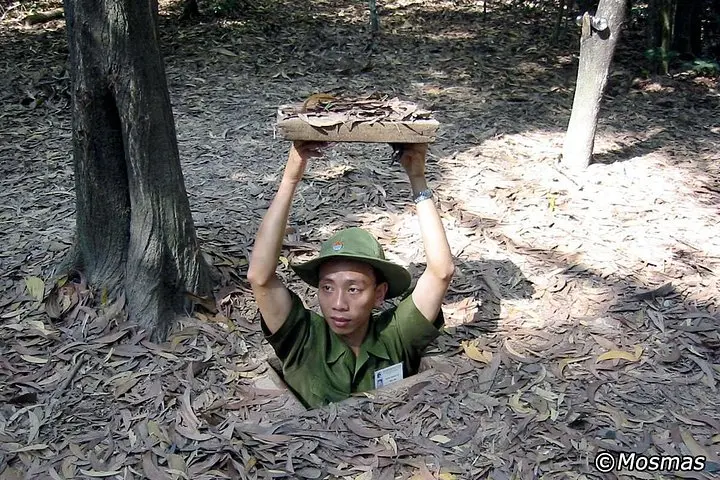
The Cu Chi Tunnels are an engineered landscape of necessity — miles of hand‑dug passageways carved into lateritic soils and layered with roots and leaf litter. Built and expanded by Viet Cong units, the tunnels functioned as living quarters, hospitals, and supply routes. Above ground, craters and rubber plantations still mark a theater of asymmetric warfare; below, tight, low tunnels show the improvisation of a people adapting to relentless pressure.
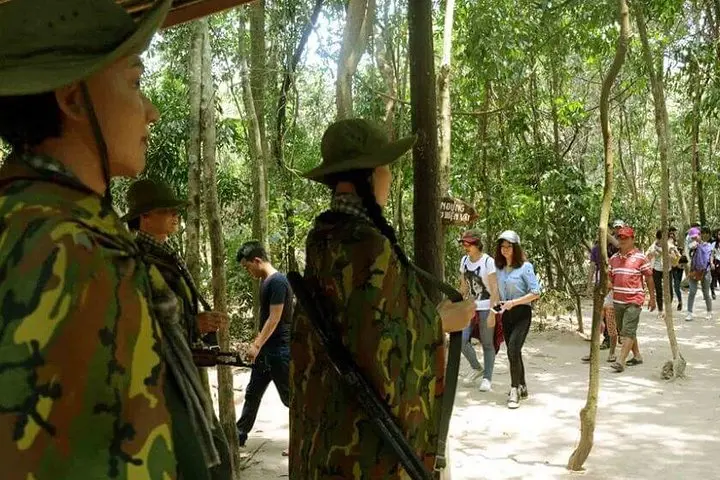
Culturally, the site frames the war from a Vietnamese perspective: artifacts, photos, and reconstructed trap systems present survival as daily work. Geologically the region is soft, well‑drained soil that allowed fast excavation but made concealment all the more necessary. Local artisans nearby produce handicrafts, and you’ll often pause at a small cooperative where traditional techniques continue.
Practical guidance: expect 4–6 hours total from Ho Chi Minh City, some short jungle walks, and the chance to crawl into widened demonstration tunnels — bring a lightweight daypack, closed‑toe shoes, and be ready for tight spaces. Photography is allowed in most areas; follow signs and guides when exploring reconstructed trap zones. Hydrate before and after, respect memorial displays, and budget for optional extras like the shooting range. This half‑day visit mixes tactile history with hands‑on interpretation — visceral, informative, and manageable on a single morning or afternoon from the city.
This is a half‑day tour (about 6 hours including transport from Ho Chi Minh City) and typically includes entrance fees, bottled water, an English‑speaking guide and round‑trip transport.
Yes — many tours allow visitors to enter widened demonstration tunnels; original narrow sections are not visitor‑accessible. Crawling is optional and modified for comfort and safety.
No — the shooting range is an additional cost and entirely optional; follow the operator’s safety briefing and local regulations if you choose to participate.
Above‑ground exhibits and short jungle walks are family‑friendly, but tunnel crawls and some uneven paths may not be suitable for very young children or those with reduced mobility.
Vietnam Tours VIP operates guided outdoor trips and adventures with an emphasis on safety, stewardship, and memorable experiences.

You step off the air‑conditioned van into a humidity that seems to press the green closer to the trailhead. Rice paddies flatten into lines of water and the jungle breathes around a narrow dirt path; the countryside here feels patient, as if keeping its wartime secrets close.
You step off the air‑conditioned van into a humidity that seems to press the green closer to the trailhead. Rice paddies flatten into lines of water and the jungle breathes around a narrow dirt path; the countryside here feels patient, as if keeping its wartime secrets close.
The Cu Chi Tunnels are an engineered landscape of necessity — miles of hand‑dug passageways carved into lateritic soils and layered with roots and leaf litter. Built and expanded by Viet Cong units, the tunnels functioned as living quarters, hospitals, and supply routes. Above ground, craters and rubber plantations still mark a theater of asymmetric warfare; below, tight, low tunnels show the improvisation of a people adapting to relentless pressure.
Culturally, the site frames the war from a Vietnamese perspective: artifacts, photos, and reconstructed trap systems present survival as daily work. Geologically the region is soft, well‑drained soil that allowed fast excavation but made concealment all the more necessary. Local artisans nearby produce handicrafts, and you’ll often pause at a small cooperative where traditional techniques continue.
Practical guidance: expect 4–6 hours total from Ho Chi Minh City, some short jungle walks, and the chance to crawl into widened demonstration tunnels — bring a lightweight daypack, closed‑toe shoes, and be ready for tight spaces. Photography is allowed in most areas; follow signs and guides when exploring reconstructed trap zones. Hydrate before and after, respect memorial displays, and budget for optional extras like the shooting range. This half‑day visit mixes tactile history with hands‑on interpretation — visceral, informative, and manageable on a single morning or afternoon from the city.