THE ADVENTURE COLLECTIVE® · Independent discovery and booking for outdoor travel

Leave Saigon behind for flat rice plains and a remarkable underground world: the Cu Chi Tunnels half-day tour pairs documentary context with hands-on exploration of wartime galleries. Expect short crawls, reconstructed bunkers and a local tea and tapioca tasting.
Leave Saigon behind for flat rice plains and a remarkable underground world: the Cu Chi Tunnels half-day tour pairs documentary context with hands-on exploration of wartime galleries. Expect short crawls, reconstructed bunkers and a local tea and tapioca tasting.
You step out of Saigon’s traffic into a quieter, flat landscape where rice paddies spike from muddy fields and water buffalo stalk the roadside. The air tastes faintly of wood smoke and boiled cassava — the same staple that kept guerrillas moving through long campaigns. By the time the minivan pulls up to the Cu Chi visitor complex, the pace shifts: screens and exhibits introduce the networks of narrow galleries that crawl beneath this district.
Verified experiences and guided adventures in the surrounding area.
Operated by SST TRAVEL · Cu Chi, Ho Chi Minh
You step out of Saigon’s traffic into a quieter, flat landscape where rice paddies spike from muddy fields and water buffalo stalk the roadside. The air tastes faintly of wood smoke and boiled cassava — the same staple that kept guerrillas moving through long campaigns. By the time the minivan pulls up to the Cu Chi visitor complex, the pace shifts: screens and exhibits introduce the networks of narrow galleries that crawl beneath this district.
The tunnels themselves are carved from lateritic soil and sand, beneath a region scarred by decades of conflict. Cu Chi’s system — a series of linked galleries, trapdoors and firing bunkers — was expanded and adapted by local fighters; exhibits and the reconstructed command rooms show that improvisation as much as engineering. Around the site, lacquer workshops and small village stalls keep local crafts and flavors visible: a short cultural arc from field to artifact to afternoon tea.
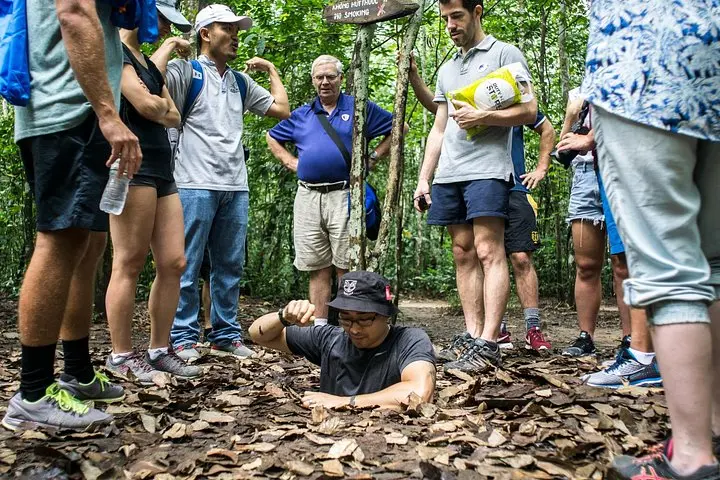
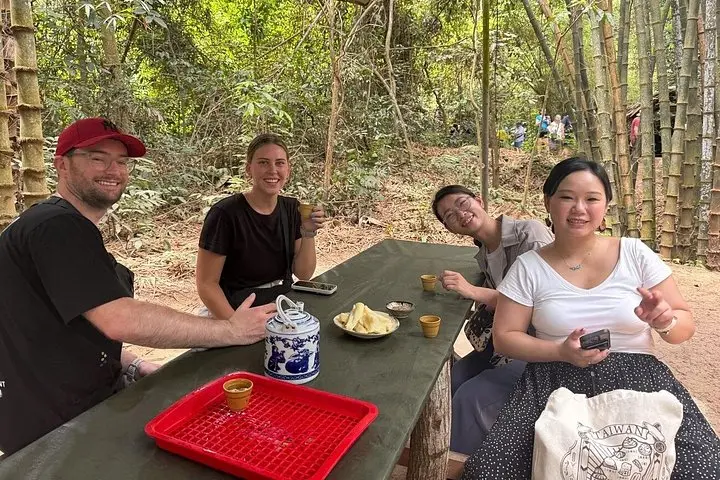
Practically, this half-day tour compresses that arc into a morning or afternoon: a documentary and command-center walkthrough, guided visits to bunkers and booby-trap replicas, a chance to duck into short tunnel sections, and a local snack of tapioca and tea. Guides balance storytelling with safety — many crawlways are optional and tightened for visitors. Expect repeated sun exposure, patches of uneven ground, and narrow, low-ceiling sections that reward cautious movement.
Bring closed-toe shoes, modest clothing for hot, humid conditions, and a sense of curiosity. The tour finishes back in the city by mid-afternoon, leaving time to process the site’s layered history and the quiet resilience of the surrounding countryside.
The full excursion, including pickup and return to District 1, runs about 6–7 hours; morning departures typically return by early afternoon.
No — tunnel sections include optional shorter, widened entries for visitors; anyone with mobility or claustrophobia can remain in the above-ground exhibits.
Yes—pickup and drop-off from hotels in District 1 are included in most departures; confirm your pickup point when booking.
Children can join, but infants must sit on laps and parents should be aware of low-ceiling tunnel sections and historical content that may be intense for very young kids.
SST TRAVEL operates guided outdoor trips and adventures with an emphasis on safety, stewardship, and memorable experiences.

You step out of Saigon’s traffic into a quieter, flat landscape where rice paddies spike from muddy fields and water buffalo stalk the roadside. The air tastes faintly of wood smoke and boiled cassava — the same staple that kept guerrillas moving through long campaigns. By the time the minivan pulls up to the Cu Chi visitor complex, the pace shifts: screens and exhibits introduce the networks of narrow galleries that crawl beneath this district.
You step out of Saigon’s traffic into a quieter, flat landscape where rice paddies spike from muddy fields and water buffalo stalk the roadside. The air tastes faintly of wood smoke and boiled cassava — the same staple that kept guerrillas moving through long campaigns. By the time the minivan pulls up to the Cu Chi visitor complex, the pace shifts: screens and exhibits introduce the networks of narrow galleries that crawl beneath this district.
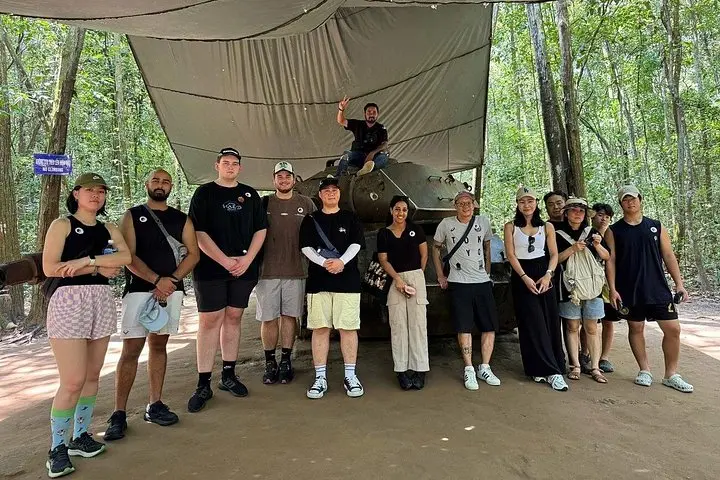
The tunnels themselves are carved from lateritic soil and sand, beneath a region scarred by decades of conflict. Cu Chi’s system — a series of linked galleries, trapdoors and firing bunkers — was expanded and adapted by local fighters; exhibits and the reconstructed command rooms show that improvisation as much as engineering. Around the site, lacquer workshops and small village stalls keep local crafts and flavors visible: a short cultural arc from field to artifact to afternoon tea.
Practically, this half-day tour compresses that arc into a morning or afternoon: a documentary and command-center walkthrough, guided visits to bunkers and booby-trap replicas, a chance to duck into short tunnel sections, and a local snack of tapioca and tea. Guides balance storytelling with safety — many crawlways are optional and tightened for visitors. Expect repeated sun exposure, patches of uneven ground, and narrow, low-ceiling sections that reward cautious movement.
Bring closed-toe shoes, modest clothing for hot, humid conditions, and a sense of curiosity. The tour finishes back in the city by mid-afternoon, leaving time to process the site’s layered history and the quiet resilience of the surrounding countryside.