THE ADVENTURE COLLECTIVE® · Independent discovery and booking for outdoor travel

Climb out of the city routine and into the Cu Chi Tunnels: a guided half-day that pairs above-ground reconstructions with a short tunnel crawl. Expect 1–1.5 hours each way from Ho Chi Minh, hands-on demonstrations, and a grounded look at wartime ingenuity.
Climb out of the city routine and into the Cu Chi Tunnels: a guided half-day that pairs above-ground reconstructions with a short tunnel crawl. Expect 1–1.5 hours each way from Ho Chi Minh, hands-on demonstrations, and a grounded look at wartime ingenuity.
The bus pulls away from District 1 and the city’s heat gives up to rice paddies and low-lying scrub; narrow dirt tracks cut into the landscape like the lines in an old map. You step out into a field where camouflage netting still flutters and the air carries the sharp scent of diesel and earth.
Verified experiences and guided adventures in the surrounding area.
Operated by Train Spread · Cu Chi, Ho Chi Minh City
The bus pulls away from District 1 and the city’s heat gives up to rice paddies and low-lying scrub; narrow dirt tracks cut into the landscape like the lines in an old map. You step out into a field where camouflage netting still flutters and the air carries the sharp scent of diesel and earth.
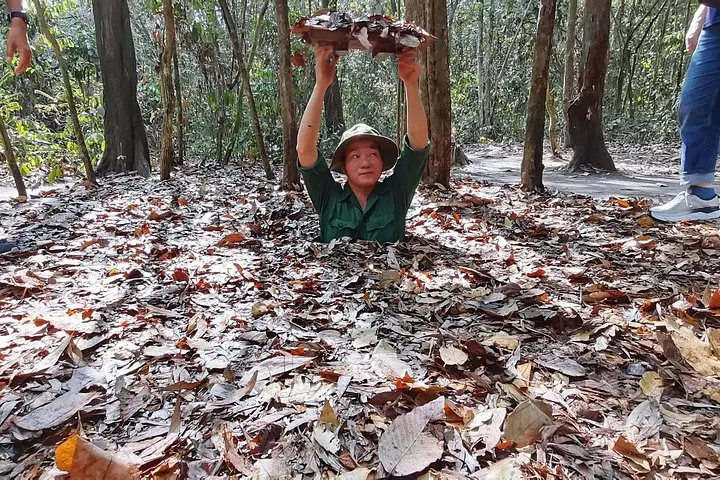
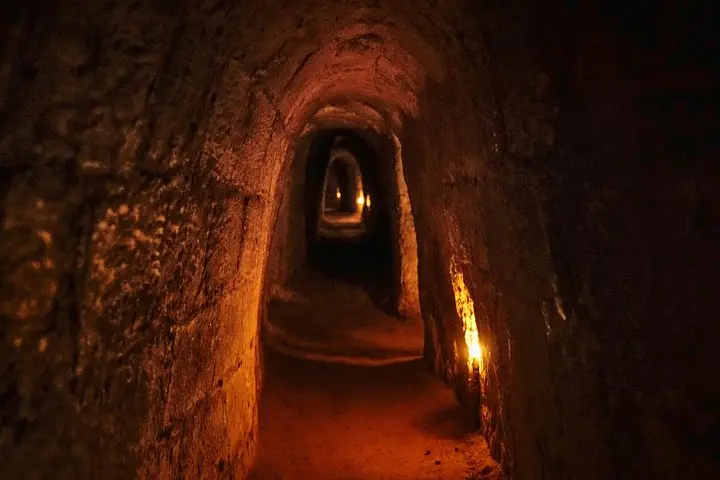
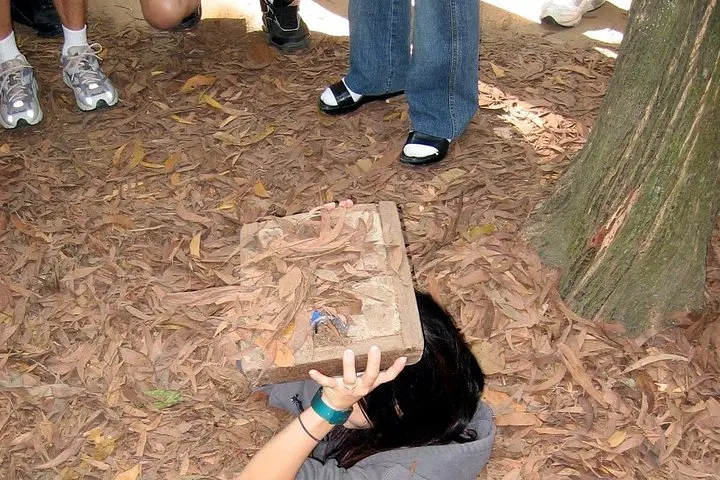
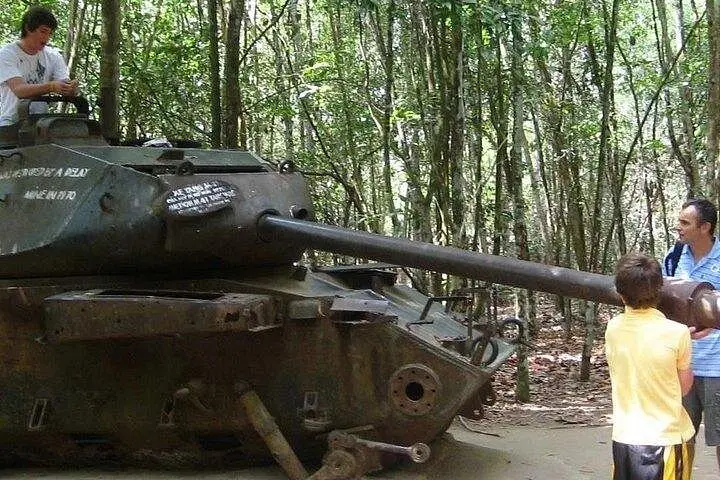
At Cu Chi you move between above-ground reconstructions — trapdoors, hidden kitchens, and replica bunkers — and the cool, dim throat of the tunnels themselves. These man-made galleries snake through lateritic soil and alluvial deposits formed by the Mekong’s long reach; the original network stretched for hundreds of kilometers but tourist-accessible sections are short, widened, and reinforced for safety. Guides explain daily life in wartime: improvised stoves, concealed latrines, and the tactics that let small units vanish into the ground.
The visit is as much cultural as geological. You’ll encounter stories of local resilience, the mechanics of booby traps, and the contested memory of a nation rebuilding. The landscape around Cu Chi is flat with low hills; expect packed earth trails, occasional mud in the rainy months, and minimal elevation gain.
Practical guidance: the tour typically includes round-trip transfer from central Ho Chi Minh City (plan for roughly 1–1.5 hours each way in traffic) and about 2–3 hours on site. Wear closed-toe shoes, bring sunscreen and water, and be prepared for narrow, low-ceiling sections—this experience is not recommended for those with claustrophobia, pregnancy, or serious heart conditions. Bring small cash for souvenirs and arrive with an open, respectful mindset toward a difficult chapter of Vietnam’s past.
Typical transfer time is about 1–1.5 hours each way depending on traffic; plan for a 6–7 hour round-trip tour.
Tour sections include original tunnel segments that have been widened and reinforced for safety; guides regulate group access and movement.
Older children who can manage crouching and short crawls are usually fine, but toddlers and infants are not recommended for tunnel sections.
Photography is generally allowed in above-ground areas; inside the tunnels, use low-light settings and follow guide instructions to avoid damaging exhibits.
Train Spread operates guided outdoor trips and adventures with an emphasis on safety, stewardship, and memorable experiences.
The bus pulls away from District 1 and the city’s heat gives up to rice paddies and low-lying scrub; narrow dirt tracks cut into the landscape like the lines in an old map. You step out into a field where camouflage netting still flutters and the air carries the sharp scent of diesel and earth.
The bus pulls away from District 1 and the city’s heat gives up to rice paddies and low-lying scrub; narrow dirt tracks cut into the landscape like the lines in an old map. You step out into a field where camouflage netting still flutters and the air carries the sharp scent of diesel and earth.
At Cu Chi you move between above-ground reconstructions — trapdoors, hidden kitchens, and replica bunkers — and the cool, dim throat of the tunnels themselves. These man-made galleries snake through lateritic soil and alluvial deposits formed by the Mekong’s long reach; the original network stretched for hundreds of kilometers but tourist-accessible sections are short, widened, and reinforced for safety. Guides explain daily life in wartime: improvised stoves, concealed latrines, and the tactics that let small units vanish into the ground.
The visit is as much cultural as geological. You’ll encounter stories of local resilience, the mechanics of booby traps, and the contested memory of a nation rebuilding. The landscape around Cu Chi is flat with low hills; expect packed earth trails, occasional mud in the rainy months, and minimal elevation gain.
Practical guidance: the tour typically includes round-trip transfer from central Ho Chi Minh City (plan for roughly 1–1.5 hours each way in traffic) and about 2–3 hours on site. Wear closed-toe shoes, bring sunscreen and water, and be prepared for narrow, low-ceiling sections—this experience is not recommended for those with claustrophobia, pregnancy, or serious heart conditions. Bring small cash for souvenirs and arrive with an open, respectful mindset toward a difficult chapter of Vietnam’s past.