THE ADVENTURE COLLECTIVE® · Independent discovery and booking for outdoor travel

Explore the Cu Chi Tunnels on a half-day small-group tour from Ho Chi Minh City. Learn how dugout living spaces, field hospitals and hidden traps supported guerrilla fighters, then return to the city with first-hand context and practical insights for visiting.
Explore the Cu Chi Tunnels on a half-day small-group tour from Ho Chi Minh City. Learn how dugout living spaces, field hospitals and hidden traps supported guerrilla fighters, then return to the city with first-hand context and practical insights for visiting.
You step off an air-conditioned minivan onto cracked red earth and the hot fold of southern Vietnamese air pushes against you like a living thing. The entrance to the Cu Chi network sits amid low scrub and rice paddies; palms lean in, as if curious about the corridor of earth beneath your feet.
Verified experiences and guided adventures in the surrounding area.
Operated by LOCAL TOURS VIETNAM · Cu Chi, Ho Chi Minh City
You step off an air-conditioned minivan onto cracked red earth and the hot fold of southern Vietnamese air pushes against you like a living thing. The entrance to the Cu Chi network sits amid low scrub and rice paddies; palms lean in, as if curious about the corridor of earth beneath your feet.
Carved by hand and secrecy, the Cu Chi tunnels are part of a 220km lattice woven by Viet Cong fighters during the Vietnam War (American War). The site preserves living quarters, kitchens, field hospitals and concealed trapdoors—each space a pragmatic response to conflict and climate. The geology here is soft alluvial soil overlying clay, which made digging possible but also required constant maintenance and camouflaging.
Local culture is evident in small rituals: the serving of tea and cassava, guides who speak of survival with matter-of-fact respect, and village families who still farm the surrounding fields. Nearby, the Ben Duoc trench complex offers a quieter contrast to the main Ben Dinh exhibition.
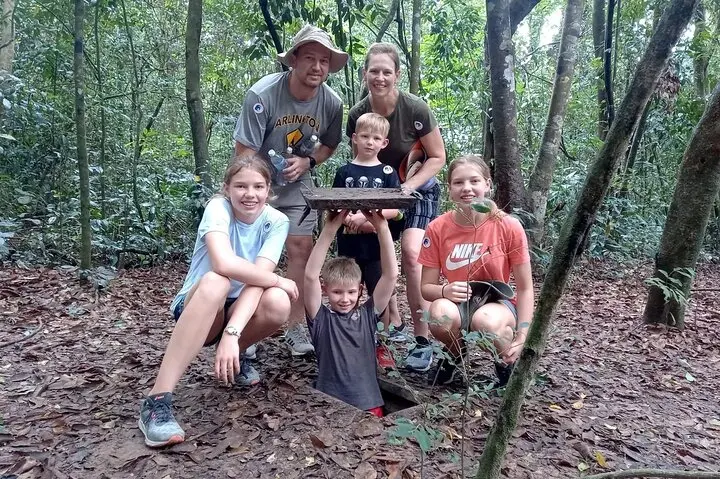
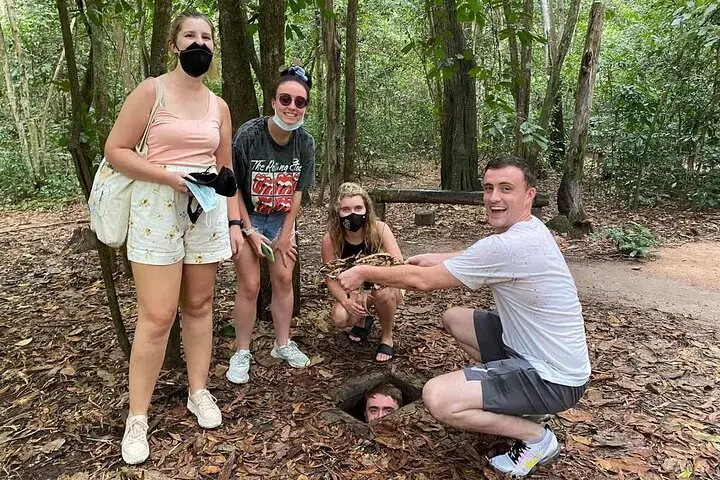
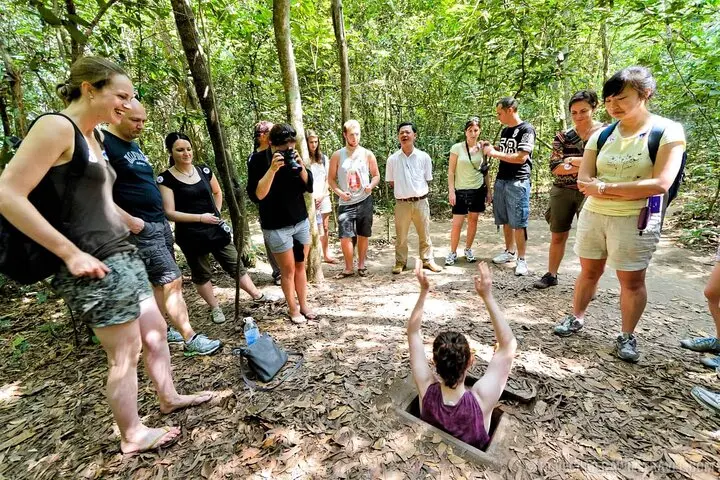
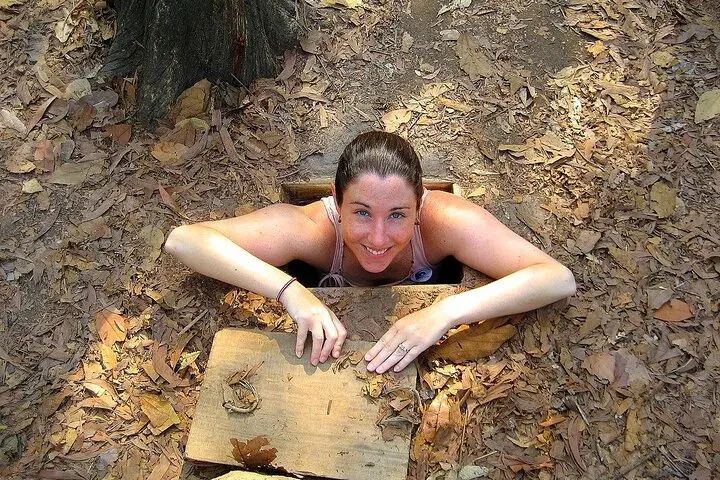
Practical guidance: tours run about 6–7 hours with roughly 90 minutes of travel each way from District 1 in Ho Chi Minh City. Expect paved walkways and short tunnel sections—some visitors may crouch or kneel to enter reconstructed passages. Wear breathable clothing, sturdy shoes, and bring sun protection and an extra water bottle (one is provided on most tours). Morning departures are cooler and better for photos; afternoons can be warmer and often see afternoon showers during the wet season.
Respect preserved areas, follow your guide’s safety directions, and be prepared for close, contained spaces if you choose to duck into the tunnels.
The tour runs about 6–7 hours door-to-door from District 1 and includes transport, an English-speaking guide, Cu Chi admission, bottled water and hotel pickup/drop-off in central HCMC.
Yes—there are reconstructed, short sections designed for visitors; some are narrow and may require stooping—ask your guide for alternatives if needed.
Children can join but tunnel sections may not be suitable for very young kids; limited-mobility visitors can view many areas from above ground but should check accessibility with the operator before booking.
Bring a rain jacket or poncho and shoes with good grip; afternoon showers are common from May to October and paths can become slick.
LOCAL TOURS VIETNAM operates guided outdoor trips and adventures with an emphasis on safety, stewardship, and memorable experiences.
You step off an air-conditioned minivan onto cracked red earth and the hot fold of southern Vietnamese air pushes against you like a living thing. The entrance to the Cu Chi network sits amid low scrub and rice paddies; palms lean in, as if curious about the corridor of earth beneath your feet.
You step off an air-conditioned minivan onto cracked red earth and the hot fold of southern Vietnamese air pushes against you like a living thing. The entrance to the Cu Chi network sits amid low scrub and rice paddies; palms lean in, as if curious about the corridor of earth beneath your feet.
Carved by hand and secrecy, the Cu Chi tunnels are part of a 220km lattice woven by Viet Cong fighters during the Vietnam War (American War). The site preserves living quarters, kitchens, field hospitals and concealed trapdoors—each space a pragmatic response to conflict and climate. The geology here is soft alluvial soil overlying clay, which made digging possible but also required constant maintenance and camouflaging.
Local culture is evident in small rituals: the serving of tea and cassava, guides who speak of survival with matter-of-fact respect, and village families who still farm the surrounding fields. Nearby, the Ben Duoc trench complex offers a quieter contrast to the main Ben Dinh exhibition.
Practical guidance: tours run about 6–7 hours with roughly 90 minutes of travel each way from District 1 in Ho Chi Minh City. Expect paved walkways and short tunnel sections—some visitors may crouch or kneel to enter reconstructed passages. Wear breathable clothing, sturdy shoes, and bring sun protection and an extra water bottle (one is provided on most tours). Morning departures are cooler and better for photos; afternoons can be warmer and often see afternoon showers during the wet season.
Respect preserved areas, follow your guide’s safety directions, and be prepared for close, contained spaces if you choose to duck into the tunnels.